Mistral AI Is Raising €3 Billion at a €20 Billion Valuation
Mistral AI is in talks to raise €3 billion at a €20 billion valuation, nearly doubling its worth in nine months. Behind the number is a French startup trying to do something no one else in Europe has managed: build a real, sovereign alternative to OpenAI and Anthropic, backed by a chipmaking giant

Mistral AI is in early talks to raise around €3 billion at a €20 billion valuation, according to Bloomberg reporting from mid-June 2026. That's nearly double the €11.7 billion the French startup was worth just nine months earlier, when it closed its Series C in September 2025. For a company that didn't exist before 2023, that kind of jump usually means one of two things: genuine momentum, or a hype cycle running ahead of the fundamentals. With Mistral, the honest answer is a bit of both, and untangling which parts are real is the whole story.
The Numbers: What Actually Changed in Nine Months
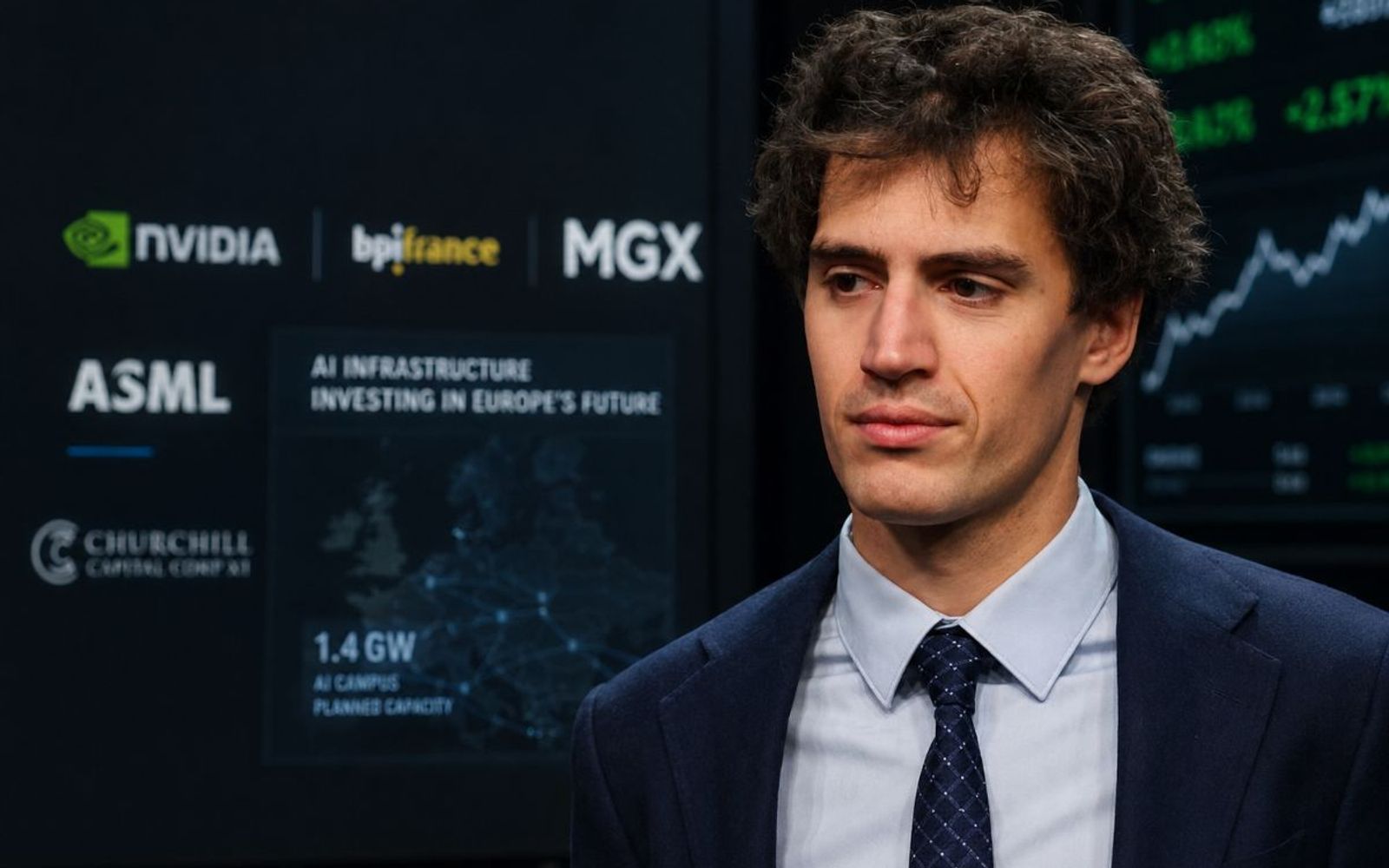
Valuation jumps this size don't happen on vibes alone, so it's worth starting with what's different about Mistral today versus last September. Annualized recurring revenue crossed $400 million in January 2026, up from roughly $20 million twelve months earlier, a 20-fold increase that CEO Arthur Mensch has said puts the company on track to top $1 billion in ARR by the end of 2026. The company has also moved well beyond being just a model developer: it secured an $830 million debt facility from seven banks in May 2026 to build its own data center outside Paris, and in March 2026 it joined a consortium with Abu Dhabi's MGX fund, French state investment bank Bpifrance, and Nvidia to build a 1.4-gigawatt AI campus, among the largest dedicated AI infrastructure projects announced in Europe to date.
Put together, that's a company that went from selling AI models to building the infrastructure underneath them, funding that infrastructure with debt rather than diluting further with equity, and doing it all while revenue multiplied twentyfold. Whether all of that justifies exactly €20 billion is a separate question, but it's not a valuation built on nothing.
From Three Researchers to Europe's Most Valuable AI Startup
Mistral was founded in Paris in 2023 by Arthur Mensch, formerly of Google DeepMind, alongside Guillaume Lample and Timothée Lacroix, who both came from Meta's AI research division. The founding pitch was straightforward: Europe had plenty of AI research talent and almost no serious AI companies to show for it, and the researchers building frontier models in the US and China had no obvious European counterpart.
The funding trajectory since then has been unusually steep even by AI industry standards. A €105 million seed round in June 2023, reportedly raised within days of the company's founding, was followed by a €385 million Series A that December. A €600 million Series B came in June 2024, valuing the company at roughly €5.8 billion. The September 2025 Series C brought in €1.7 billion and pushed the valuation to €11.7 billion, with Dutch semiconductor equipment giant ASML leading the round with a €1.3 billion investment that made it Mistral's largest shareholder. The talks now underway would very roughly double that figure again in under a year.
Why a Chipmaking Giant Bet €1.3 Billion on a Software Company
ASML's involvement is the detail that made a lot of people in the industry sit up. ASML doesn't build AI models. It builds the extreme ultraviolet lithography machines that make advanced semiconductor manufacturing possible in the first place, and it holds something close to a monopoly on that specific piece of hardware. A company like that betting big on a European AI lab is a statement about where ASML thinks the value in AI ultimately settles: not just in who makes the chips, but in who controls the software layer running on top of them, especially if that layer stays European rather than flowing entirely through American hyperscalers.
The partnership goes beyond ASML simply writing a check. It gives Mistral a European anchor investor with genuine technical credibility in hardware, at a moment when the company is trying to move from renting compute to owning it outright.
Mistral Compute: Building the Infrastructure Nobody Wants to Rent Out
The clearest sign that Mistral is playing a longer game than most AI startups is its infrastructure build-out. Its first dedicated data center, in Bruyères-le-Châtel south of Paris, houses 13,800 Nvidia GB300 chips across 44 megawatts of capacity, funded through that $830 million debt facility rather than another equity round, a choice that signals real confidence in future cash flow. The much larger 1.4-gigawatt campus planned with MGX, Bpifrance, and Nvidia is expected to begin construction in the second half of 2026 and start operating by 2028.
Mensch has gone a step further, publicly acknowledging in May 2026 that Mistral is exploring designing its own AI chips, a move that would put it in territory currently occupied almost exclusively by hyperscalers like Google, Amazon, and Microsoft. For a four-year-old startup, that's an aggressive bet on vertical integration. It's also a direct response to a real constraint: European AI companies have spent the past few years watching Nvidia's allocation queues get filled by American cloud giants first, and owning your own compute is the only real hedge against being last in line.
The Sovereignty Pitch: Why Governments and Banks Keep Choosing Mistral
Underneath the infrastructure spending is a sales pitch that has nothing to do with model benchmarks. Roughly 60% of Mistral's revenue comes from European customers, and a meaningful share of that is driven by data residency and regulatory requirements that US-based providers simply can't satisfy the same way. Mistral's client list includes the French army, carmaker Stellantis, telecom operator Orange, shipping giant CMA CGM, and German defense technology firm Helsing, alongside partnerships with IBM and Accenture on enterprise deployment.
That's a very different customer base than a typical AI startup's. Governments and defense contractors don't pick AI vendors based on which model scores highest on a benchmark leaderboard. They pick vendors whose infrastructure sits on their own soil, whose data doesn't route through servers subject to foreign legal jurisdiction, and whose long-term viability doesn't depend on a single US tech giant's strategic priorities. Mistral has built its enterprise and government business almost entirely around being the credible answer to that specific set of concerns, and it's working well enough that data sovereignty now shows up as a top consideration for a majority of European enterprise IT buyers surveyed on the topic.
The Revenue Reality Check
It's worth being precise about where that $400 million in ARR is actually coming from, because "AI startup revenue" can mean very different things depending on the company. For Mistral, it breaks down into three real streams: usage-based API revenue from La Plateforme, its developer platform charging per token; enterprise subscriptions for private and on-premise deployments, which command a premium specifically because of the data residency guarantees mentioned above; and paid tiers of Le Chat, its consumer chatbot, which has passed 5 million users and saw over 1 million downloads in its first two weeks after a major relaunch.
The $1 billion ARR target by the end of 2026 is aggressive but not obviously unrealistic given the trajectory: revenue roughly tripled in the 100 days before May 2025, then grew another twentyfold over the following year. The bigger open question isn't whether Mistral can keep growing revenue, it's whether it can do so while also carrying the debt and capital expenditure load of building out gigawatt-scale infrastructure at the same time, a balancing act that has strained far larger, better-capitalized companies.
A Regulatory Deadline That's About to Reshape the Playing Field
There's a date worth circling on the calendar here that has nothing to do with Mistral's fundraising and everything to do with its market position: August 2, 2026, just over two weeks from now, is when the bulk of the EU AI Act's obligations come into force, including transparency requirements and rules governing general-purpose AI models sold or deployed in the EU. The European Commission has already softened parts of the original timeline through a Digital Omnibus agreement reached in May 2026, pushing some high-risk system obligations out to December 2027, but the core transparency and governance rules are still on track to apply from August 2.
For a company like Mistral, built from day one around EU data residency and compliance, that deadline is less a threat than a tailwind. American AI labs now have to build EU-specific compliance layers into products designed primarily for a US regulatory environment. Mistral doesn't have to retrofit anything, because European compliance was the starting assumption, not an add-on. That structural advantage is quietly as important to the company's pitch to enterprise and government clients as anything in its technical roadmap.
Can Mistral Actually Compete With OpenAI and Anthropic at Scale?
This is the question that will determine whether €20 billion looks smart or generous in two years. OpenAI and Anthropic are both backed by hundreds of billions in combined compute commitments from Microsoft, Google, and Amazon, resources Mistral simply cannot match dollar for dollar even with ASML, MGX, and Bpifrance behind it. Mistral's bet isn't that it can outspend those companies. It's that a meaningful slice of the market, European governments, regulated industries, defense contractors, and companies that simply don't want their AI infrastructure routed through a foreign competitor's servers, will pay a premium for sovereignty even if the underlying model isn't quite state-of-the-art on every benchmark.
That's a real, defensible niche, and it's one no American lab can easily copy without fundamentally restructuring where its infrastructure lives. Whether that niche is worth €20 billion depends on how large "European AI sovereignty" actually turns out to be as a market, and that's still an open question the next eighteen months of enterprise contracts and government procurement decisions will answer more clearly than any funding round can.
Frequently Asked Questions
How much is Mistral AI raising, and at what valuation?
Mistral is in early talks, as of June 2026, to raise approximately €3 billion at a €20 billion valuation, according to Bloomberg. That would nearly double its previous €11.7 billion valuation from its September 2025 Series C.
Who are Mistral AI's main investors?
ASML is Mistral's largest shareholder, having led the €1.7 billion Series C with a €1.3 billion investment. Other backers involved in Mistral's broader ecosystem include Abu Dhabi's MGX fund, French state bank Bpifrance, and Nvidia, primarily through infrastructure and data center partnerships rather than direct equity.
What is Mistral AI's revenue?
Mistral's annualized recurring revenue crossed $400 million in January 2026, up from around $20 million a year earlier. The company has publicly targeted more than $1 billion in ARR by the end of 2026.
Why do European governments and companies prefer Mistral over OpenAI or Anthropic?
The main driver is data sovereignty. Mistral's infrastructure and data handling are based in the EU, which matters for governments, defense contractors, and regulated industries that need guarantees their data isn't subject to foreign legal jurisdiction. Roughly 60% of Mistral's revenue currently comes from European customers.
What is Mistral Compute?
Mistral Compute refers to the company's own data center infrastructure, starting with a facility in Bruyères-le-Châtel near Paris housing 13,800 Nvidia GB300 chips, and expanding to a much larger 1.4-gigawatt AI campus being built with MGX, Bpifrance, and Nvidia, expected to begin operating by 2028.
How does the EU AI Act affect Mistral AI?
The bulk of the EU AI Act's obligations, including transparency and general-purpose AI model rules, take effect on August 2, 2026. Because Mistral was built around EU compliance and data residency from the start, it faces less retrofitting than US-based AI labs that need to adapt products built primarily for American regulatory conditions.
Comments (0)
No comments yet. Be the first to share your thoughts.