The $500 Illusion of Creator Wealth
Most creators earn less than a barista’s tips, yet platforms and brands sell the myth of digital abundance—here’s the ugly math.

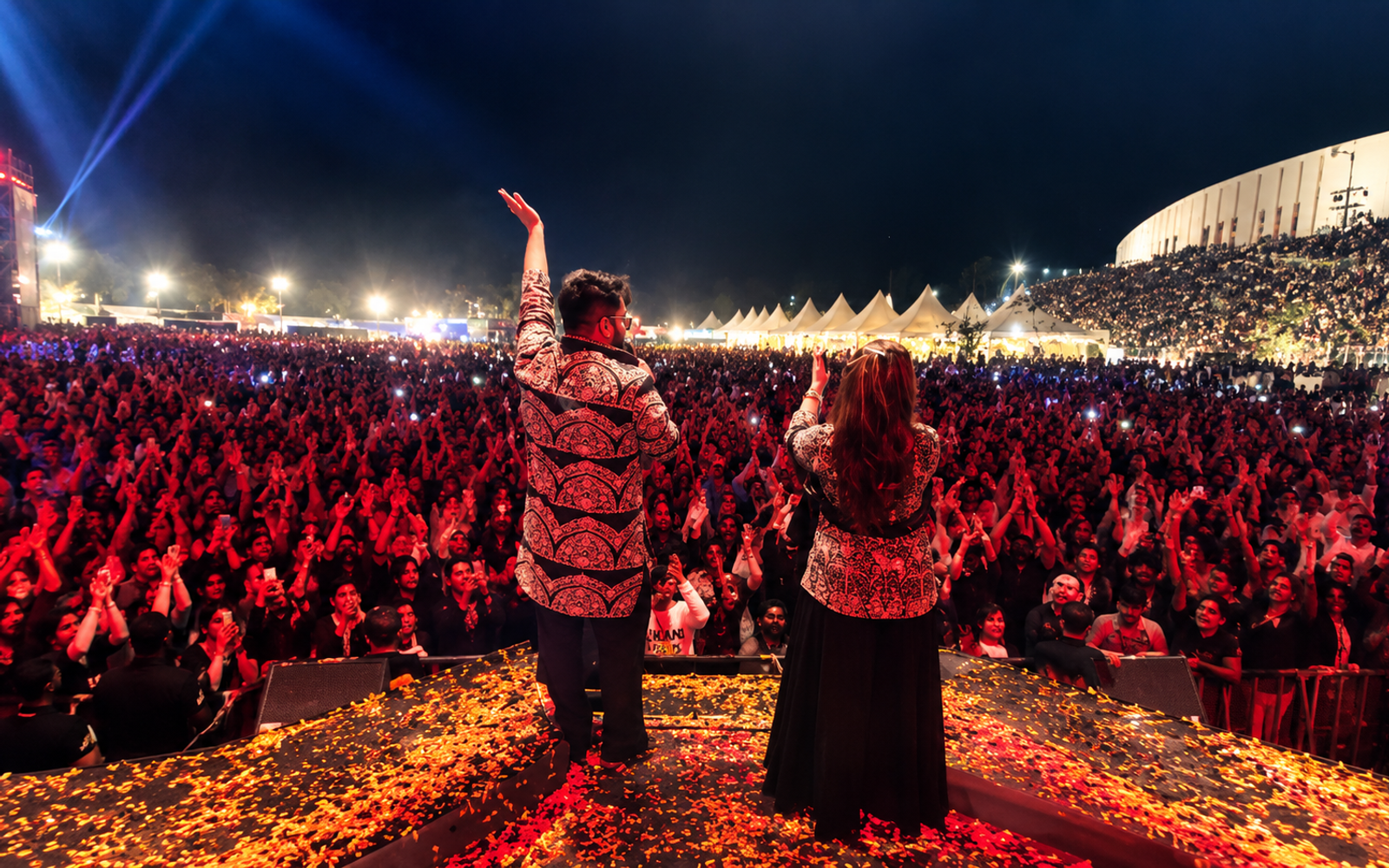
The field in County Clare was wet. Not the kind of wet that makes you cancel a show, but the kind that seeps into your boots while Big Thief’s Adrianne Lenker debuts three new songs, her voice cracking like a branch underfoot. The crowd—mostly Irish, mostly young, mostly holding phones—records every second. Not for posterity. For content. Because in 2026, even live music is just another asset in the monetization stack, another clip to splice into a TikTok ad read for some skincare brand that doesn’t pay them enough to afford rent in Dublin.
(Look: Nevada City just declared May 27 ‘Joanna Newsom Day.’ A nice gesture, sure, but try telling that to the Patreon artists who’ve been begging for $5 a month for years. The math doesn’t add up. It never does.)
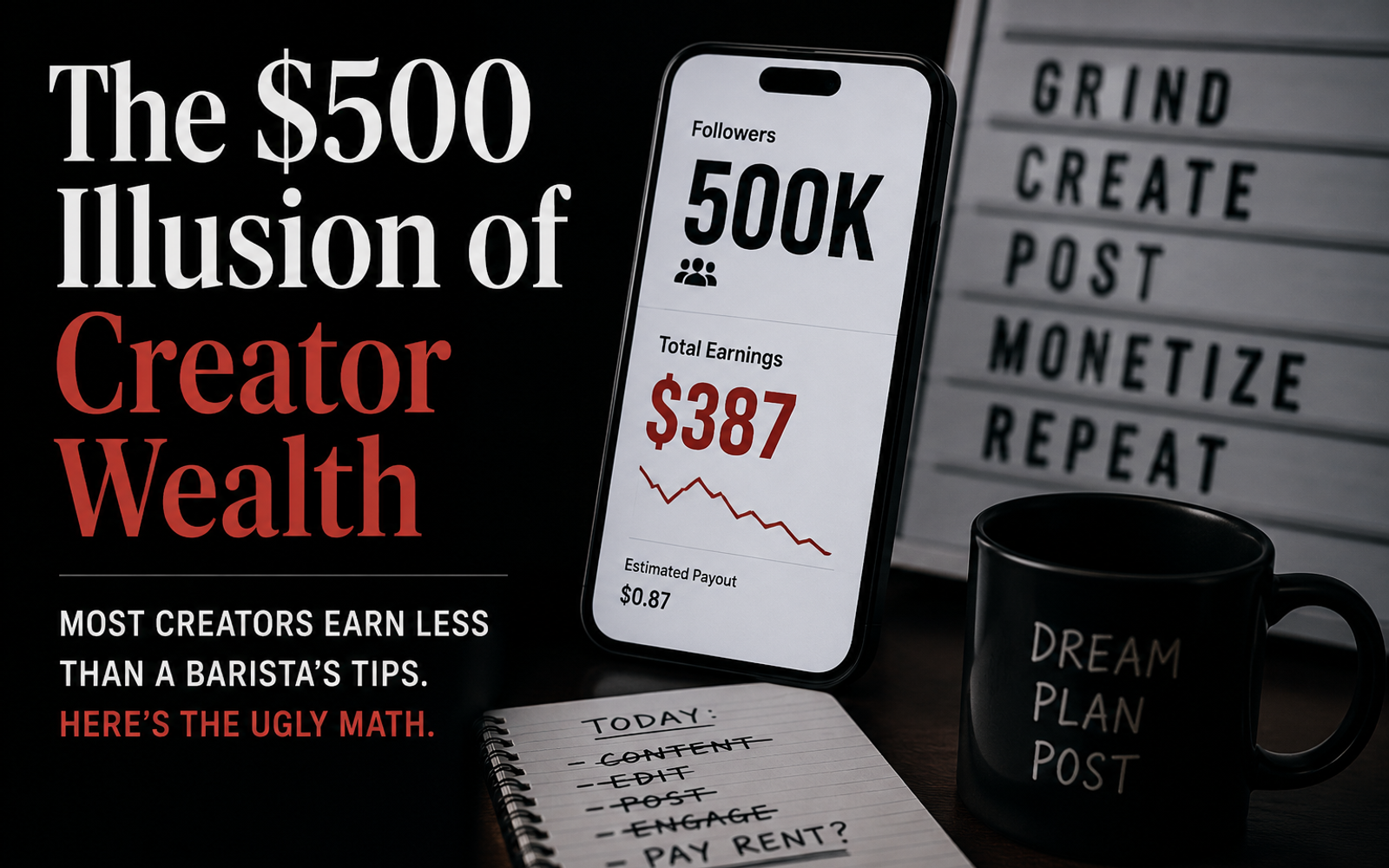
The 2025 Monetization Report is out, and the numbers are as grim as a Gold Panda album without the euphoric drops. Of the 427 creators surveyed—a mix of newsletter operators, video essayists, and meme lords—most earned under $500. Not per month. Per year. The median? $387. That’s less than a single month’s Spotify payout for a mid-tier artist, and Spotify’s already a punchline. But look: the headlines don’t scream ‘Most Creators Are Broke.’ They scream ‘Creator Economy to Hit $480 Billion by 2027!’—as if the money’s trickling down instead of pooling in the same corporate pockets that brought us ‘endless creepy yellow corridors’ and 30 billion TikTok views for content that evaporates faster than a Kanye West concert in Italy.
The part we all ignore
Here’s the dirty secret of 2026’s ‘platform-stack integrations’: they’re not designed to make creators rich. They’re designed to make platforms richer. The shift from single-platform payouts (YouTube’s ad revenue, Substack’s subscriptions) to ‘integrated’ stacks (TikTok Shop + Instagram Affiliates + Patreon + AI-generated merch) isn’t about diversification. It’s about fragmentation. It’s about ensuring that no creator ever gets too comfortable, too stable, too independent. Because stability breeds demands. And demands—like, say, fair pay—are bad for business.
Take the #paid 2026 Creator Signals Report. It’s a masterclass in corporate gaslighting. Buried under gift guides for ‘sister-in-laws’ and ‘mothers-in-law’ (because nothing says ‘authentic creator content’ like SEO-optimized shopping lists) is the admission that brands are dumping more money into creator partnerships than ever. But the payouts? Still laughable. The average brand deal in 2026 pays $200–$500 per post. For context, Larry Lamb—who called himself ‘lucky’ to land roles in *EastEnders* and *Gavin and Stacey*—probably made more in a single episode than most creators do in a year. And he’s not even the star. That’s just the guy who got ‘lucky.’
The thing is, AI was supposed to fix this. The promise was simple: AI-driven ad spend would flood the creator economy, lifting all boats. Instead, it’s just made the water murkier. Brands now use AI to generate hyper-targeted ads, but they’re still paying creators the same rates they did in 2020. The difference? The ads are more invasive, the content more disposable, and the creators more exhausted. The 2026 monetization timeline—‘How Long to Reach $1K, $5K, and $10K Per Month’—reads like a dystopian joke. The answer? ‘Longer than you think.’
Why this feels different
It’s not that creators haven’t been exploited before. It’s that the exploitation is now *institutionalized*. Platforms don’t even pretend to care anymore. TikTok’s ‘Creator Fund’—once touted as a lifeline—collapsed under the weight of its own miserly payouts. YouTube’s Partner Program still pays out pennies per thousand views. And Patreon? The last refuge of the ‘serious’ creator? It’s now just another cog in the stack, a place where fans pay for ‘exclusive’ content that’s often just repurposed Instagram Stories with a paywall slapped on.
The real shift in 2026 isn’t the money. It’s the resignation. Creators aren’t fighting for better pay anymore. They’re fighting for *visibility*. The algorithm is the new boss, and it’s a cruel one. Post too much? Shadowban. Post too little? Irrelevance. Try to game the system? The AI will catch you. The only winning move is to keep grinding, keep producing, keep begging for scraps—because the alternative is obscurity, and obscurity is death.
(Except, it isn’t. Not really. The most interesting creators in 2026 aren’t the ones chasing the algorithm. They’re the ones ignoring it. The ones making weird, unmonetizable art—like Joanna Newsom’s labyrinthine harp epics or Big Thief’s raw, unfiltered field recordings. The ones who’d rather play to 50 people in a damp Irish field than 50,000 bots on TikTok. But those creators? They’re not the ones getting brand deals. They’re the ones getting declared ‘local holidays’ by small towns. And that’s fine. Until it isn’t.)
The creator economy isn’t a meritocracy. It’s a lottery. And in 2026, the house always wins.
Comments (0)
No comments yet. Be the first to share your thoughts.