The Third Exit: Why Secondary Markets Just Hit $210B
IPOs and acquisitions no longer decide when founders cash out. The secondary market just hit $210 billion. Plan for it.

You raised your Series B in the spring of 2021, when valuations were generous and every term sheet promised an exit was about three years away. Five years later, the IPO window is reopening for a narrow group of companies, and yours isn't in it yet. M&A conversations keep stalling at the valuation gap, early investors are asking pointed questions about returns, and the liquidity timeline keeps sliding. Private markets are carrying an estimated 32,000 companies worth around $3.8 trillion that were supposed to have exited by now.
The exit you were promised isn't arriving the way it was pitched, but another path has grown large enough to matter. The secondary market, where existing shares change hands without the company going public or being acquired, crossed $210 billion in transaction volume in 2025, up from roughly $9 billion during the 2008 crisis. For founders stuck in the liquidity crunch, that changes the planning math. The question has shifted from when you'll get an exit to how many liquidity events you'll engineer along the way.
Why the Old Exit Clock Stopped Working
For four straight years, distributions to limited partners have hovered between 8% and 12% of net asset value, down from roughly 25% annually in healthier cycles. That's the polite way of saying venture funds are returning almost nothing to the pensions and endowments that back them. The IPO window stayed mostly frozen through early 2025, and while M&A has recovered, it hasn't cleared the backlog of aging portfolios. Capital that was supposed to cycle back to investors is stuck in place.
That's why secondary transactions stopped being an emergency measure and became standard infrastructure. When traditional exits stalled between 2021 and 2024, secondaries kept the venture ecosystem from seizing up. But something more interesting happened along the way. Secondary sales shifted from distress signal to deliberate plan, written into term sheets and discussed in board meetings alongside IPO timelines and acquisition strategies.
Lexington Partners' Taylor Robinson, on the Alt Goes Mainstream podcast, described the shift directly: "We have the ability to take a fund that might be second or third quartile and at the right price turn it into a first quartile type return for our LPs." That repricing power is why institutions now treat secondaries as a core allocation rather than a tactical exit valve. For founders, the implication is simple: the people who fund you have changed how they think about liquidity, and your exit plan has to change with them.
The Third Exit Is Not Available to Everyone
Not every company benefits equally from the boom. The market has split into three tiers, and knowing which one you're in determines whether secondary liquidity is a real option. At the top sit companies like SpaceX, Stripe, and Anthropic, whose shares trade at premiums because demand outstrips supply. In 2025, 16% of all secondary volume came from companies with zero presence in the market a year earlier.
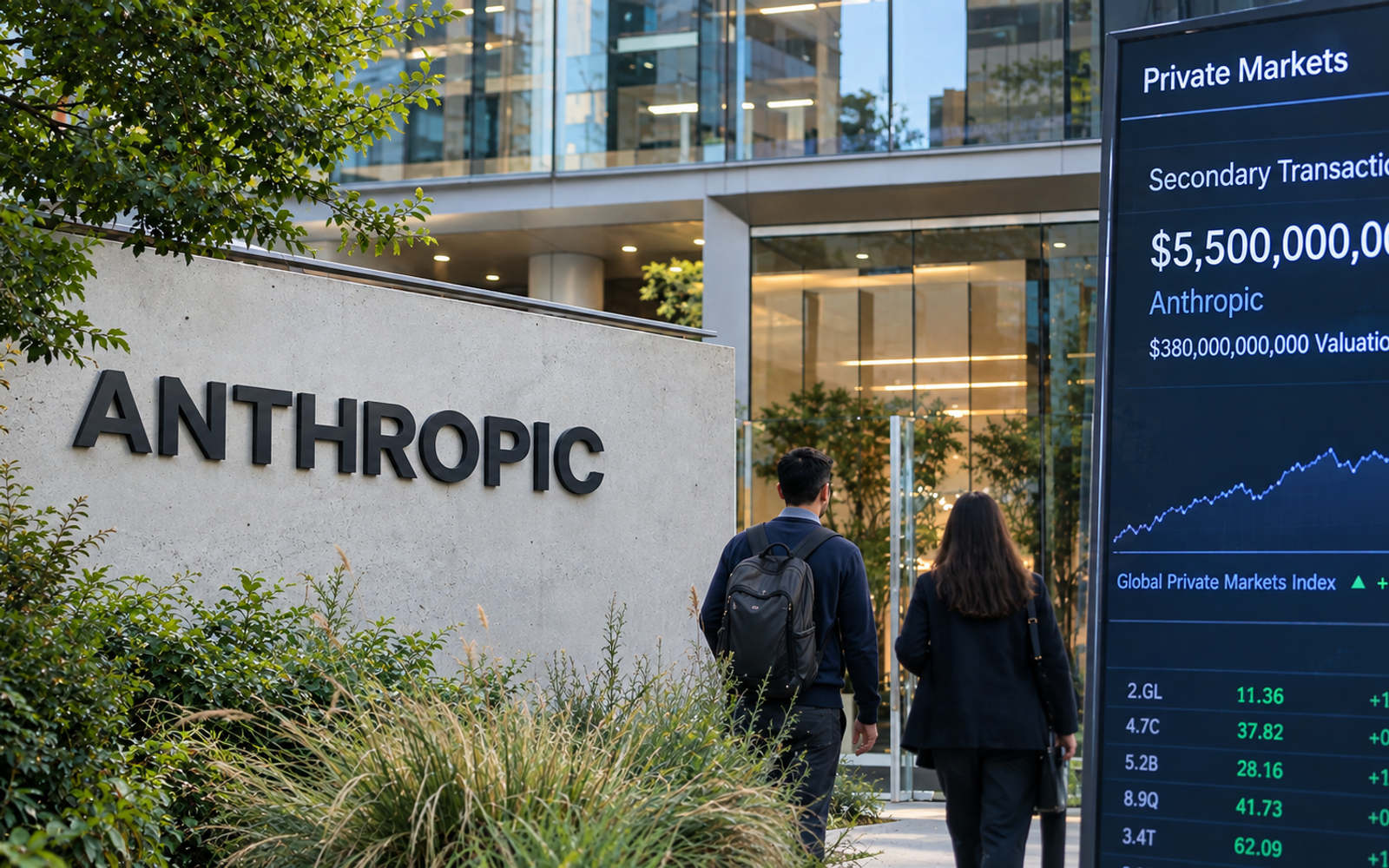
Even at the top, the market is selective in ways that surprise people. Earlier this year, institutional holders tried to move roughly $600 million of OpenAI stock on the secondary market and could not find buyers. In the same quarter, Anthropic closed a $5.5 billion tender at a $380 billion valuation with demand running hot. Two of the most valuable private companies on earth produced opposite results in the same stretch of months.
The middle tier is where the 2026 problem lives. Roughly 40 to 45 companies sit in secondary market purgatory, valuable enough to attract attention but not liquid enough to clear a meaningful block of shares at a price anyone accepts. Below them sits everyone else, watching the volume numbers climb and wondering why none of it applies to them. If your company isn't in the top tier, secondary liquidity alone won't save you. It can extend runway and reward early employees, but it won't manufacture a valuation the market doesn't believe in.
What the Data Shows About Who Qualifies
According to Carta's exit environment report published this month, the startups finding exits in 2026 are the ones with AI-powered growth. That's a filter applied across every industry, and it shows up in acquisition prices and secondary demand alike. Companies demonstrating AI-driven revenue acceleration attract buyers at premiums while everyone else fights for attention. The gap between the haves and have-nots in the exit market has become an AI gap.
That dynamic flows directly into secondary demand. Perplexity's $20 billion rise shows how quickly AI growth reshapes private valuations, and the same logic applies at every tier. If your growth curve bends upward in a way investors can verify, you have options. If it doesn't, no amount of secondary market growth will change your position.
Qualifying for the secondary tier is a business problem more than a financing maneuver. You don't get secondary liquidity by hiring a banker to run a process, you get it by building the kind of company whose shares people line up to buy. The fundamentals that attract an acquirer are the same ones that attract secondary buyers. The good news is that those fundamentals are more within your control than the IPO calendar ever was.
Plan for Secondary Liquidity From Day One
If secondary liquidity is going to be part of your exit, you need to plan for it before you need it. The founders who get the best pricing in secondary deals started preparing years earlier, and most of that preparation is unglamorous paperwork. Clean cap table, tidy option pool, share classes that don't require three months of legal work to transfer. Buyers pay a premium for companies where a deal can close quickly, and they discount the ones where every transfer needs fresh approval.
The second piece is negotiating secondary rights into your term sheets. Some founders now ask for a small secondary component in each new round, letting early employees and angels sell a portion of their holdings while new money comes in. It rewards the people who carried the company through the lean years without waiting for a liquidity event that may never arrive on schedule. Early movers get better pricing, so the window to act is now.
Tender offers deserve the same attention. Running a company-sponsored tender once a year gives employees a predictable window to sell shares, and that predictability is itself a retention tool. People stay when they can convert paper value into cash on a schedule they can plan around, which is why ESOP structures and annual tenders have become standard features of late-stage compensation design.
None of this requires giving up on a traditional exit. An engineered exit is a sequence of events rather than a single day: a tender offer here, a secondary sale there, an acquisition when the timing and price finally line up. Each step resets expectations and buys the company more time to build value. The founders who treat liquidity as something to design rather than something to wait for keep control of their own timelines.
M&A Still Leads, but Secondaries Fill the Gaps
M&A remains the dominant exit pathway in 2026, according to a report tracking nearly 2,000 venture-backed companies across North America and Europe in the first quarter. US private equity exit deals were already heading for a second straight year of recovery by late 2025, according to PitchBook data cited by Reuters. But acquisition timelines are longer than they used to be, and buyers are more careful. The secondary market has become the layer underneath, keeping shareholders whole while the company waits for the right deal.
The most sophisticated founders treat these as one system. You sell a block of shares to a secondary buyer to give early investors an exit, and you keep the company independent long enough to land the M&A deal that pays everyone else. Institutional investors already do this at the fund level, rebalancing portfolios through secondary sales while they wait for traditional exits. Founders who apply the same logic get the same benefit: liquidity on their schedule, not the market's.
The distribution drought has consequences beyond the boardroom. The same forces that have quietly shrunk personal savings accounts are now pushing pensions and endowments into secondaries, and the ripple effects reach every term sheet you sign. When institutions can't get cash out of private markets, they slow new commitments, and the whole chain of venture funding tightens. Understanding where that money flows helps you read what your investors are actually thinking.
Go back to that Series B founder from 2021. The exit you were promised is still possible, but it's no longer the only path, and it's certainly not the fastest one. Liquidity has become a series of decisions rather than a single day, starting with an honest read of where your company sits in the secondary market's three tiers. If you're in the top tier, you have options you didn't have two years ago, and you should be using them. If you're not, the work is building the kind of company that makes buyers line up for shares, because the market is already pricing the companies that qualify and ignoring the ones that don't.
Comments (0)
No comments yet. Be the first to share your thoughts.