Virtual Pop Stars Can't Fail. That's the Problem.
Virtual influencers out-engage human creators three to one. That gap measures control, not culture, and the boom is built on confusing them.

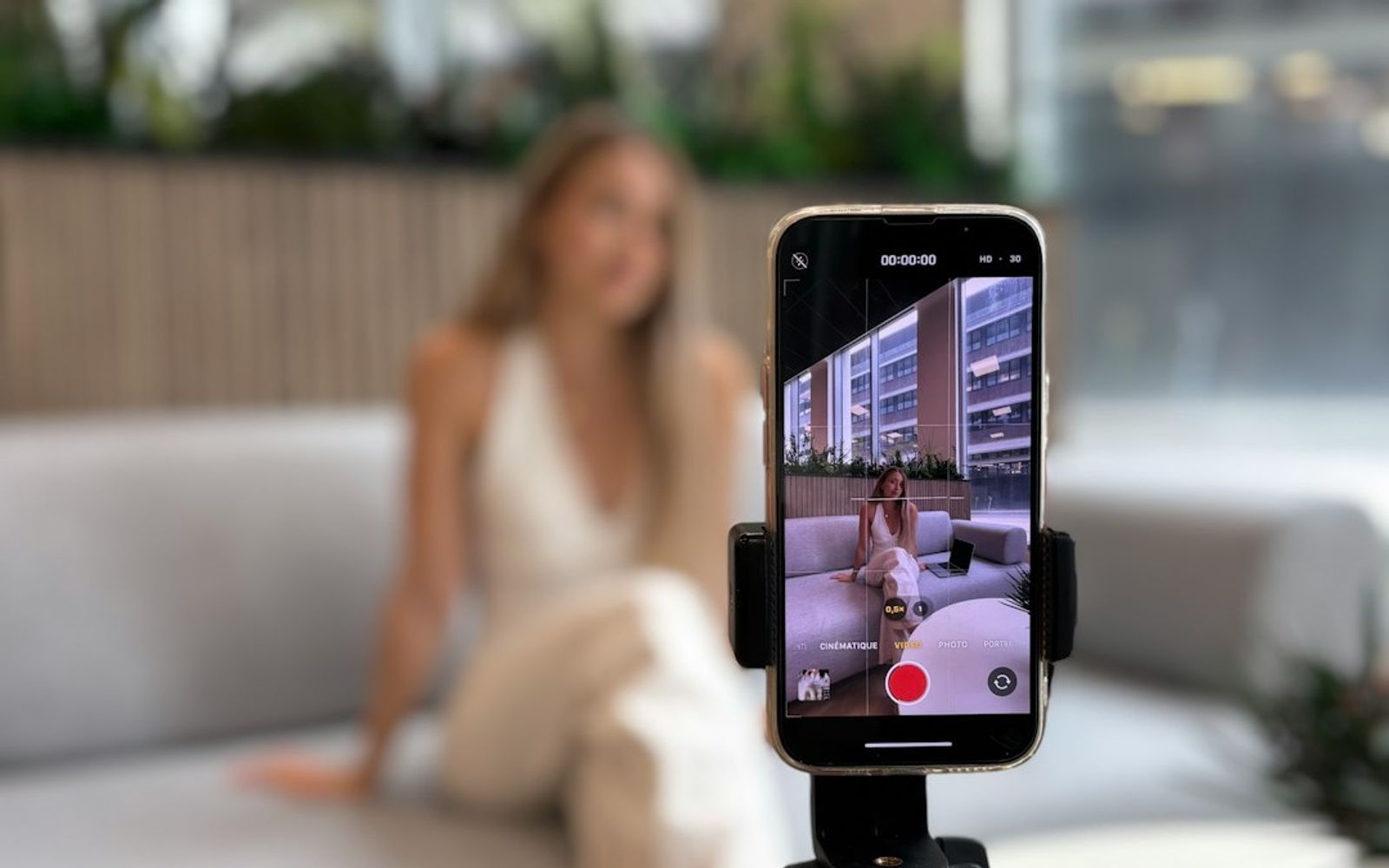
In January, Gracie Nielson opened TikTok and found an account wearing her exact outfit. Not a homage, not a knockoff, but the same garment, the same body pose, the same corner of the same room, with only the face swapped out. The account belonged to Sienna, a virtual influencer, and Nielson, who has 600,000 followers of her own, got nothing from the arrangement except the vertigo of watching software cosplay her life.
The synthetic celebrity economy has a foundation, and it looks like this: the unpaid labor of the humans being automated out of the frame. That is the detail worth unpacking, because the official story of AI pop stars and virtual influencers is considerably prettier. In that story, digital personalities are the future of fame, immune to scandal and aging, adored by millions, and measured in numbers that make human creators look obsolete.
The numbers are doing a lot of the convincing, so they deserve a closer look. But the closer you get, the stranger the picture becomes, because the features that make synthetic stars so attractive to marketers are the same features that keep them from ever mattering to a culture. The pitch is a paradox wearing a quarterly report.
The Numbers Behind the Boom
By the industry's own accounting, the growth is staggering. The virtual influencer market hit $11.74 billion in 2026, with industry research projecting $154.6 billion by 2032, a compound annual growth rate above 41 percent. Campaigns built around synthetic creators average a 5.67 percent engagement rate against 1.89 percent for human ones, and 71 percent of brands report that AI influencers deliver a higher return on investment.
The pitch is seductive in its symmetry. Virtual stars never age, never get caught in a scandal, never post something regrettable at 2 a.m., and never ask for a raise or a mental health break. They work around the clock in every time zone, always on message because the message is written by the people who sign the checks. For a marketing department, this is the dream of culture without the inconvenience of human beings.
So the dream deserves a stress test. The models keep getting sharper, a reasoning leap that deepens the illusion every quarter, and the ethics are only beginning to attract regulators. But the catch is cultural. It hides in plain sight inside the engagement statistics that launched the boom, and what looks like proof of appeal is actually proof of ownership.
The Engagement Gap Is a Control Gap
Start with the metric everyone quotes. The 5.67 percent engagement rate that makes virtual influencers look like the future of attention is not a like-for-like comparison with human creators. Real people build audiences one skeptical follower at a time, in public, with their actual reputations on the line. A synthetic influencer is usually owned by the same brand that commissions the campaign, which means the audience, the content, and the measurement all live inside one company.
When a brand reports engagement for its proprietary avatar, it is grading its own homework in a closed loop. The contrast with fraud is instructive. Industry estimates put losses to influencer fraud at $4.8 billion in 2026, and regulators are circling because fake followers distort pricing for human creators. But when a brand inflates the audience of its own avatar, the same behavior is called a growth strategy, and that distinction does heavy lifting for the people who own the software.
The engagement gap is a measure of control rather than charisma, and those two qualities carry very different cultural value. Control produces consistency. Charisma produces attachment, which is messier, slower, and impossible to schedule, which is why knowing how to actually spot AI-generated content has become a survival skill rather than a party trick. Confusing the two is the category error underneath the boom, and it explains why the market can keep compounding while the culture keeps shrugging.
Miku Was a Mirror. The New Stars Are Vaults.
The clearest way to see what changed is to compare the new synthetic icons with their ancestor. Hatsune Miku, the holographic singer who debuted in Japan in 2007, became a genuine cultural force precisely because she was an open instrument. Fans wrote the songs, choreographed the dances, and built the mythology themselves, generating tens of thousands of compositions and a live spectacle that still sells out arenas. Miku worked as a mirror, reflecting whatever her community poured into her.
The 2026 model runs in the opposite direction. Ownership is total, personality is scripted, and the audience is invited to consume rather than create. Lu do Magalu, the Brazilian avatar who earned roughly $2.5 million in 2024 across 74 brand collaborations, is a mascot with a posting schedule, valued the way a logo is valued. The shift from open canvas to locked vault is the entire story of what synthetic celebrity means in this decade, and it explains why these figures attract attention without producing culture.
Culture has always been made by people who can fail. The cracked vocal on a live recording, the flop album that forces a reinvention, the public mistake metabolized into an aesthetic: these come from having a body, a will, and a reputation on the line. A synthetic star has none of those, so it cannot surprise its audience, and surprise is where attachment actually comes from. The cautionary tale already exists in FN Meka, the AI rapper signed by Capitol Records in 2022 and dropped within weeks after critics called him a stereotype with no artist behind him to absorb the backlash or grow from it.
The Humans Funding the Research
Which brings us back to Gracie Nielson and the thousands of creators in her position. The synthetic celebrity economy is not being assembled in a vacuum. It is built from the scraped likenesses, vocal tones, and visual habits of working humans, and those humans are only now discovering what their data has been constructing. By one 2025 estimate, AI influencers generated $6 billion in a single year while the creators whose rooms and outfits supplied the training material received nothing but the confusion of watching themselves be automated.
The legal reckoning will be messy and slow. Voice and likeness rights are being tested across multiple jurisdictions, and disclosure rules are tightening as regulators move from warnings to enforcement. But the cultural damage will outrun the legal remedies, because the problem extends beyond theft to the message the synthetic celebrity sends about what an artist is for. If a brand can own a face that never tires and a persona that never wobbles, artistry becomes just another input cost, and the humans who used to supply it become optional.
Audiences are not stupid, but they are busy, and the feed rewards the seamless. The risk is that a generation raised on polished avatars starts to expect performance without personhood, and that expectation reshapes the market real artists have to survive in. The bar for a compelling presence drops to whatever a model can render, and the humans who clear it start to look like inefficiencies rather than the entire point.
What the Forecasts Don't Count
None of this means the market collapses, and the projections are probably right. The virtual influencer economy will keep compounding because it is cheap, controllable, and measurable, and those three qualities have driven more bad cultural bets than any algorithm ever will. Lu do Magalu will keep posting and keep collecting fees, and the engagement numbers will keep looking excellent, because nothing about the arrangement requires the avatar to mean anything.
But meaning was always the product, and it is the one thing a wholly owned personality cannot manufacture. A pop star is not a distribution channel. When a voice on the radio rearranges a life, it is usually because a real person risked something real to make it, and listeners can feel the difference even when they cannot name it. Strip the risk out and what remains is inventory with a face attached, priced per post, optimized for a feed that was never designed to hold anything that matters.
The tell is in the sales pitch. Nobody promoting a virtual star ever says "wait until you hear what she does next," because the answer is always the same: whatever the brand approves. Gracie Nielson, meanwhile, will keep posting unscripted, and some of it will fail, and some of it will be exactly why her followers stay. That failure is the actual output, the thing the avatars cannot copy because it does not exist until a person risks it. The synthetic celebrity boom is a triumph of measurement over meaning, and the forecasts will keep looking right until the audience notices what the metrics were never counting.
Comments (0)
No comments yet. Be the first to share your thoughts.