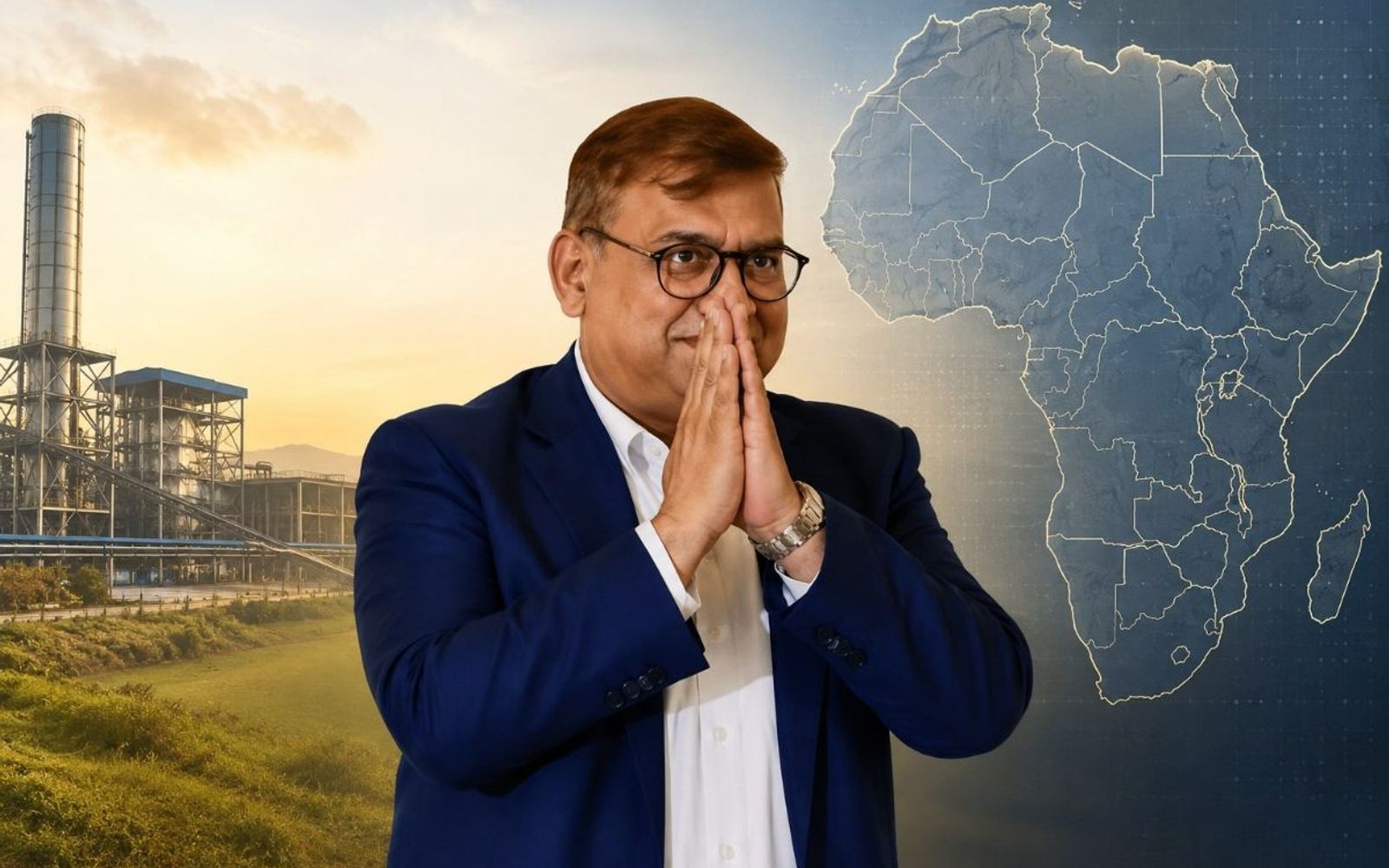
Inside Nigeria's New Solar Steel Megaproject
Niger State just handed Indian billionaire Raj Gupta 500 hectares to build sub-Saharan Africa's largest solar-powered steel plant. Here's what was actually agreed, and what's still missing.

Niger State handed over 500 hectares of land to Abuja Steel Mills Limited in late June 2026, clearing the way for what its backers call sub-Saharan Africa's largest solar-powered steel plant. The ceremony, held in Sabon Wuse in the state's Tafa area, brought together Governor Mohammed Bago, federal ministers, and Raj Gupta, the Indian-born billionaire whose African Industries Group has spent five decades building Nigeria's largest steel business. It's a genuinely large industrial announcement. It's also one with a real information gap at its center that's worth understanding before treating it as a done deal.
What Was Actually Signed in Sabon Wuse
The land handover covers 500 hectares earmarked for two connected pieces: a dedicated utility-scale solar farm and the AIG Industrial Park, alongside an expansion of Abuja Steel Mills' existing steel manufacturing operations. Governor Bago framed the allocation as a landmark investment meant to reshape Niger State's industrial base, and federal officials used the ceremony to tie the project directly to national policy, with Minister of Steel Development Shuaibu Audu linking it to President Bola Tinubu's goal of building a $1 trillion Nigerian economy by 2030.
Gupta himself called the land allocation "historic" at the ceremony, describing the planned solar installation as potentially the largest in Nigeria, and possibly the largest supporting a steel operation anywhere in West Africa or sub-Saharan Africa.
Who Is Raj Gupta, and What Is African Industries Group
Gupta chairs African Industries Group, a conglomerate that traces back more than five decades to the early 1970s, making it one of the oldest continuously operating industrial groups in Nigeria. His brother, Alok Gupta, serves as managing director, running a business the family built up under their father's guidance. Today AIG operates roughly 31 manufacturing plants employing close to 10,000 workers, spanning steel, mining, chemicals, glass, and real estate, and is widely recognized as Nigeria's largest steel producer. Abuja Steel Mills, the subsidiary actually receiving the 500-hectare allocation, is one of several steel businesses under the AIG umbrella, and its manufacturing footprint has expanded sharply over the past two decades as demand for Nigerian-made steel has grown alongside the country's construction and infrastructure sectors.
That history matters for reading this announcement correctly. This isn't a foreign investor testing the Nigerian market for the first time, it's an established industrial player expanding an operation it's run profitably for two generations, which is a meaningfully different risk profile than a fresh entrant making a first bet on the country. Gupta has described this project publicly as the group's most ambitious to date, a notable claim from a company that already runs the largest steel operation in Africa's most populous nation.
Why Solar, and Why Now
The push toward solar power isn't a branding choice, it's a direct response to one of Nigerian manufacturing's most persistent problems. Nigeria's national power grid remains unreliable enough that heavy industry routinely falls back on diesel generators, which are expensive to run and volatile in cost given global fuel price swings. A dedicated solar farm gives Abuja Steel Mills independent, more predictable power for energy-intensive steel production, insulating the operation from both grid outages and diesel price shocks.
At the ceremony, Nigeria's Minister of Power, Joseph Tegbe, framed the broader problem in blunt terms, describing the government's push to fix "the fundamental contradictions that have made electricity a source of national frustration rather than national productivity." Large industrial solar projects like this one are effectively private companies solving a national infrastructure problem on their own balance sheet, because waiting for grid reliability to improve isn't a viable strategy for a steel operation running around the clock.
The Numbers Nobody Announced
Here's the detail worth sitting with before treating this as fully locked in: the project's cost, its production capacity, and its construction timeline were not disclosed at the groundbreaking ceremony. Every account of the event, across Nigerian and international coverage, describes the same land allocation and the same ambitious framing, without a single hard figure on what the plant will actually cost to build or when it's expected to come online.
That's not unusual for a groundbreaking ceremony, where the political and symbolic value of the event often takes priority over finalized engineering numbers, but it does mean the "sub-Saharan Africa's largest" framing is currently a stated ambition rather than a confirmed, measured outcome. Readers and investors should treat the scale claims as the company's stated goal until AIG or Abuja Steel Mills releases concrete capacity and investment figures.
How This Fits Niger State's Bigger Industrial Push
The 500-hectare allocation isn't happening in isolation. Governor Bago used the ceremony to signal a much larger ambition, pledging that Niger State would allocate an additional 200,000 hectares for future industrial investment, while pointing to the state's access to the AKK gas pipeline and existing hydropower dams as additional draws for manufacturers considering the region. That's a state government explicitly positioning itself as an industrial corridor, not just hosting a single company's expansion.
For a state that hasn't historically been Nigeria's primary industrial hub, in the way Lagos or Rivers State have been, landing a project of this profile from Nigeria's largest steel producer is a meaningful signal to other manufacturers weighing where to locate energy-intensive operations.
What This Means for Nigeria's $1 Trillion Economy Goal
Nigerian federal officials were explicit about tying this project to President Tinubu's broader economic target, and the logic isn't unreasonable on its face. Steel is foundational infrastructure input, feeding into construction, manufacturing, and energy projects across the economy, and a plant that solves its own power problem removes one of the most common bottlenecks facing Nigerian heavy industry. Coming alongside other recent milestones, including Dangote's refinery overtaking the US as Europe's top jet fuel supplier, it fits a broader pattern of large-scale Nigerian industrial projects reaching new scale in 2026.
Whether this specific project delivers on the "largest in sub-Saharan Africa" framing depends entirely on the details that haven't been released yet. For now, what's confirmed is a real land allocation, a credible operator with five decades of Nigerian operating history, and a genuine bet that solving your own power supply is the price of doing serious industrial business in Nigeria right now.
Frequently Asked Questions
Who is Raj Gupta?
Raj Gupta is an Indian-born billionaire and chairman of African Industries Group, a Nigerian industrial conglomerate operating since the early 1970s. AIG is Nigeria's largest steel producer, running roughly 31 manufacturing plants and employing close to 10,000 people.
What was actually announced in Niger State?
Niger State allocated 500 hectares of land in Sabon Wuse to Abuja Steel Mills Limited, an AIG subsidiary, for a dedicated solar farm, an industrial park, and expanded steel manufacturing capacity.
How much will the solar steel plant cost, and when will it open?
Neither figure was disclosed at the groundbreaking ceremony in late June 2026. Cost, production capacity, and construction timeline remain unannounced as of this writing.
Why is the plant being built with solar power instead of using Nigeria's grid?
Nigeria's national electricity grid is unreliable, forcing manufacturers to rely on expensive diesel generators. A dedicated solar farm gives Abuja Steel Mills independent, more predictable power for continuous steel production.
Is this really going to be sub-Saharan Africa's largest solar-powered steel plant?
That claim currently comes from the company and Niger State officials, not from any independently verified capacity figures. It should be treated as the stated ambition for the project rather than a confirmed fact until AIG releases concrete numbers.
What else did Niger State's government announce alongside this project?
Governor Mohammed Bago pledged an additional 200,000 hectares for future industrial investment in the state, citing access to the AKK gas pipeline and existing hydropower dams as further incentives for manufacturers.
Comments (0)
No comments yet. Be the first to share your thoughts.