Canva's Founders Are Giving Malawi $150 Million
In one Malawi district, 90% of GiveDirectly recipients rose above the extreme poverty line within three months, no job training, no aid conditions, just cash. Canva's billionaire founders are funding it with $150 million. Here's what's actually happening on the ground.

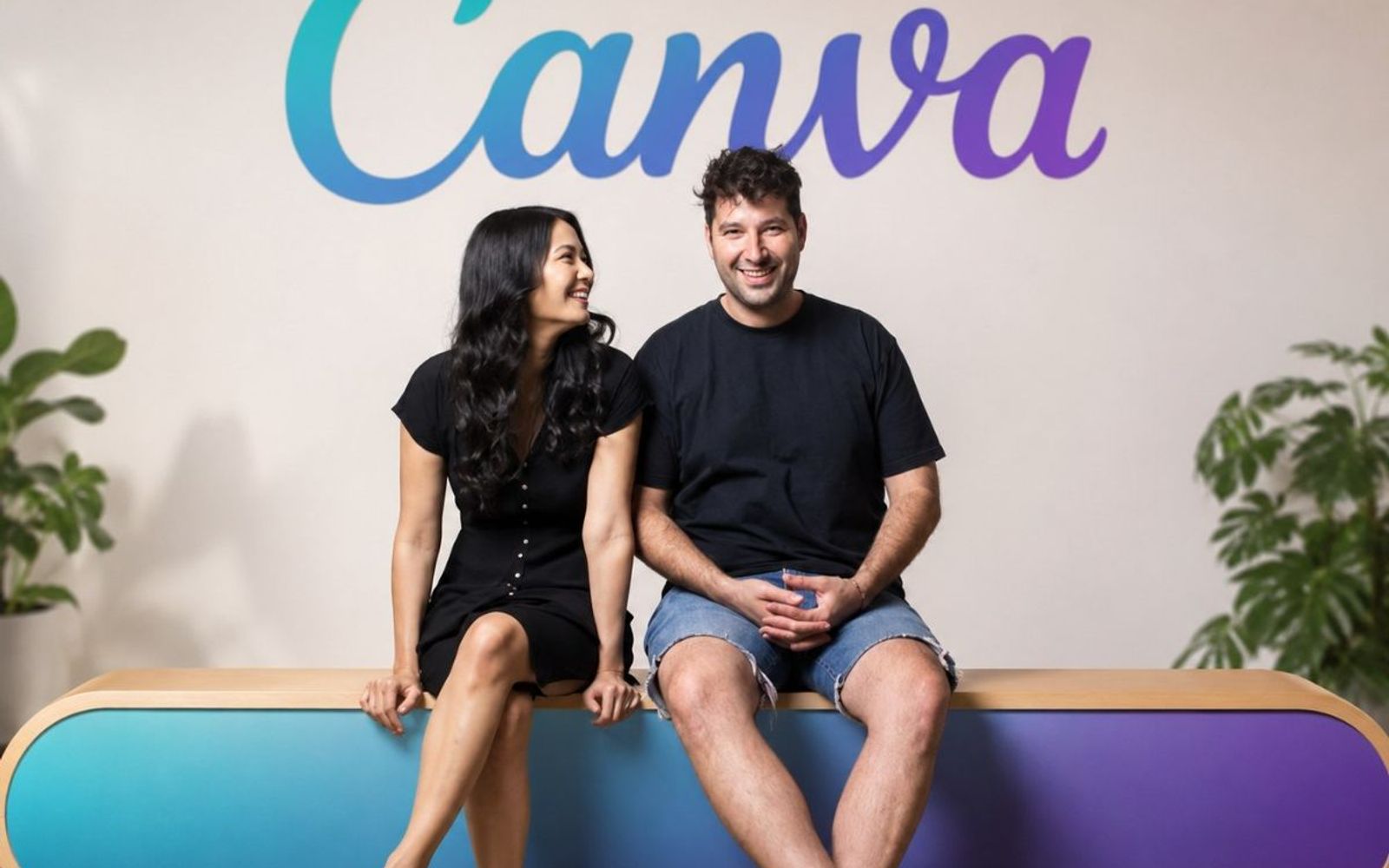
In Malawi's Khongoni pilot area, 90% of people receiving unconditional cash payments rose above the extreme poverty line within three months. Child mortality in the program fell 48%. School enrollment rose 23%. Those numbers are coming out of a $150 million commitment from Melanie Perkins and Cliff Obrecht, the married co-founders of Australian design software giant Canva, who have spent the past five years quietly funding one of the largest experiments in direct cash giving ever attempted in a low-income country.
The Number That's Actually Making News
Results like these are rare in development economics, where interventions typically move poverty indicators by single-digit percentages over years, not by double digits over months. GiveDirectly, the nonprofit running the program in partnership with Perkins and Obrecht's Canva Foundation, reported the 90% poverty-line figure from its Khongoni pilot zone, alongside the 48% drop in child mortality and 27% reduction in illness. Those are the kind of numbers that would ordinarily headline a major public health intervention, not a cash-only program with no conditions attached to how recipients spend the money.
That's precisely what's driving renewed attention to a commitment that, on paper, isn't brand new. It's the scale of verified outcomes now attached to it that's turning heads.
What's Actually Being Given, and When
The $150 million figure breaks down into two distinct commitments. Perkins and Obrecht gave an initial $50 million between 2021 and 2023 to get the Malawi program off the ground. In October 2025, they added a $100 million anchor pledge, the largest single donation in GiveDirectly's history. As of mid-2026, roughly $52.5 million has actually reached Malawians, delivered to more than 139,000 people, with the remainder flowing over the next four years.
The next phase moves from pilot-scale testing to district-wide rollout, starting in Chiradzulu, with a target of reaching 185,000 people by early 2027. Each adult in the program receives approximately $550, delivered directly via mobile phone payments rather than through vouchers, food aid, or any intermediary deciding how the money should be spent.
How GiveDirectly's Cash Transfer Model Actually Works
GiveDirectly's core bet is straightforward and, within traditional development circles, still somewhat controversial: give poor people cash with no strings attached, and trust them to know their own needs better than an aid organization does. No vocational training requirement, no proof-of-purchase for approved goods, no monitoring of how funds get spent. Recipients decide for themselves, whether that means food, medicine, school fees, home repairs, or starting a small business.
The Malawi program is also structured as a live research experiment, not just a giving campaign. It's specifically designed, in coordination with the Malawi government, to test which additional measures, technical assistance, community grants, or other support layered on top of the cash, actually improve outcomes beyond what the cash transfers achieve on their own. That distinction matters: this isn't just a large donation, it's Perkins and Obrecht funding an attempt to generate real evidence about what works in extreme poverty reduction, at a scale few private donors have ever attempted.
From 100 Rejections to a $42 Billion Company
The money behind this experiment has an origin story worth understanding on its own terms. Perkins pitched Canva to more than 100 venture capital investors, all of whom passed, before she and Obrecht finally raised their first round in 2013 and launched the company in Sydney. Canva has since grown into one of the most valuable private technology companies in the world, with roughly 260 million users and about $3.5 billion in annualized revenue. An employee share sale in 2025 valued the company at $42 billion, and an IPO is widely expected in the coming years.
Perkins has been candid about what drives the giving rather than treating it as a routine corporate talking point. "If the whole thing were about building wealth, that would be the most uninspiring thing I could possibly imagine," she's said publicly. That framing runs through how the couple has approached wealth more broadly. Obrecht, for his part, has become something of a minor legend for proposing to Perkins with a $30 ring while the two were traveling in Turkey, a detail that's stuck around in profiles of the couple precisely because it's such a contrast to how most newly minted billionaires tend to present themselves. The couple signed the Giving Pledge in 2021, the same framework used by Warren Buffett and Bill and Melinda Gates, committing the majority of their fortune to philanthropy rather than personal accumulation. Unlike many Giving Pledge signatories, though, Perkins and Obrecht have leaned more heavily on evidence-driven giving than on traditional gala-and-foundation philanthropy, the Malawi cash transfer program being the clearest example of that instinct in practice.
The Debate Underneath: Does Cash Actually Work Better Than Traditional Aid?
The scale of this commitment adds real weight to a long-running argument in development economics over whether direct cash transfers outperform traditional aid models, food distribution, infrastructure projects, skills training, that route resources through intermediary organizations. Critics of unconditional cash transfers have historically worried that money without guidance gets spent on the wrong things, or that markets in poor regions can't absorb sudden cash inflows without driving up local prices.
The early Khongoni results, if they hold up at district-wide scale, push hard against that skepticism. A 90% poverty-line exit rate within three months, alongside meaningful drops in child mortality and illness, is difficult to explain away as noise. What's still genuinely uncertain is whether those results generalize once the program expands from a closely monitored pilot zone to nearly 200,000 people across a full district, which is exactly the question the current phase in Chiradzulu is designed to answer.
The Bigger Plan: Giving Away 30% of a $42 Billion Company
Malawi is one piece of a much larger commitment. Back in 2021, Perkins and Obrecht outlined what they've called a "Two Step Plan" for Canva: first, build one of the most valuable companies in the world, and second, "do the most good we can" with it. That second step involves eventually giving away 30% of Canva's equity through the Canva Foundation, alongside a pledge to donate 1% of the company's equity, profits, employee time, and product annually.
That broader giving has already produced real numbers beyond Malawi. Canva says it has donated more than $2.5 billion in product value to students, teachers, and over a million nonprofits worldwide. And on July 16, 2026, the couple launched a new initiative called the Global Goals Platform, funded through the Canva Foundation, designed to survey citizens globally about the changes they most want to see in the world, an early step toward figuring out how to deploy the rest of that 30% equity pledge as thoughtfully as possible.
What Comes Next in Malawi
The immediate milestone to watch is the Chiradzulu rollout, which will test whether the pilot's dramatic early results can hold at nearly ten times the scale. If the district-wide numbers land anywhere close to the Khongoni pilot's, it would represent one of the strongest empirical cases yet for unconditional cash transfers as a serious tool against extreme poverty, not just a feel-good funding model.
For now, what's confirmed is a genuinely large financial commitment, a rigorous research design built in partnership with Malawi's own government, and early results strong enough to reopen a debate that development economists have been having for decades. Whether $150 million from two tech billionaires ends up reshaping how the aid world thinks about giving cash directly to the poor will depend less on the size of the check and more on what the next 185,000 recipients' outcomes actually show.
Frequently Asked Questions
How much have Canva's founders actually given to Malawi so far
Roughly $52.5 million of the total $150 million commitment has been delivered as of mid-2026, reaching more than 139,000 people. The rest is scheduled to flow over the next four years.
What were the early results of the cash transfer program?
In the Khongoni pilot area, 90% of recipients rose above the extreme poverty line within three months. GiveDirectly also reported a 48% drop in child mortality, a 27% reduction in illness, and a 23% increase in school enrollment.
How much money does each person actually receive?
Approximately $550 per adult, delivered directly via mobile phone payments with no conditions on how it's spent.
Who runs the program on the ground?
GiveDirectly, a nonprofit specializing in unconditional cash transfers, runs the program in partnership with the Canva Foundation and in coordination with the Malawi government.
Is this a new commitment from Perkins and Obrecht?
No. It combines an original $50 million given between 2021 and 2023 with a $100 million anchor pledge made in October 2025, the largest single gift in GiveDirectly's history. Renewed coverage in mid-2026 reflects fresh reporting on outcomes, not a new pledge.
How does this fit into Canva's broader philanthropic plans?
Perkins and Obrecht have pledged to eventually give away 30% of Canva's equity through the Canva Foundation, alongside an annual pledge of 1% of the company's equity, profits, employee time, and product. The Malawi program is one part of that broader commitment.
Comments (0)
No comments yet. Be the first to share your thoughts.