Why Doing Nothing Is Your Best Productivity Tool
The neuroscience of why unfocused time is the most productive part of your day and how to reclaim it.

This week, the United States and Iraq announced the end of a 23-year military mission. By September, all remaining troops will withdraw. It was not a pivot, a rebranding, or an escalation, according to the terms confirmed by officials in Washington and Baghdad. It was an ending, plain and precise, and there is something worth studying in the quiet finality of that decision.
Productivity culture has spent the last century convincing us that the only way forward is more. More hours worked, more tasks checked, more inputs consumed. The Taylorist time and motion studies of the early 1900s turned factory efficiency into a moral philosophy, and that philosophy now governs white-collar work with the same relentless logic. Every idle moment is treated as leakage. Every gap in the calendar is something to fill.
The Brain's Hidden Work
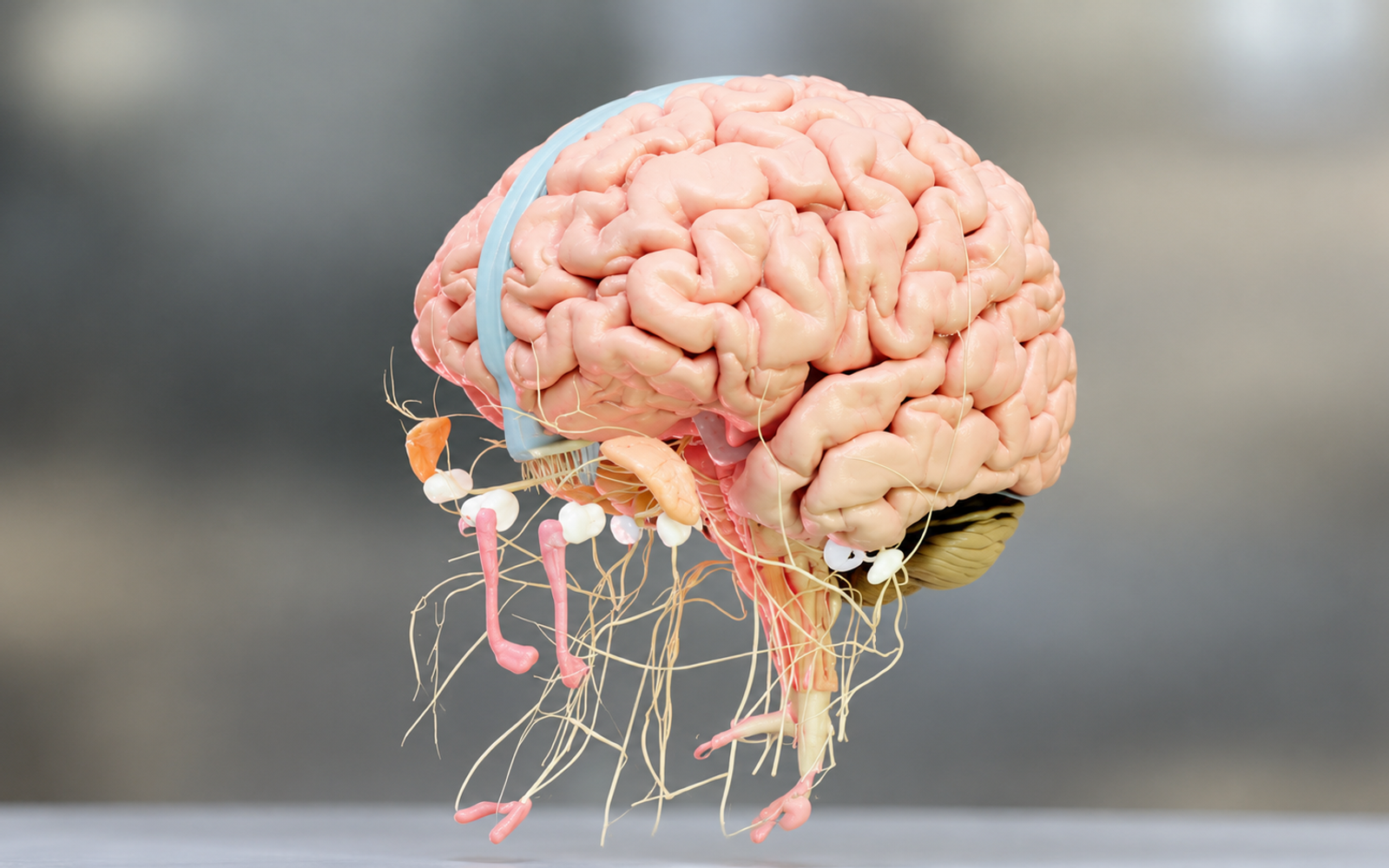
What the productivity optimizers have missed is that the brain never actually stops working. A Harvard Health article on what researchers call the default mode network shows that the brain's unfocus network consumes more energy than any other system in the brain, about 20 percent of the body's total energy budget. When you think you are doing nothing, your brain is doing something essential.
The default mode network activates precisely when you stop directing your attention toward a specific task. It is responsible for self-reflection, memory consolidation, creative problem-solving, and emotional regulation. It connects disparate pieces of information that your focused mind never puts together. The breakthrough idea in the shower, the solution that arrives during a walk, the insight that surfaces while staring out a window, these are not happy accidents. They are the DMN doing its job.
The Vanishing Art of Idleness
A recent Guardian piece on the art of idling explored how modern life has systematically eliminated the conditions for unstructured time. Boredom, the article argued, triggers a neural search for stimulation, and that search process is where creative connections happen. When you reach for your phone during every gap, you short-circuit the search before it can deliver anything useful.
The numbers are stark. In 1938, the average person spent roughly 47 minutes per day doing nothing. By 2026, that figure has almost vanished. The lost idle minutes were never truly idle. They were the incubation periods where problems got solved without effort and where the brain consolidated the day's learning into long-term memory.
Why Strategic Withdrawal Works
This is where the news from Iraq offers a useful lens. The decision to end a mission that lasted 23 years was not an admission of failure. It was a recognition that continuing was no longer the right answer. Strategic withdrawal, applied to productivity, means treating unfocused time as a legitimate part of the work day rather than a leak to be plugged.
Every productivity system that ignores the brain's need for unfocused rest is working against the organ it claims to optimize. The productivity trap is not that you have the wrong app or the wrong calendar system. It is that you have accepted the premise that every moment must produce something measurable. The premise is false.
The Minimum Viable Practice
The most evidence-backed way to reclaim unfocused time requires no app, no subscription, and no training. Schedule one 20-minute block each day with no input whatsoever. No phone, no book, no podcast, no music, no conversation. Just sitting. A window helps, but a blank wall works just as well. The discomfort you feel in the first few sessions is the DMN warming up after years of neglect.
The resistance will be loud. The brain will demand stimulation the way a caffeine drinker demands the morning cup. That is the point. After two weeks, the resistance softens. After a month, you notice that the best ideas of the day arrive during these gaps, not during the focused work blocks you have optimized so carefully.
This is not laziness dressed as philosophy. It is respect for the brain's actual architecture. The Guardian's coverage of the default mode network described it as the brain's background mode, the system that switches on when you stop directing attention. Archimedes had his eureka moment in a bath, not a boardroom, for a reason. The bath was the condition, not the distraction.
The Uncomfortable Truth
The deepest resistance to doing nothing is not practical. It is emotional. Idle time forces you to sit with your own thoughts, and for many people, that is genuinely uncomfortable. The phone is not just a distraction. It is an escape from the quiet where doubts, regrets, and unresolved questions live. But those doubts and questions are precisely what the DMN processes. Avoiding them does not make them go away. It just delays the processing.
A 23-year mission in Iraq is ending because the calculus changed. The occupation no longer served the purpose it was designed for. Your personal productivity system may be in the same position. The relentless optimization of every waking hour served a purpose once, but it has outlived its usefulness. Ending it is not failure. It is the most productive thing you can do.
Frequently Asked Questions
What is the default mode network and why does it matter for productivity?
The default mode network is a system of connected brain areas that activates when you are not focused on a specific task. It handles creative problem-solving, memory consolidation, and self-reflection, making it essential for sustained productivity and innovation.
How much time should I spend doing nothing each day?
Research suggests that 20 minutes of completely unstructured time with no input from devices or conversation is enough to activate the default mode network. Consistency matters more than duration.
Does listening to music or a podcast count as doing nothing?
No. Any form of directed input keeps your brain's attention networks engaged and prevents the default mode network from activating. True unfocused time requires no external stimulation.
Why does doing nothing feel so uncomfortable at first?
Your brain has become conditioned to constant stimulation and will initially resist the lack of input. The discomfort is a withdrawal symptom that typically fades after one to two weeks of consistent practice.
Can I practice unfocused time while walking or doing household chores?
Low-automatic activities like walking without headphones or washing dishes without distraction can support default mode network activation, as long as the activity requires minimal conscious attention.
Comments (0)
No comments yet. Be the first to share your thoughts.