
The €2.95 Billion Question: Europe's Antitrust Hammer Hits Big Tech's Data Machine
EU fines Google €2.95B for ad tech abuse. Meta faces twin battles in DC and Rome over WhatsApp. What 2026 holds.

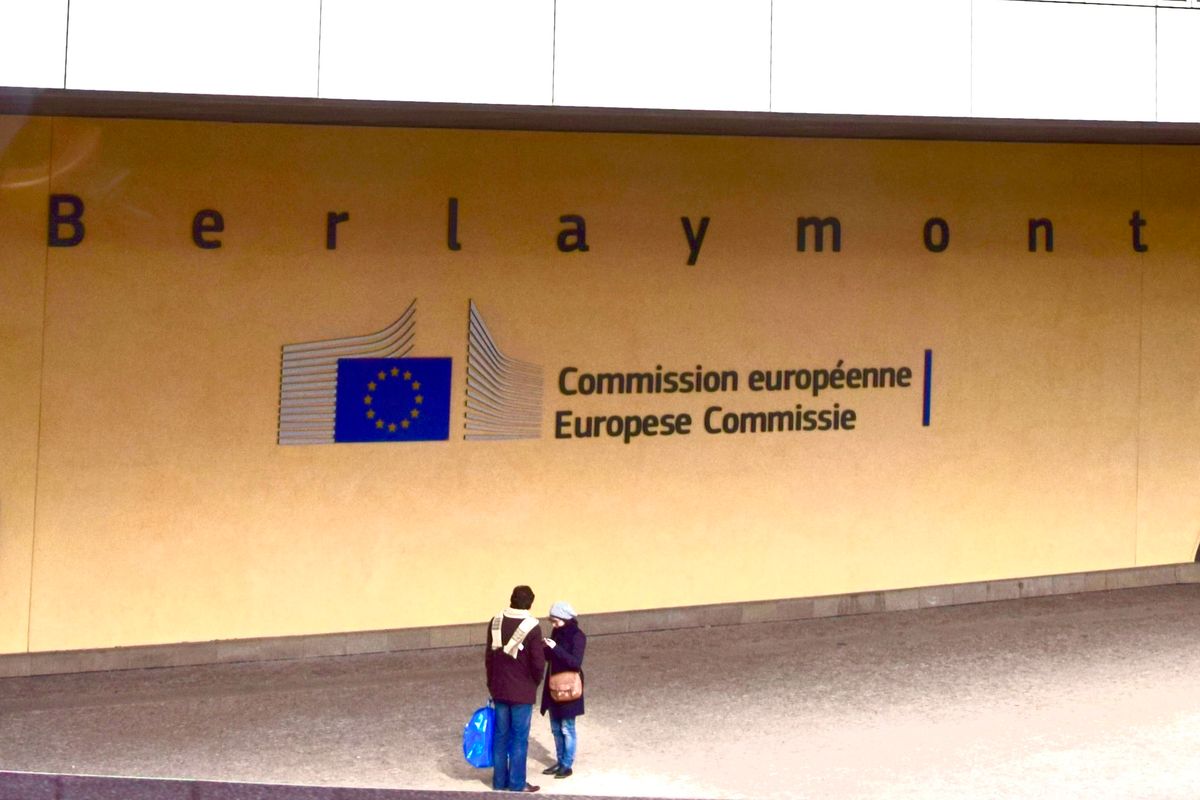
The European Commission's fine landed in September with a number that still rattles boardrooms: €2.95 billion. That's roughly $3.19 billion. The charge was straightforward in its legal framing and devastating in its implication. Google abused its dominant position in the online advertising technology sector. The company favored its own ad exchange, its own publisher tools, its own demand-side platform. It built the stadium, fielded both teams, sold the tickets, and kept the scoreboard to itself. The fine from Wilson Sonsini's 2026 Antitrust Year in Preview is the single largest penalty the EC has ever levied for ad tech misconduct. And it's only one front in a war that now spans continents, chat apps, and the very architecture of how machines buy and sell attention.
The Machine That Ate Digital Advertising
The advertising technology stack that Google built is not a product. It's a circulatory system. When an independent publisher loads a web page and a global brand wants to place an ad there, the decision to match them happens in milliseconds inside Google's infrastructure. The company controls the supply side (Google Ad Manager), the demand side (Google Ads and DV360), and the exchange that sits between them (AdX). The European Commission concluded that this vertical integration let Google rig the auction. It gave preferential treatment to its own exchange, charged competitors higher fees, and kept the spread between what advertisers paid and what publishers received wider than it should have been.
The mechanics matter here. Every time an ad auction runs, Google's systems collect bid data from competitors and then use that data to undercut them in the next auction round. It's like playing poker with someone who can see your cards after every hand, then adjusts their strategy before the next deal. The EC's investigation found that Google had been doing this since at least 2014. That's eleven years of tilted auctions. Eleven years of independent digital publishers worldwide earning less than they should have because the auction floor was never level.
Meta faces a different kind of pressure. Not over auctions, but over access. In late December 2024, the Italian Competition Authority ordered the company to suspend terms that excluded competing AI chatbots from WhatsApp. The logic is elegant in its brutality. WhatsApp holds over two billion users worldwide. If Meta uses that user base to train its AI models while blocking competitors like Anthropic, Cohere, or independent third-party developers from accessing similar distribution, it's not competing on merit. It's competing on moat width. The Italian authority saw this as an abuse of WhatsApp's market power in the messaging space to create an unfair advantage in the AI space. Two markets. One data pipeline. Zero room for rivals.
Two Continents, One Playbook
The United States is running a parallel experiment. The Federal Trade Commission's case against Meta over its acquisitions of Instagram and WhatsApp finally began in 2025. This is the case that asks a question regulators have ducked for a decade: Did Meta buy Instagram and WhatsApp not because they were good products, but because they were existential threats? The argument goes that Mark Zuckerberg saw photo-sharing and messaging as the next battlegrounds for social attention and decided to purchase rather than compete. The FTC wants to unwind those deals. If it succeeds, Instagram and WhatsApp would become independent companies again. That would reshape the social media landscape more dramatically than any regulation passed in the last twenty years.
The timing matters. Both the US and European cases are moving forward in parallel, and they share a common intellectual thread. They're not about traditional monopoly behavior like price-fixing or output restrictions. They're about data accumulation as a form of market power. Google hoards ad transaction data. Meta hoards social graph data and messaging metadata. Both companies then use that data to train AI systems that further entrench their positions. It's a flywheel that spins faster every quarter. The only way to slow it, regulators are increasingly convinced, is to break the data loops.
This has direct consequences for software markets worldwide. The Tech HQ report on US antitrust pressure notes that the outcomes of these cases will dictate interoperability and data access rules across every major digital economy. If dominant tech gatekeepers are legally required to open their communication channels and ad exchanges, independent software developers and regional tech ecosystems gain a viable path to compete without paying punitive toll fees to platform incumbents.
The AI Angle Nobody's Talking About
The Italian Competition Authority's order against Meta for WhatsApp's AI chatbot exclusion is a signal. It points to the next phase of antitrust enforcement. The first phase was about search and advertising (Google). The second phase was about social networking and acquisitions (Meta). The third phase will be about training data and foundation models.
Here's the technical constraint. Large language models require enormous datasets. The best datasets are conversational: real human dialogue, not curated text from Wikipedia or books. WhatsApp generates more conversational data in a single day than most AI labs collect in a year. If Meta can use that data exclusively for its own models while barring competitors from accessing similar data through the platform, it creates an AI moat that no amount of venture capital can bridge. The Italian authority saw this and acted. Other European regulators are watching. The German Federal Cartel Office has already signaled interest in data access obligations for dominant platforms.
Consider the downstream impact on artificial intelligence development. Independent research labs and emerging foundation model startups do not have access to the proprietary telemetry and continuous user interaction data controlled by Meta or Google. They rely on public benchmarks and open-access repositories. If regulatory enforcement forces dominant platforms to open communication channels to competing AI agents, it levels a competitive landscape that has grown increasingly monopolistic. The Concurrences Tech Antitrust Conference scheduled for 2026 explicitly lists merger clearance, algorithmic collusion, and platform data access as its core themes, highlighting how global policy is pivoting toward structural interoperability.
The Liquidity Drain Nobody's Watching
There is a quieter corporate finance consequence embedded in all of this. The EU's €2.95 billion fine does not just penalize past misconduct; it fundamentally redirects corporate capital allocation. Fines collected by Brussels flow back into European Union and member state budgets, supporting public research and digital infrastructure funds. Google alone has faced over €8 billion in cumulative penalties across various European antitrust rulings over the last decade. While these sums do not exhaust a balance sheet with more than $110 billion in liquid cash, they alter the internal calculus of capital expenditure.
The structural compliance cost is where corporate priorities shift. Every billion dollars spent on regulatory defense, legal settlements, and mandatory platform re-engineering is capital diverted away from open research grants, developer ecosystem subsidies, and speculative infrastructure projects. Platform operators are forced to prioritize defensive legal containment over expansive platform investments. This does not excuse anticompetitive market manipulation, but it illustrates a decisive transition: the era of frictionless, unpoliced platform expansion is over, replaced by an adversarial regulatory environment where compliance defines software architecture.
What 2026 Actually Looks Like
The Wilson Sonsini preview makes clear that Big Tech antitrust is not slowing down. The US Department of Justice and FTC have both designated tech enforcement as a top priority for 2026. The European Commission has signaled that its Digital Markets Act is just the beginning, not the end. The Italian Competition Authority's WhatsApp order is likely to be replicated by other member states. And the cases already in motion, Google's ad tech fine, the Meta acquisition challenges, the AI data access disputes, will take years to resolve.
Appeals will drag on. Google has already announced its intention to challenge the €2.95 billion fine. The FTC's case against Meta's Instagram and WhatsApp acquisitions could take until 2027 or 2028 to reach a final ruling. The Italian WhatsApp order is currently under review. None of these cases will produce clean, immediate resolutions. What they will produce is uncertainty. And uncertainty is, for the moment, the most effective check on Big Tech's expansion instinct.
Software companies do not know what proprietary data they will be permitted to keep exclusive. They do not know which acquisitions will be challenged under revised merger guidelines. They do not know whether remedies imposed in Brussels, Washington, or Rome will compel reciprocal operational changes globally. That regulatory friction slows aggressive corporate acquisitions and forces platforms to tread carefully, creating vital breathing room for independent software builders, open-source AI researchers, and mid-market challengers worldwide.
The Kicker
A final note on the physics of enforcement. Antitrust cases move at the speed of law. Technology moves at the speed of inference. By the time the Google ad tech fine is fully adjudicated, the advertising industry may have already shifted to AI-native systems that look nothing like the ad exchanges of 2014. By the time the Meta acquisition case concludes, the competitive landscape for social platforms may be unrecognizable. The regulators are fighting the last war while the industry builds the next one. That's not an argument against enforcement. It's an argument for faster enforcement. The data advantage that Big Tech holds today compounds daily. Every day that passes without a remedy is a day the moat gets deeper. The question for 2026 is not whether the fines are large enough. It's whether they arrive before the moat becomes uncrossable.
Comments (0)
No comments yet. Be the first to share your thoughts.