Cheap Prebiotic Fibre Beats the Brain Supplement Aisle
A twin trial found cheap prebiotic fibre nudged memory scores up. The evidence is narrower than the aisle implies.

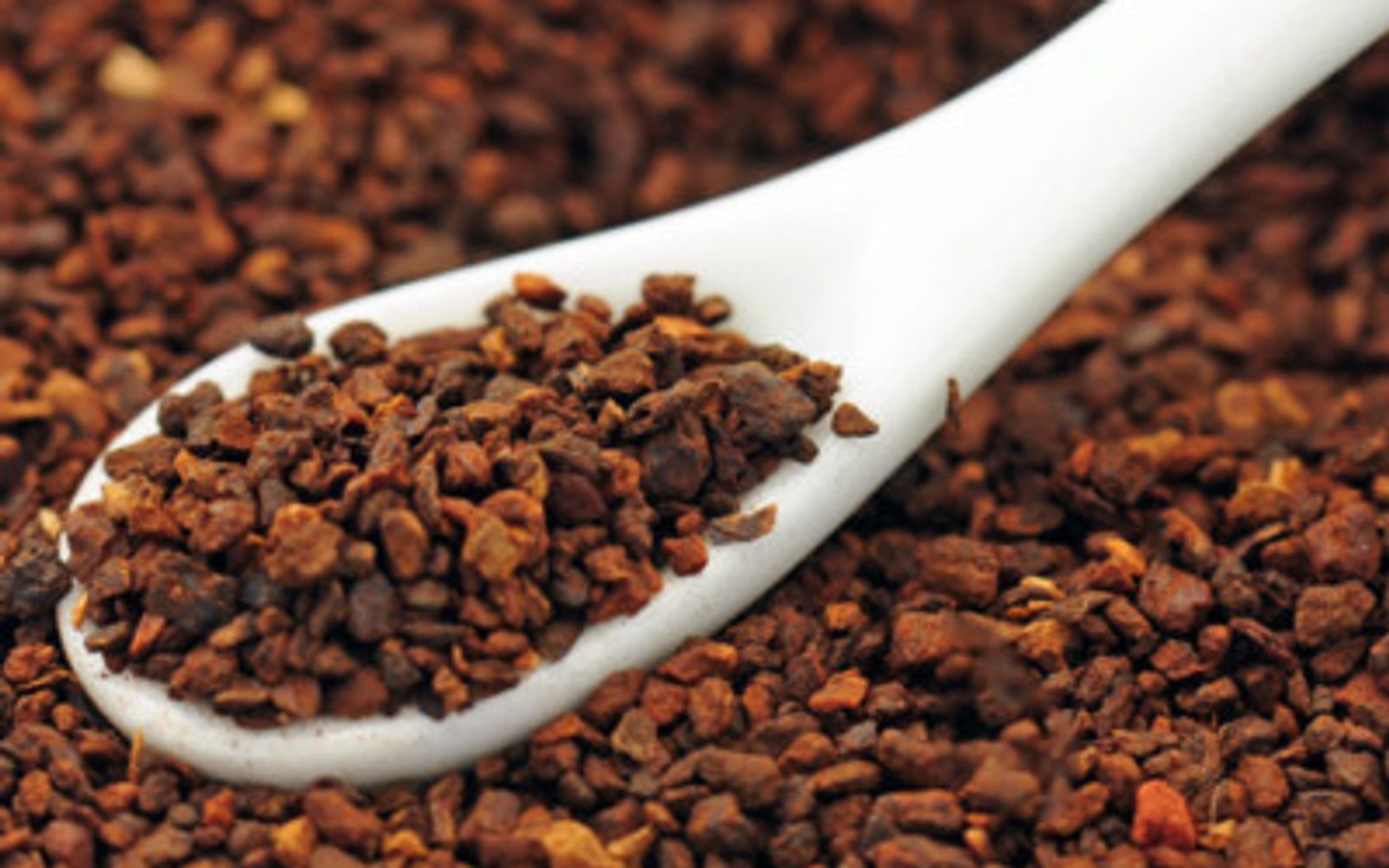
Walk into a pharmacy almost anywhere and you'll find two versions of the same idea within a metre of each other. One is a plain tub of inulin or chicory root powder with almost nothing printed on the front. The other is a glossy box with a brain on the label and a serving price several times higher, and it's the one that moves. The evidence, read closely, points at the boring tub.
- 1The trial: In 36 pairs of twins over 60, the twin taking 7.5 grams of inulin and FOS daily scored higher on memory tests after 12 weeks than the twin taking a placebo.
- 2The limit: The same fibre produced no improvement in chair rise time, which makes it a narrow gut signal rather than a general anti ageing tonic.
- 3The purchase: Plain inulin powder costs a fraction of a branded brain supplement, and the published evidence supports the powder, not the branding.
What the Twin Trial Actually Measured
The trial behind the claims is worth reading properly, because the design is unusually clean. Researchers at King's College London recruited 36 pairs of twins aged 60 and over from the TwinsUK registry and randomised each pair so that one twin took a prebiotic and the other a placebo for 12 weeks. Neither the twins nor the assessors knew who had which. Because every participant had a genetically matched sibling in the opposite arm, genes and shared upbringing dropped out of the comparison.
The supplement was 7.5 grams of inulin and fructooligosaccharides, the fibre extracted from chicory root and sold cheaply in most markets. The trial reported in Nature Communications in March 2024, and it gave every participant resistance exercise plus a branched chain amino acid supplement, a detail that matters shortly. After 12 weeks the prebiotic group carried more Bifidobacterium in their guts and scored higher on a computer based cognitive battery, including a visual memory test used to flag early signs of Alzheimer's disease.
The numbers are modest. The cognitive factor score improved with a beta of -0.482, a 95% confidence interval of -0.813 to -0.141, and a p value of 0.014. That's a real signal in a small sample. Geriatrician Claire Steves, one of the senior authors, put the appeal plainly: "These plant fibers, which are cheap and available over the counter, could benefit a wide group of people in these cash-strapped times."
The Null Result That Keeps It Honest
The most informative figure in the study is the one that didn't make headlines. Chair rise time, the physical function test the team set as its primary outcome, showed no difference between groups, with a beta of 0.579 and a confidence interval straddling zero. Thirty six pairs of twins, three months of daily fibre, and no measurable change in how fast a person stands up from a chair.
That null separates a plausible mechanism from a wellness claim. If prebiotics worked by broadly dampening inflammation across every ageing system, the legs should have improved too. Cognition moving while strength stayed flat suggests something narrower, probably microbial metabolites acting along a gut to brain route that never touches muscle protein synthesis. It also means the fibre is an addition to a programme rather than a substitute for one, since every participant was already lifting and already taking protein.
I'd read the study more conservatively than most coverage did. A supplement that misses its primary outcome and wins on a secondary one is a hypothesis with an encouraging first result, not a proven cognitive aid. The memory finding justifies the next trial. It doesn't justify a shelf of products priced on the back of it.
Fourteen Trials, Two of Them Prebiotic
The case around that shelf got stronger in September 2026, when a systematic review and meta analysis led by researchers including Mary Ni Lochlainn appeared in Age and Ageing. The team pooled 14 studies of adults over 60, 13 of them randomised controlled trials. Nine reported significant improvement in at least one cognitive domain, and a subgroup meta analysis found global cognition scores rising by 1.28 points, with a 95% confidence interval of 0.15 to 2.40.
Two of those 14 tested prebiotics. Ten tested probiotics and two tested synbiotics, which means the cheapest and most shelf stable option in the category is also the least studied. The fibre with the smallest evidence base in the review is the one that produced the result that travelled around the world, and it did so on roughly one seventh of the trial volume behind the fermented products.
The 1.28 points is smaller than it sounds. The review doesn't name the instrument behind the pooled figure, but the global cognition scales used across this literature, the MMSE and the MoCA, both run to 30 points, so 1.28 is about four per cent of the range. That's a population level nudge, well inside the band where two people would both be classed as cognitively normal.
The same week brought a different sort of claim. A randomised trial of 50 middle aged adults with obesity, led by the University of Oklahoma and published in JAMA Network Open, reported that four weeks of urolithin A increased blood flow to the brain during a demanding memory task. That's a mechanism finding from a short, small study, and mechanism findings get converted into packaging years before anyone knows whether they move a test score.
What the Dutch Trial Will Settle
PRECODE, run by Wageningen University, is the study to watch. It randomised 164 adults aged 60 to 79 with subjective cognitive decline and at least one modifiable risk factor into four arms: chicory inulin, resistant dextrin, seaweed polysaccharide, or a maltodextrin placebo. Participants take their fibre twice a day for 26 weeks, stirred into water, tea or coffee, and the primary outcome is brain activation during a working memory task measured with functional MRI rather than a score on a screen.
The design was published in Frontiers in Nutrition in April 2026, and baseline measurements were completed on 151 volunteers averaging 69.4 years old, with results expected in 2027. Work through the exposure and the scale of the upgrade becomes obvious. The twin trial generated 864 participant weeks, 72 people over 12 weeks. PRECODE should generate roughly 4,264, or 164 people over 26 weeks, about five times the exposure in a population whose cognition is already slipping.
What changes is the design. The twin trial was built to test muscle function and found cognition by accident. PRECODE is built to test cognition, in a higher risk group, with imaging instead of questionnaires. If the effect survives that, a cheap daily fibre moves from interesting to defensible. If it evaporates in 2027, the 2024 headlines will be what they always were, a secondary outcome in a 72 person study.
What to Do With a Cheap Tub of Fibre
The practical move doesn't need to wait for the Dutch results, because the downside is small and the cost is trivial. Plain inulin or chicory root powder, unflavoured, is the same ingredient at the same 7.5 gram dose, and it costs a fraction of the branded version. Build up over two or three weeks rather than starting at a full scoop, since gas and bloating are the standard complaint when gut bacteria meet a new substrate in bulk. Take it with food.
There's a hierarchy question worth stating plainly. A prebiotic is a marginal input competing with other marginal inputs for the same twenty seconds of daily attention, and the strongest evidence in that group belongs to sleep regularity. A study of 23,000 adults found that steady bed and wake times tracked more closely with health outcomes than total hours slept, and the effect sizes there are larger than a 1.28 point shift on a cognition scale. If only one habit changes this month, fibre isn't it.
The other hierarchy point is that prevention attracts spending where it feels like action. A panel of blood tests, a scan, a monthly subscription all create the sensation of having intervened, which is why paying for the test so often replaces the boring input the test was meant to measure. The intervention with the weakest commercial story, a cheap fibre and a fixed bedtime, is usually the one with the best trial behind it.
What makes the fibre story worth taking seriously is how unglamorous it is. A 7.5 gram scoop of chicory root, a tub with no claims on the front, a randomised twin as the control, and a follow up trial that will either confirm the result or quietly retire it. Buy the plain one, take it for six months, and read the rest of the aisle as what it is, a shelf of products priced on research that hasn't finished.
Comments (0)
No comments yet. Be the first to share your thoughts.