Inside the IMAX Projector Deal Reshaping Global Cinema
IMAX made a 69 percent margin by selling the screen itself. Its 2027 slate of 70mm prints shows why scarcity still sells.

On February 19, 2027, a film that first opened in 1977 will play again in a small number of cinemas, on 70mm prints struck for IMAX screens. Lucasfilm has confirmed the 50th anniversary rerelease of the original Star Wars in that format, the first official IMAX 70mm outing in the franchise's history. Fans will read it as nostalgia and exhibitors will read it as a tentpole. What it actually is, once you take the anniversary framing away, is a manufacturing decision. A print is an object. It gets cut, shipped, handled, and threaded through a machine by someone who knows what they're doing. That object explains more about the film business in 2026 than any streaming chart.
The Print Is the Product Again
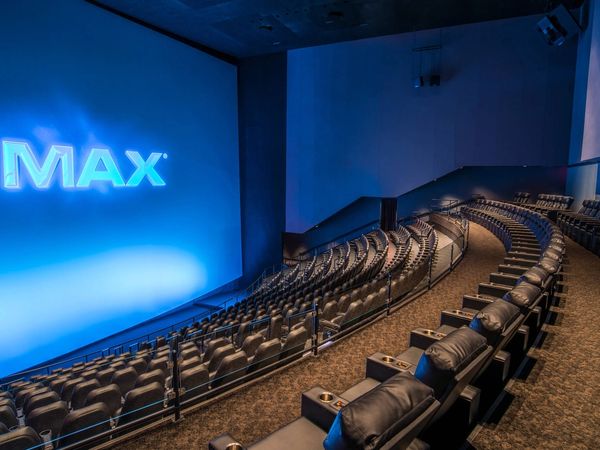
IMAX's slate for next year includes at least 12 titles filmed for the format and four releases with 70mm film prints, two of them Star Wars. Shawn Levy's Starfighter, with Ryan Gosling, was shot on IMAX-certified film cameras and will be converted to 70mm prints for a limited number of sites on May 28. Cinemark is adding three 70mm projection systems to its circuit, in the Chicago suburbs, Colorado Springs, and Rochester. Every one of those rooms is a bottleneck by design.
This is where the culture and the spreadsheet meet. A 70mm print can't be cloned onto a server, can't be screen-recorded cleanly, and can't be watched on a phone in bed. The constraints that make it inconvenient are the same constraints that make it worth money. There's a useful parallel in mechanical watchmaking, where hand-built movements outlasted quartz once accuracy stopped being the point of them.
The supply is deliberately small. Four print releases in a year isn't a plan for reaching everybody. It's a plan for making the people who do get in pay a premium, queue early, and describe the evening to everyone who didn't. Christopher Nolan's The Odyssey, the first theatrical release shot entirely in IMAX film, proved the demand side of that argument this summer, and the format's revival now has a receipts column to point at.
What a 69 Percent Margin Actually Measures
IMAX reported record third quarter results for 2026: revenue of $175 million, up 64% year over year, and adjusted EBITDA of $121 million at a 69% margin, up more than 20 percentage points from the same quarter in 2025. Research, development and administrative costs came in around $30 million.
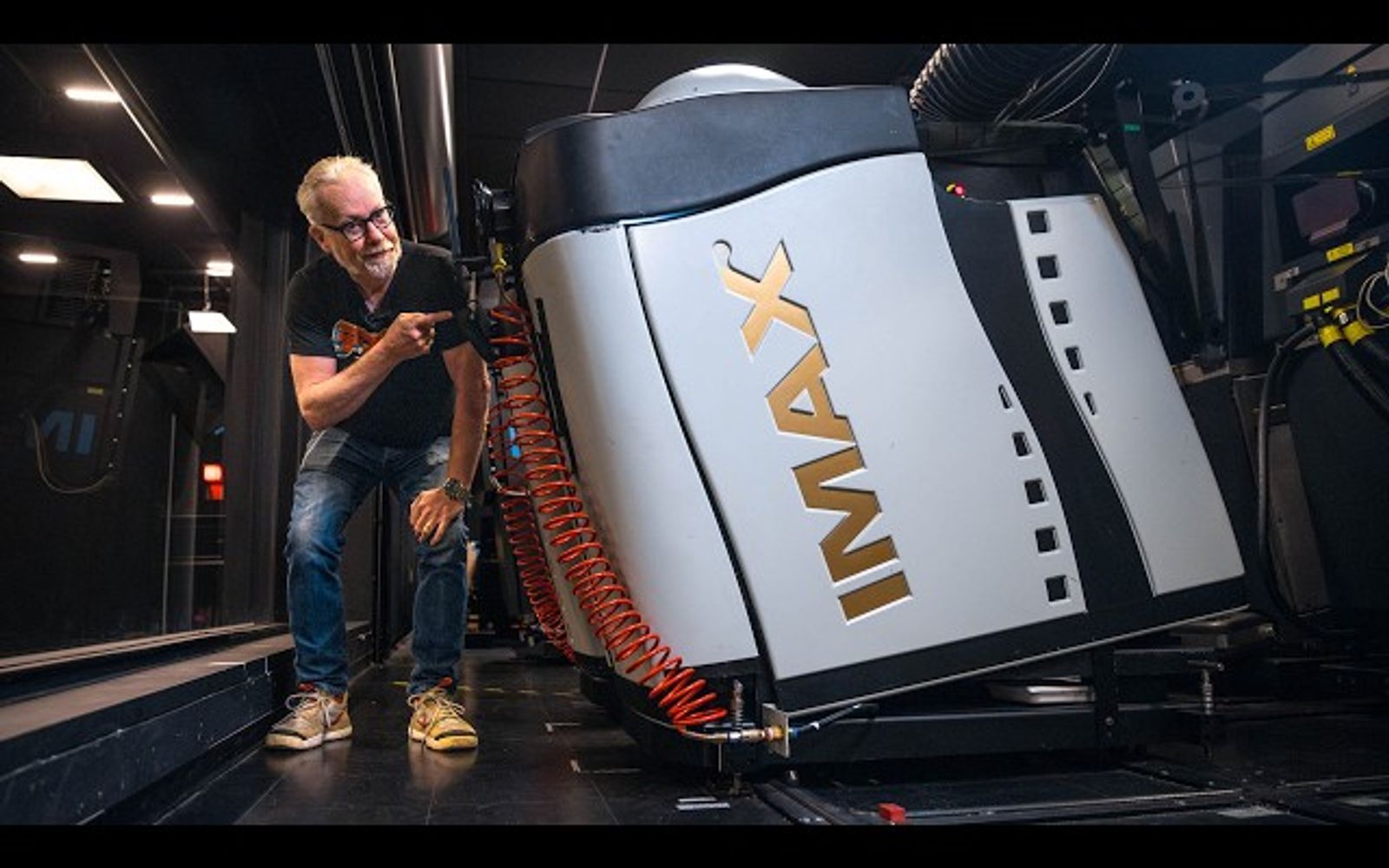
Do the division yourself and the shape of the business appears. Every dollar of operating cost carried roughly $5.80 of revenue in the quarter. Most exhibitors would trade a limb for that ratio and most of them can't approach it, because they own the buildings, the leases, the seats and the staff. IMAX owns the specification. Exhibitors buy the systems, install them, staff them, then hand over a slice of box office plus technology fees. IMAX's capital goes into projector design, not real estate.
Rich Gelfond, the company's chief executive, framed the cultural version of that case in the results announcement: "The record margins we generated in the quarter demonstrate the unique strength of our model, and the growing value of scarce events and experiences in an increasingly AI-driven world underscores a powerful opportunity for our business." Read it as investor language if you like. It's also a claim about what people will pay for when anything can be generated and nothing feels like an occasion.
Seven Percent of the Take From One Percent of the Screens
The quarter's global box office hit $712 million, nearly double the previous quarterly record, and handed IMAX a 6.7% share of worldwide box office on less than 1% of the world's screens. Domestic share reached 9.3%. Divide that $712 million across the 1,820 commercial multiplex systems installed as of September 30 and you get roughly $391,000 per system in three months, before a single new signing is counted.
The Odyssey carried most of it, becoming the highest-grossing IMAX release ever with more than $550 million on the format and close to a third of its worldwide gross coming from IMAX screens. That's the part of the model that can't be engineered into a spreadsheet, because it depends on a director treating the format as a condition of the work rather than a distribution add-on.
Geography matters just as much. Signings passed 100 systems year to date, 65% of them new locations, with growth weighted toward markets outside the United States. The company's own framing of the next few months leans on China, where the release of Avengers: Doomsday and the Chinese New Year corridor carry into 2027. Premium formats travel well because the audience for them isn't defined by language. A screen that's plainly better than the one at home sells in Jakarta and São Paulo for the same reasons it sells in Toronto.
Go Deeper
Why Rest No Longer Recovers YouThe Slate Bet and the Risk Underneath It
The 2027 calendar is stacked: The Batman Part II, Avengers: Secret Wars, Shrek 5, Spider-Man: Beyond the Spider-Verse, Sonic the Hedgehog 4, a Zelda adaptation, and those two Star Wars dates. For a company with a fixed network and near-flat operating costs, every additional hit drops almost straight to the margin line. The machine is built to convert a hit into cash with almost no friction.
The other version of the story has been true for a decade. IMAX doesn't control its content supply. It rents its upside from studios that decide what gets made, when it lands, and whether Beijing clears it. A weak summer or a delayed tentpole compresses the whole model, and a 69% margin produced by one extraordinary quarter is a peak rather than a floor. The nine-month margin sat at 55.6%, which is a strong number and a reminder that the headline figure arrived with The Odyssey attached.
Shares have gained roughly 27% over the past year, and the enthusiasm is rational on the numbers. It also prices in a slate the company can't fully see. That's the structural gamble of owning the screen instead of the story: you collect the margin when the story works and you sit in the empty auditorium when it doesn't.
Still, the shift points one direction. The projection booth, the room the industry spent two decades trying to automate out of existence, is now the most profitable square footage in the building. Print it at 15 perforations a frame and it gets more valuable, not less.
Comments (0)
No comments yet. Be the first to share your thoughts.