How to Read AMC and IMAX as Two Very Different Bets
AMC and IMAX both posted record quarters in 2026. What separates them is where the profit actually lands.

The number worth carrying out of this earnings season isn't a box office figure. It's this: IMAX reported $117.1 million in net income for the third quarter. AMC Entertainment, the biggest exhibitor on the planet with roughly 840 theatres and 9,500 screens, reported $109.3 million. IMAX got there on $175 million of revenue. AMC needed $1.71 billion, close to ten times as much, to arrive at the same place.
Both companies called the quarter a record, and both were telling the truth. AMC's second consecutive record-setting quarter landed on Nov. 4, and IMAX followed days later with the best three months in its history. What separates them isn't the top line or the enthusiasm in the press releases. It's what each company had to own, and pay for, to get the money through the door.
Two Record Quarters Built by Different Machines
AMC's growth is real and it is operational. Revenue rose 31.6% to $1.711 billion. Attendance came in near 75 million guests worldwide. Adjusted EBITDA nearly tripled to $347.5 million, and the margin on it expanded by more than 10 percentage points to 20.3%. Before this year, AMC's best revenue quarter was Q2 2019 and its best EBITDA quarter was Q4 2017. Both have now been beaten twice in six months.
The market share detail is the one to keep. U.S. admissions revenue grew 29.9% against an industry box office up 27%, so AMC took share rather than simply riding a wave. European attendance rose 41.5%, about 10 points ahead of the market in its own territories.
IMAX's quarter was a different animal. Revenue climbed 64% to $175 million, global box office on its screens hit a record $712 million, and the company converted 67 cents of every revenue dollar into net income. Its CFO, Natasha Fernandes, told analysts the results showed "the significant operating leverage and opportunity as we further expand the network and grow Imax box office," The Hollywood Reporter reported.
What AMC Is Actually Selling Now
Look at where the premium revenue comes from. Large-format and extra-large screens made up 8% of AMC's U.S. screen count in the quarter while contributing a far larger slice of admissions revenue. That ratio is the strategy in miniature. The chain doesn't need every seat filled. It needs the right 8% of seats filled at a premium, with a drink in the cupholder.
AMC and ODEON already run about 750 premium or enhanced auditoriums, and management has flagged room for 100 to 250 more over the next two to four years, largely funded by third-party capital. That's a clever way to grow a capital-heavy footprint without adding debt. It also means AMC doesn't own all of the upside in the rooms it builds.
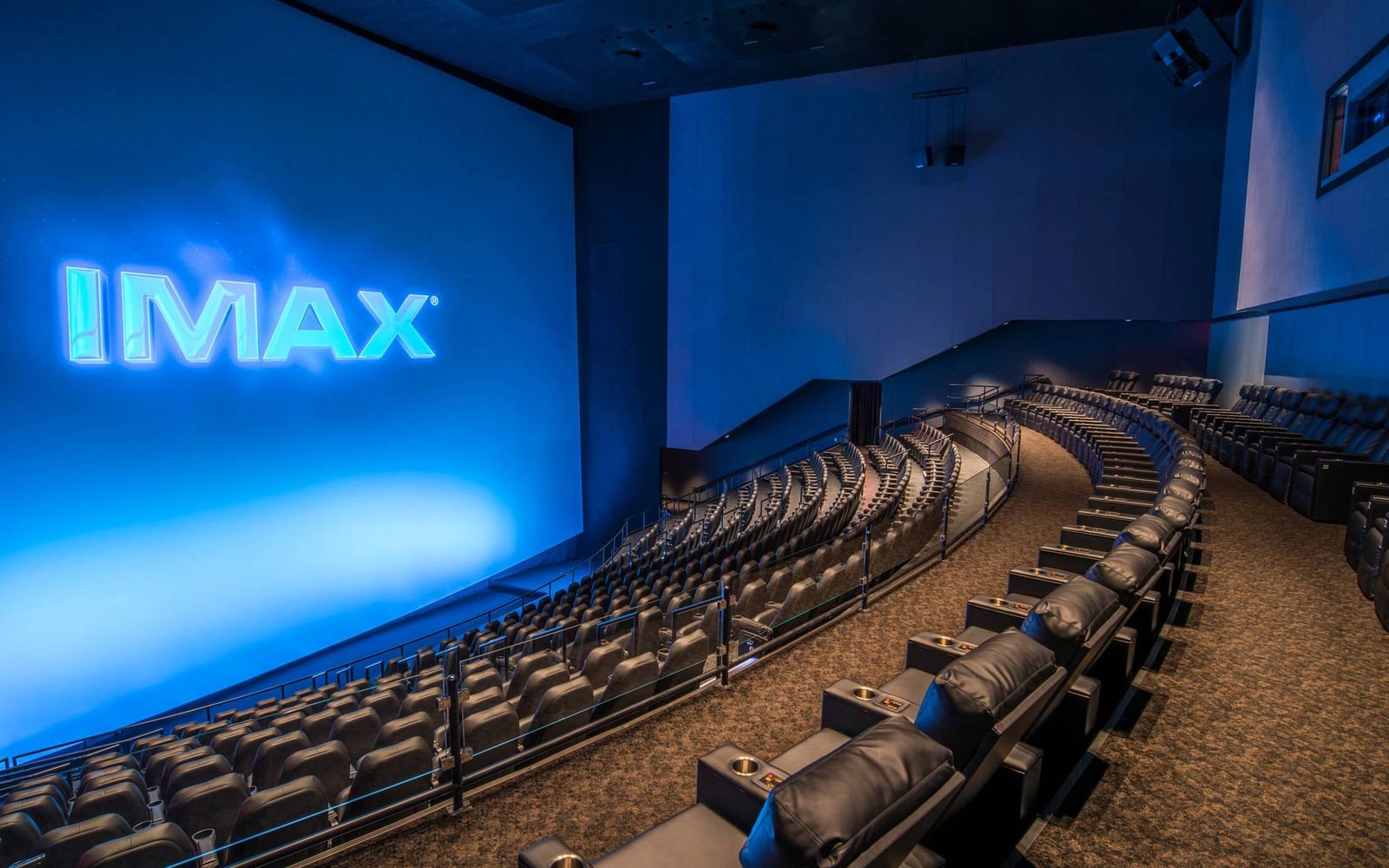
The IMAX piece of that plan is the reveal. AMC expanded its partnership to bring IMAX with Laser to more than 180 U.S. AMC locations, including 12 new sites and upgrades at 68 existing ones, the largest IMAX systems agreement in the country since 2018. So the largest exhibitor in the world is deliberately making a bigger share of its best real estate dependent on a supplier it also splits ticket revenue with. Premium physical capacity routed through a single licensor is a familiar shape, and vinyl pressing has the same geometry, right down to the one factory everybody needs.
The Debt Only Lives on One Balance Sheet
AMC finished September with $3.77 billion of long-term debt on the books and $751.9 million of cash. On Oct. 5 it completed a $3.97 billion refinancing covering roughly 97% of that debt, pushing maturities out to 2031 and 2033. That is genuine repair, and it buys room to keep spending on seats and screens instead of on creditors.
The nine-month picture shows how narrow the runway still is. AMC turned $4.35 billion of revenue into $124.7 million of free cash flow, a margin of about 2.9%. IMAX generated $86 million of operating cash in a single quarter on $175 million of revenue, near 49%. Put those two ratios side by side and the gap looks structural. IMAX spends on projectors it sells or leases and on cameras directors want. AMC spends on buildings, seats, leases, and the electric bill for 9,500 screens.
The Room Is the Product Now
Christopher Nolan shot The Odyssey entirely with IMAX film cameras, the first feature to do so. On IMAX screens alone it took more than $550 million worldwide, roughly 30% of a $1.8 billion global haul, making it the company's highest-grossing release ever and burying Avatar's $271 million on the format, Variety reported. That is what pricing power looks like when a director decides the format is the point.
Go Deeper
Content Farms: How Websites Turn Empty Words Into Millions (And What Google Does About Them)The choice matters more than the quarter does. A ticket to a normal screen buys a movie, and the movie turns up on a streaming service in eight weeks. A ticket to a 70mm or laser projection buys a version of the movie that exists nowhere else, which is why the same film watched twice only counts once as a night out. Theatrical's case against the couch has always rested on the unrepeatable room. The room is now the product being sold.
And audiences are choosing accordingly, because they have to. Domestic receipts sit near $8.7 billion for the year, roughly 21% ahead of 2025 and still about 25% below the $11.8 billion the market took in 2018. Eric Wold, executive director of equity research at Texas Capital Securities, told CNBC that with consumer spending under pressure, "streaming services continue to represent an attractive option." Fewer tickets, better tickets. That's the recovery.
The Thanksgiving Frame Is the Next Test
This week gives a clean read. Thanksgiving lands Thursday with Disney's Hexed, tracking somewhere in the $35 million to $45 million range for the three-day frame and well under the $100 million-plus that Moana 2 and Zootopia 2 delivered in the same holiday slot. A soft holiday weekend lands on AMC's fixed cost base. IMAX barely feels it, because a licensing model doesn't care how many seats are empty.
The slate after it is stronger. Dune: Part Three opens in December, Avengers: Doomsday gets a Chinese release, and Wandering Earth 3 anchors Chinese New Year for IMAX. AMC management told investors October domestic box office ran about 35% above last year with those titles still ahead, and IMAX has signed more than 100 systems year to date, 65% of them at new locations rather than upgrades. That last figure is the forward-looking one.
So the two record quarters are not the same event. AMC's depends on a slate arriving on schedule and on 9,500 screens converting a rising tide into cash faster than the interest bill eats it. IMAX's depends on directors still wanting its cameras and exhibitors still paying for its rooms. Every premium auditorium AMC adds to its count is a small, permanent royalty payment to the company that made the format worth the upcharge.
Comments (0)
No comments yet. Be the first to share your thoughts.