Your BBQ Crisps Are Losing Liquid Smoke Under New Bans
Barbecue chips, smoky sauces, and bright cherry candies are changing recipes as EU smoke-flavouring bans collide with January 2027 US FDA bans on Red No. 3 and solvents.

Pick up a familiar bag of smoky barbecue crisps in Dublin or a bottle of cherry-flavored snack glaze in Chicago over the coming winter, and the ingredient paragraph on the back looks noticeably rewritten even when the front package stays identical. Inside food formulation labs on both sides of the Atlantic, snack makers, spice houses, and confectionery plants are executing one of the largest ingredient swaps in modern packaged food.
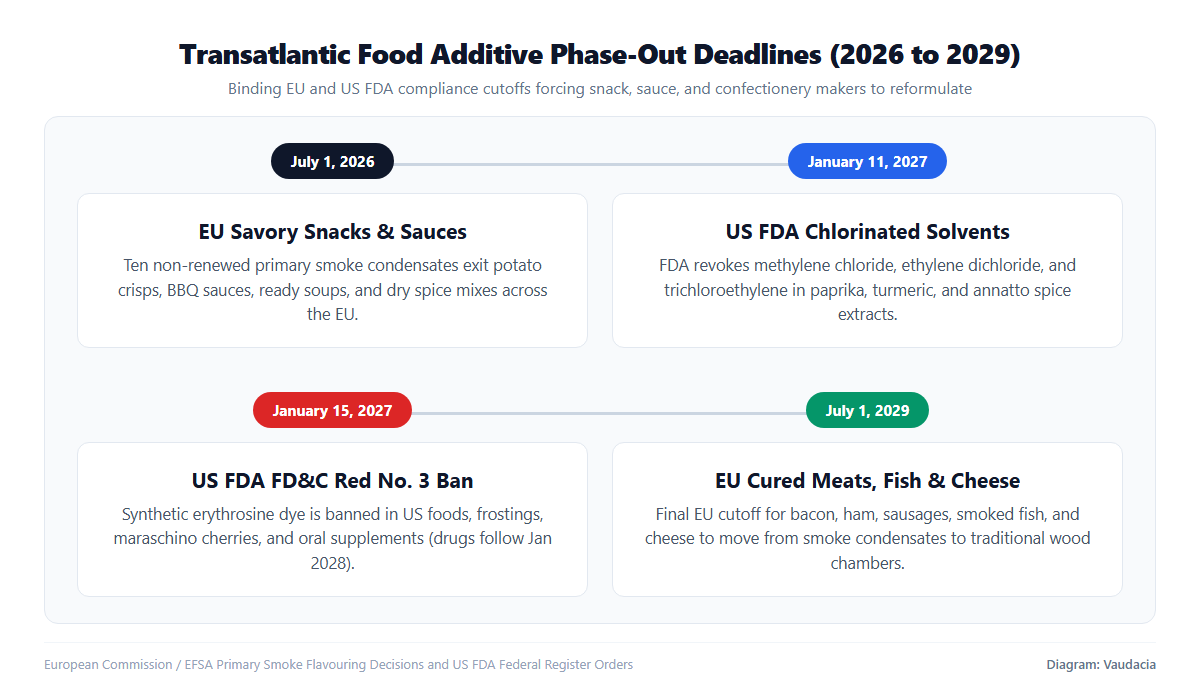
- 1Ten EU primary smoke extracts lost authorization: Following European Food Safety Authority (EFSA) genotoxicity reviews, ten industrial liquid-smoke condensates exited EU potato crisps, sauces, and soups on July 1, 2026, while cured meats, smoked fish, and cheeses have until July 1, 2029 to transition to traditional wood chambers.
- 2Two US FDA bans hit four days apart in January 2027: The FDA revokes three chlorinated spice-color extraction solvents (methylene chloride, ethylene dichloride, and trichloroethylene) on January 11, 2027, followed by FD&C Red No. 3 (erythrosine) in foods and oral supplements on January 15, 2027.
- 3Natural replacements make back-panel labels longer: Replacing synthetic dyes and condensed smoke sprays with smoked paprika, roasted malt flour, yeast extracts, beet juice, purple sweet potato anthocyanins, and insect-derived carmine lengthens ingredient declarations and requires closer allergen and vegan label checks.
Two completely distinct regulatory calendars converged between mid-2026 and January 2027. Across the European Union, a phase-out covering ten concentrated primary smoke flavourings hit its first hard cutoff on July 1, 2026, stripping condensed smoke sprays out of potato crisps, savory snacks, barbecue sauces, soups, and marinades, while cured bacon, ham, smoked sausages, cheeses, and smoked fish face their final preservation cutoff on July 1, 2029. Across the United States, the Food and Drug Administration locks down mandatory compliance bans inside a single week of January 2027: ending three industrial color-extraction solvents (methylene chloride, ethylene dichloride, and trichloroethylene) used in spice oleoresin color extracts such as paprika, turmeric, and annatto on January 11, followed by FD&C Red No. 3 (erythrosine) across red and pink frostings, candies, maraschino cherries, and ingested oral supplements on January 15. For food companies supplying supermarket chains across both regions, those four binding dates turned 2026 and early 2027 into a continuous reformulation sprint.
Why Europe Pulled the Plug on Primary Smoke Extracts
Online panic grows rapidly around EU food rulings because short social clips reduce technical toxicology into rumors that Brussels outlawed smoked bacon or wood-fired salmon. That summary gets the chemistry upside down.
Europe did not outlaw traditional smokehouses burning oak, hickory, or beechwood directly over fish or cured pork. Regulators refused to renew authorizations for ten concentrated "primary smoke products" manufactured industrially by burning wood under controlled airless conditions, condensing the vapor into tar-separated liquids or powders, and dusting snack foods directly with the extract, detailed across AGRINFO's regulatory report.
When toxicologists at the European Food Safety Authority (EFSA) re-evaluated updated testing dossiers, they could not exclude genotoxicity concerns across the ten concentrated extracts, meaning scientific files could not reliably guarantee certain chemical fractions would not damage cellular DNA across decades of human exposure. Even after major ingredient supplier Kerry Group contested the non-renewal in European courts, judges upheld Brussels' decision under EU precautionary food law, which places the burden of affirmative safety proof squarely on manufacturers.
The July 2026 Snack Cutoff vs. the July 2029 Smokehouse Window
Brussels split commercial phase-outs into two distinct tracks depending on whether concentrated smoke acts purely as a surface seasoning or as historical microbial preservation. On July 1, 2026, snacks, barbecue sauces, ready soups, spice mixes, and dips using smoke extracts solely as flavoring hit the immediate cutoff, pushing producers toward smoked paprika, roasted malt flours, smoked sea salt, or torula yeast extracts.
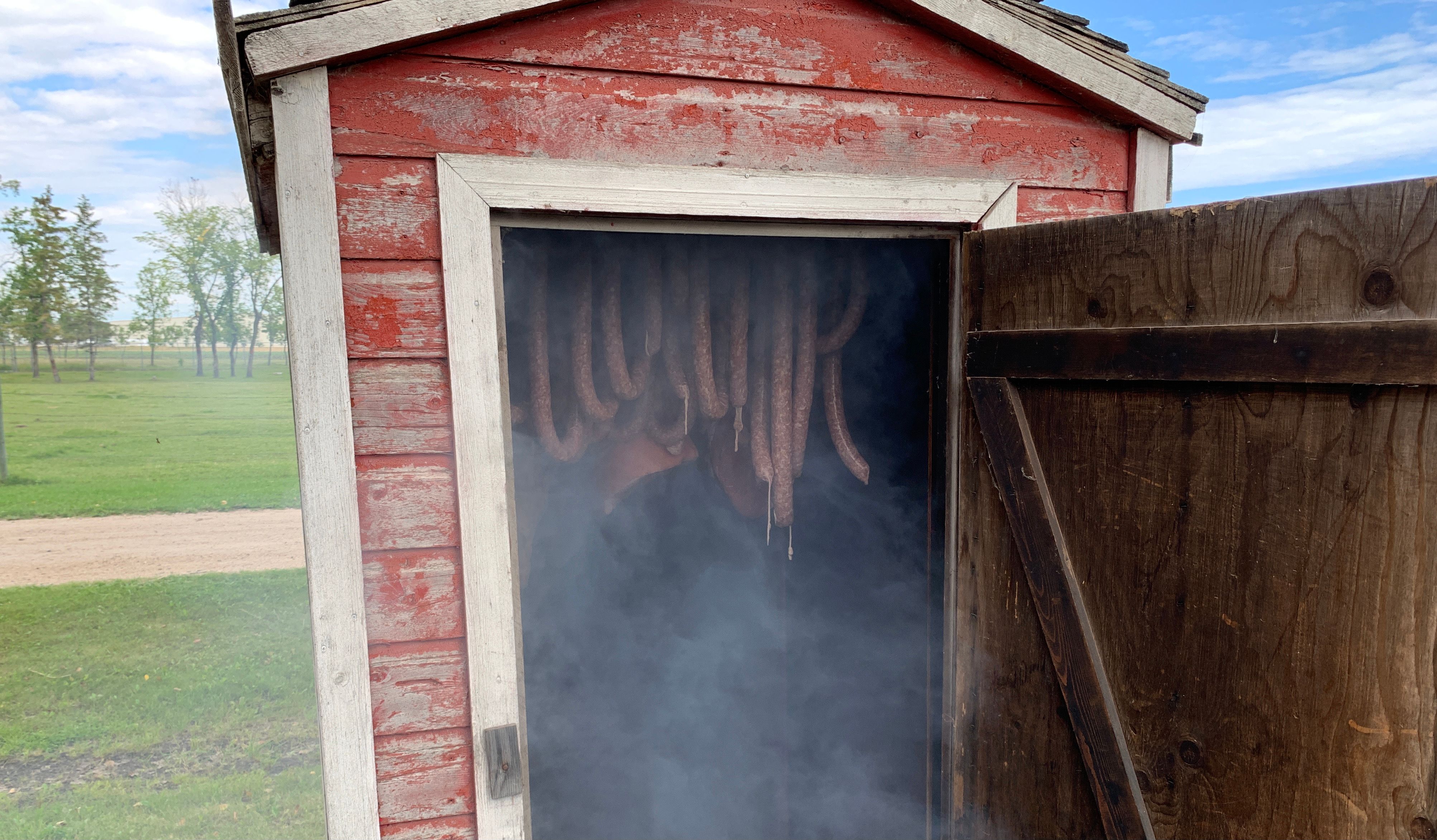
Cured meats, sausages, smoked cheeses, and fish retain a three-year transition window until July 1, 2029 so industrial smokehouses can retrofit real wood chambers without losing shelf-life safety controls. Separating dry snack seasonings from cured-meat preservation gave European crisp and sauce manufacturers less than two years to reformulate savory lines, while leaving bacon, ham, and smoked fish processors until mid-2029 to validate microbial safety under traditional smoking methods.
As ingredient specialists detailed in Plant-Ex's EU reformulation guidance, dropping condensed smoke extracts creates sharp sensory engineering challenges. Natural smoked spices and roasted yeasts shift sweet-salty balance and darken crisp surfaces differently, explaining why several popular European savory snacks tasted slightly milder or earthier through autumn 2026 as supermarket private-label ranges rolled out their updated seasoning blends.
What Changes on American Shelves in January 2027
While European snack lines scrambled to replace campfire flavor dust, the US Food and Drug Administration finalized two parallel ingredient revocations landing four days apart inside January 2027.
First, taking effect January 11, 2027, the FDA issued formal revocations ending outdated authorizations for three harsh chlorinated industrial solvents (methylene chloride, ethylene dichloride, and trichloroethylene) once legally listed as trace extraction aids for making spice colors like annatto, paprika oleoresin, and turmeric oleoresin, alongside fruit-marking inks. Although modern botanical extract houses largely migrated years ago toward cleaner supercritical carbon dioxide or ethanol extraction loops, wiping those legacy permissions off federal books eliminates import loopholes permanently.
Four days later, on January 15, 2027, lands the change shoppers recognize instantly at grocery candy aisles: FD&C Red No. 3 (erythrosine) must vanish completely from US foods and ingested dietary supplements, followed by a separate January 18, 2028 phase-out schedule for ingested oral medicines. Triggered under the statutory Delaney Clause over legacy high-dose laboratory rodent thyroid tumour findings, Red No. 3 remained baked inside neon strawberry cake frostings, fruit cocktail maraschino cherries, pink candy canes, and glazed pastries decades after the FDA barred it from cosmetics in 1990.
Why Natural Swaps Make Ingredient Labels Longer
Shoppers inspecting rear labels heading into spring 2027 will notice longer ingredient paragraphs rather than shorter lists. Stripping out concentrated liquid smoke or synthetic pink dye forces bakers and snack chemists to stack natural substitutes to match heat stability, pH tolerance, and shelf life: beet juice concentrate, carmine, purple sweet potato anthocyanins, radish extract, caramel tints, smoked spices, and rosemary extracts.
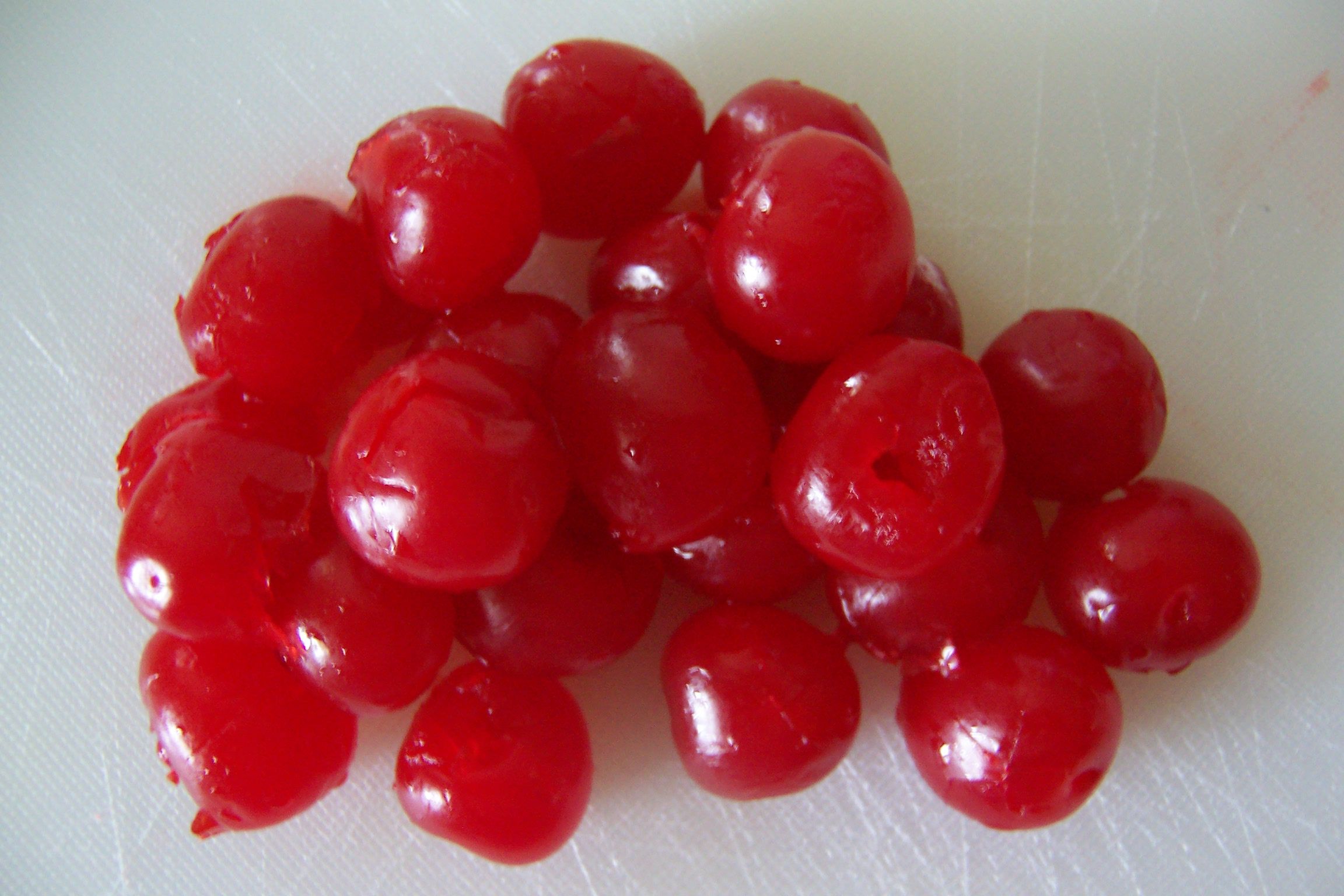
Unlike petroleum-derived Red No. 3, which holds a uniform neon cherry hue across acidic syrups and high-heat baking ovens, plant-based pigments shift color when pH or temperature changes. Beet juice browns under prolonged oven heat, while anthocyanins from purple sweet potato or black carrot turn bluish if a frosting base shifts slightly alkaline. Formulators frequently blend two or three botanical pigments alongside citric acid buffers and natural antioxidants just to keep a strawberry toaster pastry or maraschino cherry looking red six months after packaging.
Switching toward natural pigments also demands attentive allergen and dietary scanning. Carmine (cochineal extract) delivers heat-stable crimson coloring across yogurts, candies, and baked glazes, yet it derives from crushed cochineal insects rather than plants, disqualifying products from vegan, vegetarian, and certain kosher or halal certifications while requiring explicit label declaration for sensitive consumers.
How Single-Line Export Factories Standardize Global Recipes
Cross-border retail supply chains amplify those shifts globally well beyond Brussels and Washington. Multinational snack conglomerates and mid-sized food exporters operating single high-speed packaging lines for North America, UK supermarkets, and European importers rarely maintain two separate dye or seasoning tanks when purging lines between batches drives up factory downtime and washout waste.
As European wholesalers demand compliant non-condensate barbecue glazes and American grocers drop Red No. 3 completely ahead of January compliance checks, clean-label natural extracts rapidly become the default global export baseline for independent spice blenders and retail private labels everywhere.
Meanwhile, cured meat and specialty cheese producers granted until July 2029 under EU transition clauses are already testing cold-wood smokehouse retrofits and natural botanical antioxidants years early so supermarket buyers do not replace shelf facings during annual range reviews. Upgrading traditional beechwood or oak chambers requires capital investment and clean electrostatic air-filtration retrofits to filter natural ash compounds safely, explaining why regulators built a three-year bridge for traditional charcuterie houses rather than forcing hasty process changes overnight.
What Shoppers Should Look For on Rear Ingredient Panels
Keeping realistic perspective protects family grocery budgets just as clearly as when reviewing where clinical backing stops behind popular wellness supplements. Swapping Red No. 3 for beet juice inside holiday frosting does not turn cupcakes into health food, nor is anyone required to throw out sealed pantry condiments on January 15.
Both the EU smoke-flavouring phase-out and the US FDA January 2027 revocations apply at the manufacturing and market-placement gate rather than triggering emergency retail recalls of shelf-stable packages lawfully produced before the cutoff date. Over the first half of 2027, older boxes of cake mix, canned fruit cocktail, and smoky barbecue crisps will naturally clear through inventory alongside newly reformulated lots.
Taking thirty seconds on grocery runs starting this winter reveals exactly how each brand adapted. On savory crisps and sauces sold across Europe and the UK, generic "smoke flavouring" declarations are giving way to named spices ("smoked paprika," "smoked maltodextrin," "chargrilled onion powder") or "natural beechwood smoke" where food was genuinely exposed to burning wood. On American confectionery and bakery shelves, "FD&C Red No. 3" or "Red 3" disappears in favor of vegetable juice color, beta-carotene, annatto extract, or carmine, bringing everyday supermarket staples in line with updated toxicology standards on both sides of the Atlantic.
Comments (0)
No comments yet. Be the first to share your thoughts.