UAE Reopens Uganda Visas Under Strict 21-Day Departure Rules
Passengers flying from Entebbe get welcome clarity with strict timing: UAE entry visas for Ugandans reopened, provided 21 full days passed since leaving Uganda or an exemption applies.

Booking flights out of Entebbe toward Dubai, London, or Mumbai stalled abruptly for thousands of East African students, job-seekers, and families back in June 2026 when the United Arab Emirates suspended new visas over regional viral hemorrhagic fever monitoring. In November 2026, federal authorities in Abu Dhabi opened visa channels partially back up while keeping a rigid calendar rule that continues catching unprepared flyers right at departure counters.
Confirming the policy shift via state news agency WAM's official announcement, UAE officials ended the blanket suspension blocking new entry visas for citizens of the Republic of Uganda. Lifting that suspension, however, does not restore casual next-day Entebbe departures. Under coordinated public health protocols overseen by NCEMA (the National Emergency, Crisis and Disaster Management Authority), the Ministry of Health and Prevention (MoHAP), and federal immigration body ICP, non-exempt passengers still face a mandatory 21-day gap following departure from Uganda before boarding toward Emirates airports.

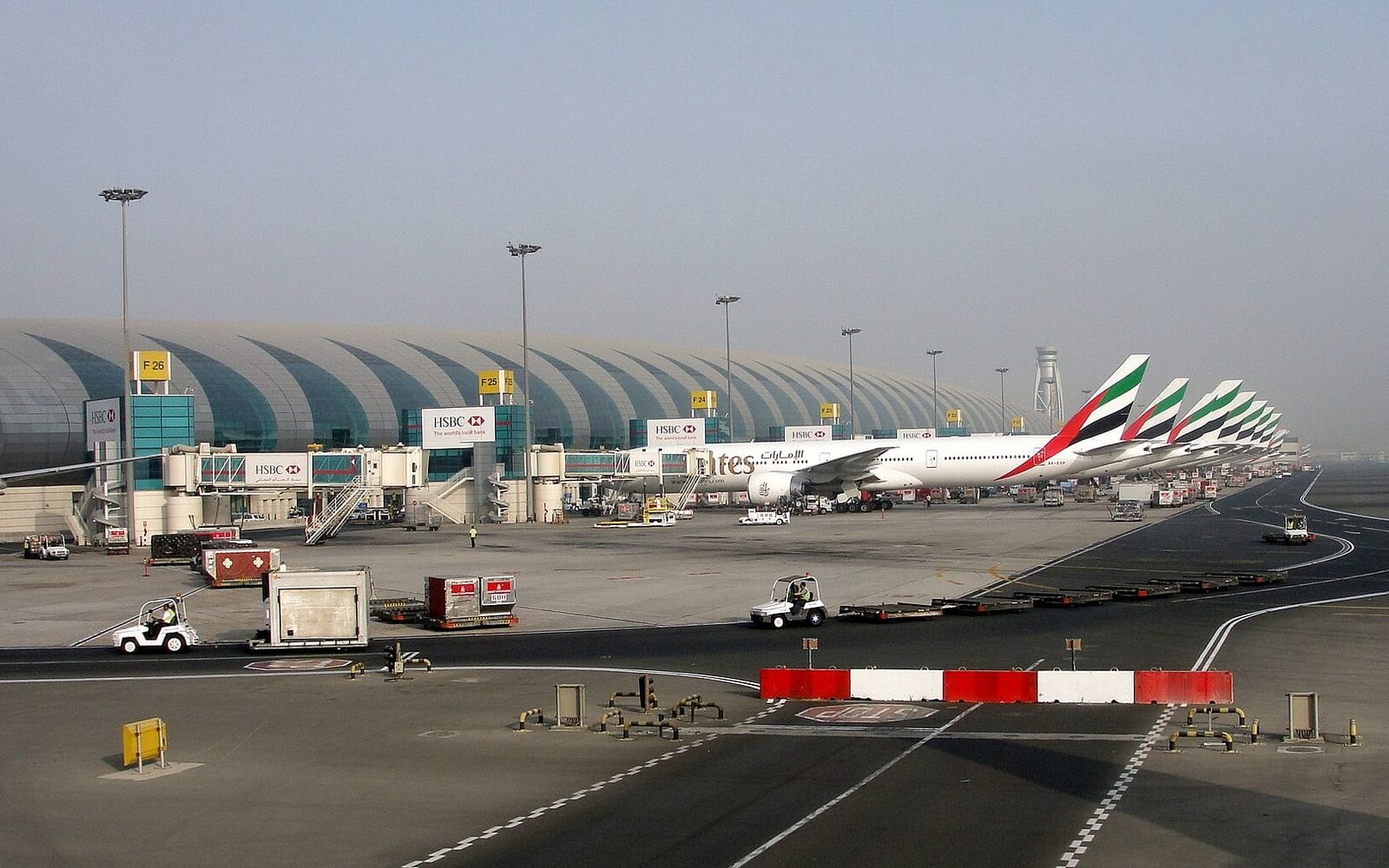
Dubai International Airport Terminal 3 (Photo: Wikimedia Commons, CC BY-SA 3.0)
How the 21-Day Clearance Rule Works at Check-In
Picture the 21-day timeline as an incubation clock rather than hotel quarantine inside Dubai itself. Under UAE entry criteria, ordinary visa-holding Ugandan nationals may enter or connect cleanly through Emirati airports only after at least 21 full days have elapsed outside Ugandan territory. That interval reflects maximum clinical surveillance thresholds applied during Ebola and regional viral tracking without holding borders shut indefinitely once domestic containment stabilized.
In real itinerary terms, a Ugandan consultant sitting at home in Kampala cannot receive an approved entry permit Thursday morning and step onto an Emirates midnight departure straight into Terminal 3 unless covered by an official humanitarian or institutional exemption. By contrast, a Ugandan engineer who spent three full weeks living and working in Nairobi, Kigali, Doha, or Cairo, holding clear dated exit stamps establishing twenty-one calendar days off Ugandan soil, can check bags cleanly once documentation matches carrier verification checks.
Airside airport transit gets caught inside the exact same verification mesh. Many East African professionals assume a tight four-hour layover switching from a feeder flight onto London or Bombay inside Terminal 3 stays safely outside domestic entry enforcement. Because Emirates biosecurity screening applies equally across entry and transit passengers, automated airline check-in terminals block baggage tagging out of East African hubs unless twenty-one clear third-country days or verified exemption codes sit linked to your PNR. Carriers face severe regulatory fines for carrying non-compliant itineraries, turning departure desks into strict pre-screening walls.
The Four Exemptions Permitted Under 21 Days
Recognizing that blanket 21-day stays outside the country impose heavy disruption on education, diplomatic work, and urgent clinical care, UAE federal agencies preserved four narrow exempt corridors coordinated directly with health authorities. First, Ugandan university students registered at UAE academic institutions prior to the June 2026 restrictions, along with accompanying eligible family dependents, may travel under coordinated university enrollment letters and ICP approval linkage so interrupted degree semesters can continue. Second, administrative employees staffing the Embassy of the Republic of Uganda in the UAE who travel on ordinary passports, alongside their immediate family dependents, are exempt when presenting verified embassy employment credentials. Third, recognized holders of Ugandan diplomatic and official special passports clear entry through established state coordination protocols. Fourth, urgent medical treatment patients requiring specialized care inside Emirati hospitals qualify for humanitarian clearance when backed by authenticated medical reports detailing the diagnosis, the named receiving UAE medical facility, and confirmed clinical intake dates.
Everybody outside those four definitions, including remote business consultants, trade show attendees, hospitality recruits awaiting fresh labor contracts, and holidaymakers, must accumulate twenty-one verifiable calendar days in an eligible third country such as Kenya or Rwanda, evidenced by dated entry and exit passport stamps at check-in, or fly alternate hubs bypassing UAE airspace while restrictions remain active. Where documentation is missing at the departure counter, ordinary business or transit flyers face immediate denied check-in out of Entebbe or feeder hubs, students or embassy staff without linked ICP or diplomatic credentials face manual verification holds, and medical travelers lacking authenticated hospital intake dates are blocked from boarding under carrier biosecurity rules. Because airline check-in agents must enter the exact exemption category or third-country entry date into the departure control system before issuing a boarding pass, arriving at the counter with printed paper copies alongside digital PDFs prevents last-minute desk holds before international boarding closes.
How Airlines Enforce Check-In Screening Before Entebbe Takeoff
Confusion routinely flares at Entebbe International Airport because travelers expect arrival border checks inside Dubai rather than hard automated blocks right at origin luggage drops. Airlines operating flights into the United Arab Emirates carry substantial statutory carrier penalties for transporting passengers whose travel histories conflict with active NCEMA and ICP bulletins. Consequently, Emirates, Flydubai, Kenya Airways, and regional partner check-in desks cross-check passport issuance, visa approval strings, and recent Ugandan departure timestamps straight against international Timatic health directives prior to printing a single bag tag. Even travelers holding newly issued UAE tourist or work entry permits online cannot force gate supervisors to override a system stop once exit-stamp calculations show fewer than twenty-one days abroad.
Recruitment agencies placing Ugandan nurses, warehouse coordinators, hotel hosts, and construction drivers across Dubai and Abu Dhabi have adjusted onboarding pipelines around this exact friction. Rather than absorbing steep cancellation fees on promotional non-refundable fares out of Entebbe, reputable labor mobility firms schedule regional onboarding camps or sequential air routing through Nairobi, Dar es Salaam, or Doha only once physical passport exit stamps prove full incubation clearance. Workers tempted to switch passports cleanly via electronic border gates inside Kampala or Kigali often find automated e-gate exits offer zero inked date evidence when human airline agents inspect passport booklets abroad. Asking airport border officers calmly for clear ink exit and transit entry stamps eliminates almost every gate dispute before luggage weighs in.
Neighboring Borders Remain Closed: DRC and South Sudan
Notice carefully what November's easing left untouched. Even as bilateral coordination reopened Ugandan visa processing, WAM emphasized explicitly that precautionary entry suspensions remain completely intact covering travelers from the Democratic Republic of the Congo (DRC) and South Sudan under active epidemiological guidance.
Multi-country East African consultants carrying regional travel stamps inside one passport should track recent sub-Saharan border pages closely before buying non-refundable winter itineraries. Aviation compliance systems and immigration desks routinely inspect recent regional departure history rather than passport cover nationality alone, echoing broader mobility friction visible across tightening international visa border gates and explaining why predictable base-hub travel planning outlasts risky multi-hop bookings. Even dual nationals holding UK, Canadian, or EU passports routinely face secondary desk checks if Kampala exit stamps appear inside three weeks of boarding toward Dubai.
Because regional health bulletins move faster than consumer ticket portals, verifying both ICP notices and your carrier's Timatic database forty-eight hours before departure protects against expensive gate rejections. Asking immigration officers for unmistakable physical ink stamps rather than relying silently on automated e-gates when exiting Uganda to spend three weeks in Kenya or Tanzania preserves clean date proof for airline agents, while keeping refundable hotel bookings and flexible carrier change fares prevents heavy no-show losses across peak East African holiday travel corridors.
Comments (0)
No comments yet. Be the first to share your thoughts.