Software Paywalls Add $12 Billion to Car Repair Bills
A right-to-repair report prices software friction at $12 billion a year, but the figure leans hard on one labor rate assumption.

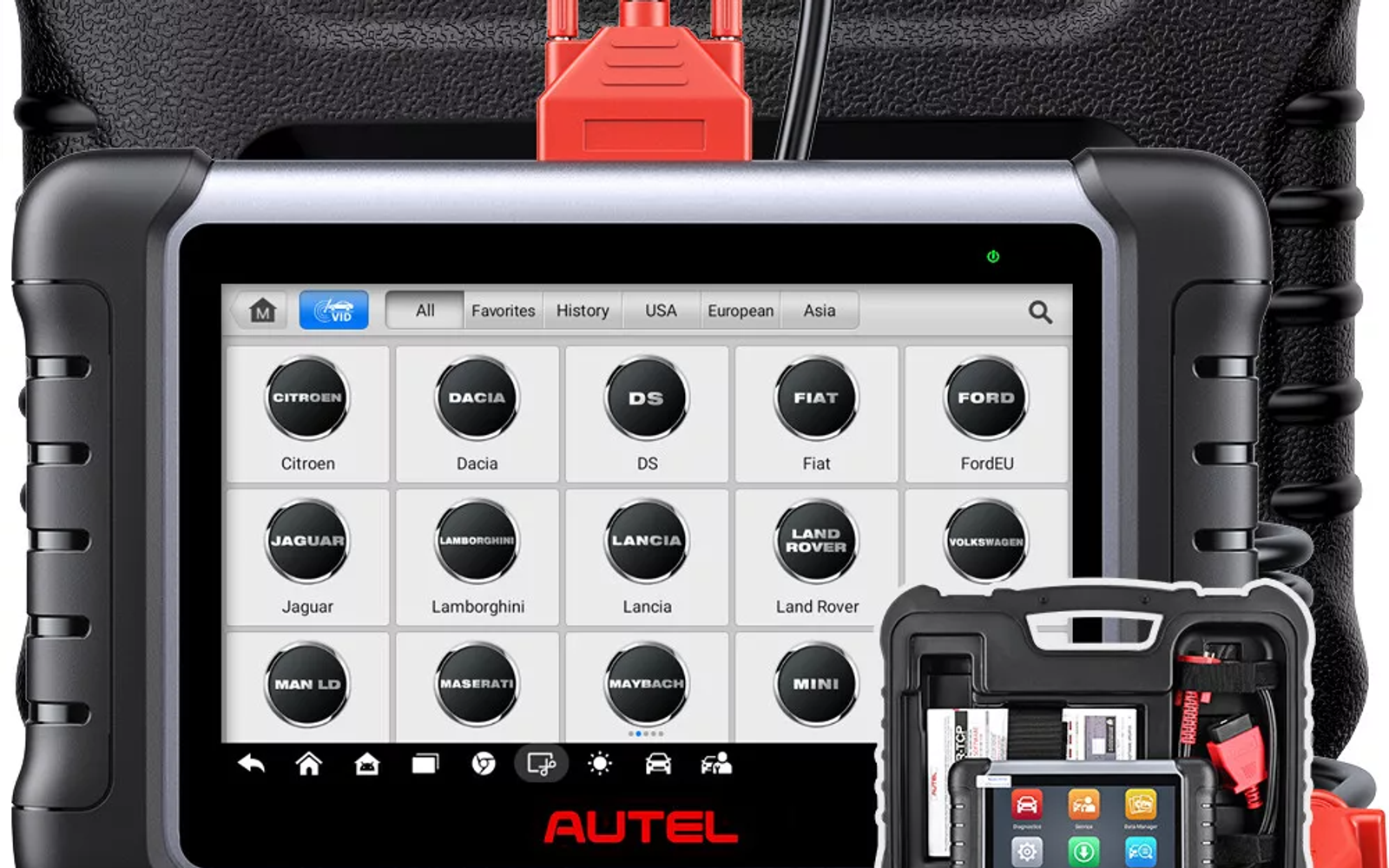
The first stretch of a modern transmission job happens before anyone reaches for a wrench. A technician connects a laptop to the OBD-II port, opens the manufacturer's portal, signs in, waits for a session to provision, then finds the vehicle's security gateway demanding a second credential before it will speak to the module behind the dash. Late-model Volkswagens issue a token that expires. A long list of Stellantis products have put that gateway between independent shops and the car since the 2018 model year. The bay clock runs the whole time.
- 1The Estimate: A report called Closing Shop puts software friction in US car repair at about $12 billion a year, built from roughly 83 million wasted mechanic hours.
- 2The Conversion: Those hours become dollars at $140 an hour, a rate above what the median independent shop bills and below what dealerships post for mechanical work.
- 3The Unfixed Part: Pending federal legislation would open diagnostic access, though it leaves the authentication step that eats most of the time exactly where it is.
That gap between plugging in and turning a bolt is what Closing Shop tries to price. The team compiled for the Repair.org coalition and written by the U.S. PIRG Education Fund, iFixit and the FULU Foundation, and it opens with a large claim: software delays alone add about $12 billion a year to what Americans spend keeping cars on the road. Underneath the dollars sits a smaller and cleaner measurement, roughly 83 million hours of shop time spent obtaining, installing, logging into and waiting on manufacturer software.
Where the 83 Million Hours Come From
The report's load-bearing number is a median of 1.25 hours of software navigation on any repair that requires manufacturer software. That median comes from a survey of independent shop owners, and reporting on the release has noted that the timing question behind it drew 28 responses. A sample that size can establish that a problem exists. It cannot pin down how large the problem is with any precision, and the authors treat the figure as a modeled estimate rather than an invoice count.
From there the estimate scales outward. The authors pair their survey with Department of Energy vehicle registration counts and Cox Automotive data on how repair work distributes between dealerships and independent shops, then multiply hours by jobs. Run the multiplication in reverse and 83 million hours imply about 66 million software-gated repair events a year. At the report's own ratio of one gated job in five, that points to something north of 300 million repair events at independent shops annually, which is the order of magnitude a US fleet of that size would generate.
IFixit's write-up puts the hours in more human terms: the annual working time of 42,000 full-time technicians. That's the comparison worth keeping, because it survives whatever labor rate you attach to it.
What the Paywall Sits In Front Of
It helps to be concrete about what is being sold. Since the 2004 model year, federal rules have required automakers to publish emissions-related reprogramming information and support a generic pass-through device, standardized as SAE J2534. That rule is why a $200 dongle can, in principle, flash an engine computer. It says nothing about the rest of the car, and the rest of the car is where the money moved.
Electronic parking brakes need a module command to retract before a pad change. Battery registration, steering angle resets, injector coding and immobilizer pairing all run through manufacturer software. As gateways became standard equipment, the port stopped being an entry point and became a checkpoint. A technician now holds subscriptions to portals that each carry their own interface, their own session rules and their own annual fee.
The report prices that stack. A single technician covering five brands needs $15,878 a year in software subscriptions, according to the research. Divide that by a $140 labor rate and the subscriptions alone consume 113 billed hours, close to three working weeks of a technician's output, before a customer job gets touched. Nathan Proctor, who leads the Right to Repair campaign at U.S. PIRG Education Fund, described the arrangement as "a toll road between the mechanic and the repair." And 88% of surveyed mechanics said they'd turned away work in the past year because they lacked the software to finish it. That last number matters more than the subscription cost. A shop that declines a job doesn't record a loss. It sends the car to a dealer.
The Rate Carries the Weight
The $12 billion headline is 83 million hours converted at $140 an hour. Change the rate and the total moves in a straight line, which the report concedes. At $120, the median hourly rate an index built from invoices at 2,411 US shops put at the center of the market for the twelve months through October, the figure lands near $10 billion. At $100, where a dozen states cluster, it falls to about $8.3 billion.
Is $140 defensible? It sits above the independent median and below the dealership number. National data on posted mechanical rates at collision shops put the average at $163 an hour in June, up 11.6% from $146 a year earlier. The report prices independent-shop friction closer to dealer economics, which is either a fair blend of the market or a generous one, depending on which side of the counter you stand.
A subtler question is buried in the conversion. A retail labor rate bundles technician wage, overhead and margin, so using it to value lost internal time overstates the loss unless the shop had a paying job ready to fill that hour. The 88% figure is what rescues the method. In a market where shops are turning work away, the hour really is forgone revenue rather than slack. The rate only holds up because the spare capacity doesn't exist.
Where the Cost Lands If Not on the Invoice
Drivers won't find a line item called software subscription on an estimate. The cost arrives by two routes instead. The first is referral, where a job an independent shop can't finish becomes a dealer job at dealer pricing. The second is insurance. Higher repair costs feed higher claims, and PIRG notes that auto insurance prices have climbed about three times as fast as the rest of the US economy since 2012, which means the bill reaches households that never had a repair done at all.
None of this is unique to cars as a category. The parts-pairing fight that reshaped how people think about choosing a phone followed the same logic. The hardware was always repairable, and the software decided who was allowed to do it. What's different about vehicles is the size of the installed base and the fact that a car is the second-largest purchase most households make.
What a Law Would and Wouldn't Remove
The political momentum is real. The REPAIR Act, filed as H.R. 1566 and S. 1379, has drawn 50 co-sponsors across both chambers, and a House subcommittee advanced it on a unanimous vote this month. State laws covering electronics and, in several cases, vehicles have passed in New York, California, Colorado, Minnesota, Connecticut, Oregon and Washington, and CNBC reported in April that advocates were tracking 57 bills across 22 states. Right to repair has become one of the few consumer issues with genuine cross-party pull.
Automakers will make a security argument, and it isn't frivolous. Gateways exist because a car is a network on wheels, and unrestricted module access is how key cloning and mileage manipulation happen. The industry's position is that a shop with a legitimate need should get credentialed access, and that the credentialing is the safety feature. The report's counterargument is that the credentialing has been priced like a toll booth and run like a bureaucracy.
Here is where the legislative fix meets an engineering wall. A law can force a manufacturer to publish repair information and sell access on fair terms. It doesn't remove the authentication step. It makes the token free. If a meaningful share of the 75 minutes is portal login, session provisioning, token refresh and download, a zero-price token recovers very little of the hour. The design that would actually recover time is offline credential provisioning, where a signed certificate bound to the shop sits on the scan tool and authentication happens locally in seconds instead of through a browser session that times out while the technician is under the car.
The Question Nobody Has Measured
The decomposition is the missing piece, and gathering it isn't hard. Authentication latency, subscription procurement, module download time and the plain hunt for the right procedure are four different problems with four different fixes, and the report's single median flattens them into one figure that points at one remedy. My view is that the 83 million hours will outlast the $12 billion, because the hours are what the survey actually measured and the dollars are a conversion layered on top.
A stopwatch in a hundred bays would settle it. Timestamp the login, the token refresh, the download and the manual search on each job, and the policy argument would organize itself around whichever slice is largest instead of around whichever round number travels best. What nobody has established is how much of that 75 minutes is the software refusing to cooperate and how much is a technician hunting for a procedure the manufacturer used to print in a book.
Comments (0)
No comments yet. Be the first to share your thoughts.