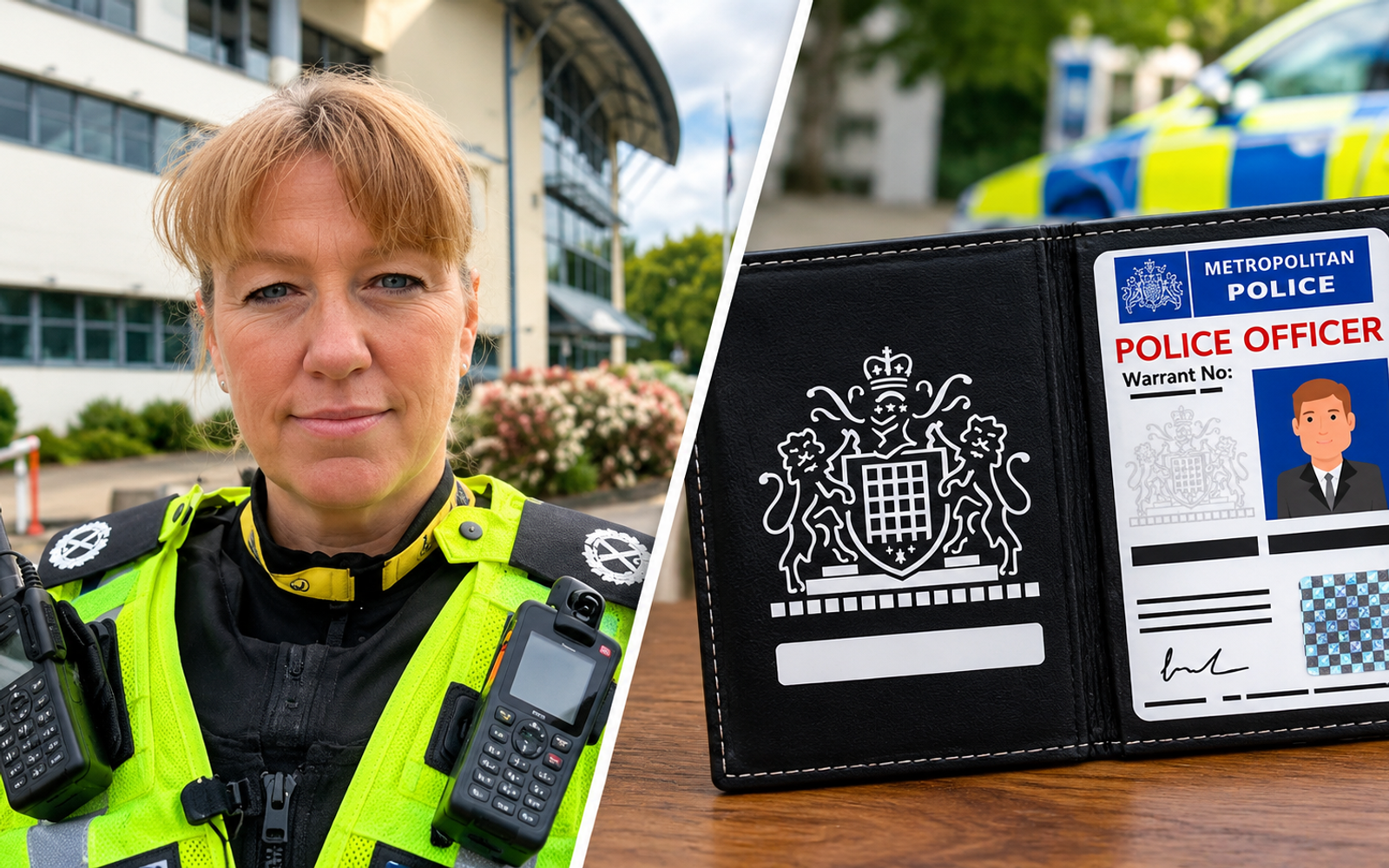
ReportFraud.police.uk: Spotting the Fake UK Police Sites
Fraud victims often get hit a second time by fake police portals and recovery callers. Knowing how ReportFraud.police.uk and FTC boundaries work kills most impersonation tricks fast.

Getting scammed online rarely stops at the first stolen payment. In hundreds of consumer cases each week, a second pitch lands days later while the victim is still frustrated and searching for a way to pull cash back. Maybe the $26-an-hour remote logistics role dangling from shiprek.com turned out to be a parcel-reshipping mule scheme, or a slick social ad storefront like velsoire.shop charged a debit card and disappeared without tracking numbers. The moment people type "report fraud online" into a search bar, impersonation rings wait right above organic listings with lookalike government sites and cold callers promising to unlock frozen funds for one more verification fee.
- 1ReportFraud.police.uk replaced Action Fraud: Operated by the City of London Police, ReportFraud.police.uk (0300 123 2040) is the official non-emergency fraud and cybercrime portal for England, Wales, and Northern Ireland, while Scottish victims file through Police Scotland on 101.
- 2Bank reimbursement clocks run ahead of police intake: Under UK Payment Systems Regulator (PSR) rules for Authorised Push Payment (APP) fraud, contacting your bank via 159 or your back-of-card number comes first, followed by obtaining an official police crime reference number.
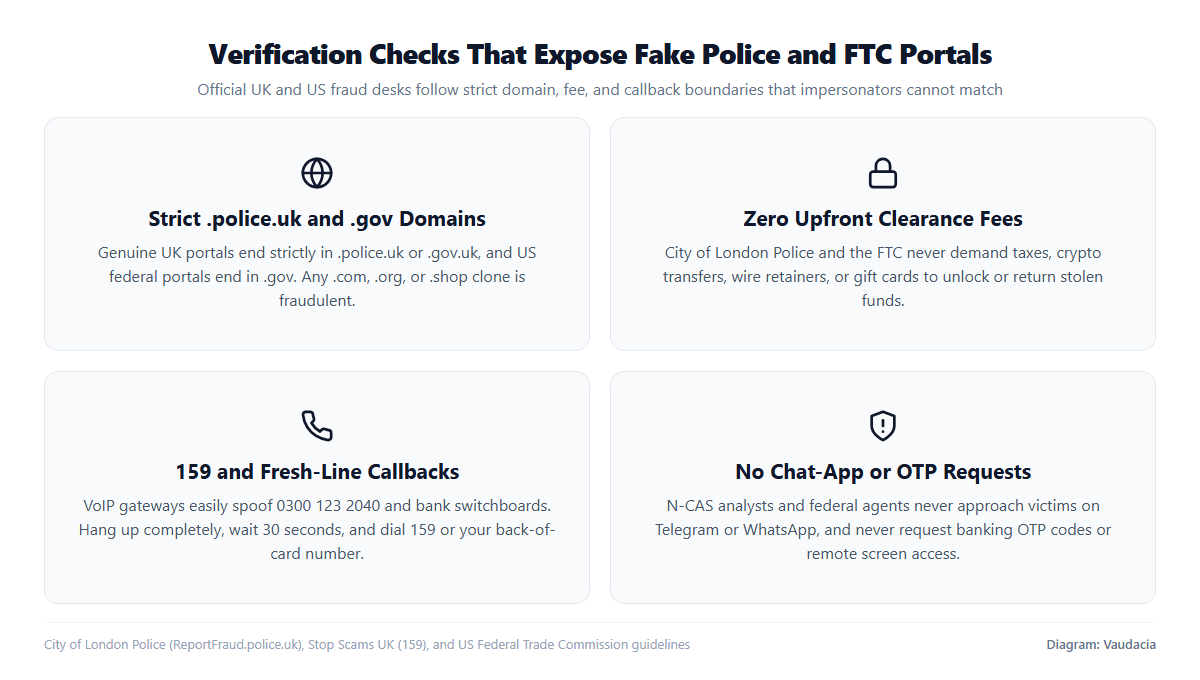
- 3Domain endings and fee demands expose every clone: Genuine UK police portals end strictly in .police.uk or .gov.uk and US federal portals end in .gov; neither City of London Police nor the FTC ever charges clearance fees or contacts victims via Telegram or WhatsApp.
Checking exact reporting domains stops that second wave immediately. In the UK, the national fraud and cybercrime portal shifted into Report Fraud, operated directly by the City of London Police in place of the older Action Fraud brand. Across the Atlantic, the US Federal Trade Commission (FTC) issued fresh warnings over sham FTC clones and spoofed investigator calls. Knowing real agency boundaries shrinks panic back down to verifiable facts.
What ReportFraud.police.uk Covers for UK Victims
Built under City of London Police oversight, the upgraded Report Fraud portal routes citizen filings into the National Crime Analysis Service (N-CAS) to connect repeat mule accounts, scam domains, and burner numbers across regions, paired with a dedicated Report Fraud Victim Service that handles post-incident outreach and triage.
Where callers slip up is assuming one web form covers every British postcode and every urgency level. England, Wales, and Northern Ireland route non-emergency cyber and financial complaints through reportfraud.police.uk or 0300 123 2040. Scotland runs its own policing system entirely, so Scottish victims file non-emergency fraud through Police Scotland on 101 instead of the London portal. Anyone under live threat or actively pressured on the phone to transfer money needs emergency responders on 999, or UK banking hotline 159 directly, rather than sitting over an intake form. Calling your card issuer's fraud desk always comes ahead of government filings whenever a card charge or bank transfer just left, because chargeback timers and Authorised Push Payment (APP) reimbursement rules run on tight banking clocks. Securing primary email logins with phishing-resistant passkeys and tight token hygiene stops attackers from resetting bank passwords afterward.
That distinction between an intelligence intake portal and a payment reimbursement mechanism matters practically. Report Fraud does not reverse Faster Payments wires on its own or summon an investigator to chase an individual £300 jacket order; its analytical value comes from linking hundreds of parallel victim complaints against identical beneficiary sort codes, hosting clusters, and merchant descriptors so banks and police can dismantle shared mule pipelines.

Active Scam Hooks Targeting Fraud Victims
Scam domains cycle weekly while the scripts underneath barely budge. Looking closely at the main consumer lures circulating right now shows how narrow domain checks and basic skepticism dismantle almost every variation.
Unsolicited job lures such as shiprek.com dangle remote logistics or parcel-inspection roles paying around $26 an hour to harvest passport scans and recruit unwitting residents into forwarding stolen merchandise from home; victims should report these to Report Fraud in the UK or IC3.gov and the US Postal Inspection Service in the United States. Disappearing social-ad storefronts like velsoire.shop run polished video ads for heavily discounted apparel or gadgets on newly registered 12-month .shop domains with copied terms and no working support line, where your bank's card dispute desk comes first before logging the domain on ReportFraud.police.uk or ReportFraud.ftc.gov.
Spoofed bank and InstaPay OTP hooks take a more direct route, sending urgent texts or calls claiming an incoming transfer is frozen until you read back a six-digit SMS code, a trap broken immediately by hanging up and dialing 159 or the official number printed on the back of your bank card. Then come the fake FTC or police recovery callers, who claim your identity is tied to criminal accounts or offer asset recovery in exchange for a crypto, gift card, or wire clearance fee, which should always be met by hanging up and dialing the published agency helpline directly.
Artificial urgency links every case together. Whether an InstaPay phishing message warns Egyptian customers of an urgent transfer block (highlighted in local banking warnings) or an FTC impersonator demands funds move into a "safe custody wallet" (detailed in FTC alerts), the scheme collapses once you pause and verify independently in a clean browser tab. High-yield chat-group pitches like multi-tier crypto task schemes and AI-assisted social impersonation run on that identical clock pressure, manufacturing polished screenshots just long enough to separate targets from verification instincts.
Real officers with City of London Police and investigators at the FTC never cold-call to demand recovery retainers, crypto transfers, wire deposits, gift cards, or banking OTP codes. Anyone messaging you on Telegram or WhatsApp promising to hack back money lost to a ghost .shop site is running a follow-on recovery scam.
How Sponsored Ads and Bank APP Clocks Interact
The transition from the legacy Action Fraud name to ReportFraud.police.uk created a temporary knowledge gap that secondary fraud rings moved quickly to monetize. Impersonators buy search ads targeting queries such as "Action Fraud helpline" and "FTC refund portal," placing paid listings ending in .com or .org directly above genuine .police.uk and .gov results. Victims who submit their loss amount, bank name, and phone number into a clone site are handing a recovery boiler room the exact dossier needed to stage a convincing callback twenty minutes later.

Under the UK Payment Systems Regulator (PSR) mandatory reimbursement framework for Authorised Push Payment (APP) scams across Faster Payments and CHAPS, sending and receiving payment firms split eligible consumer losses 50/50 up to an £85,000 cap, with most claims resolved within five business days. That five-day clock only starts when you report the transfer to your bank via 159 or your back-of-card number. Filing on ReportFraud.police.uk after calling your bank provides the official crime reference number UK lenders require to verify the claim.
Checking the Domain Before Filing Evidence
Before entering home addresses, passport scans, or card references into a portal reached via search results, stop at the first single forward slash in the address bar. Genuine UK police sites terminate strictly in .police.uk or .gov.uk (such as www.reportfraud.police.uk), and authentic US federal intake forms terminate strictly in .gov (reportfraud.ftc.gov or ic3.gov). Hyphenated lookalikes ending in .com, .org, or .shop are automatic fakes regardless of how crisp the crest graphic looks. Typing official addresses directly by hand sidesteps sponsored search ads that scammers routinely buy above real government results.
Caller ID numbers are just as unreliable because commercial VoIP gateways let fraudsters spoof genuine police switchboard digits or FTC helpline numbers onto incoming screens. Putting the phone down completely, waiting thirty seconds for any line hold to clear, and calling back from a fresh dial tone using the published number printed on a bank card or typed straight from a .gov or .police.uk page breaks caller-ID theater on the spot.
If money, card tokens, or identity scans already left your hands before the pattern clicked, move on two parallel tracks without touching any self-proclaimed "recovery specialist." Call your bank or card issuer on the official back-of-card number to lock cards, revoke standing open-banking permissions, and file an Authorised Push Payment claim or card chargeback before dispute windows close. At the same time, preserve raw chat logs, complete URLs, merchant billing descriptors, wallet addresses, and email headers ("Show original" in Gmail) before deleting threads, then submit one complete file through ReportFraud.police.uk, Police Scotland 101, or ReportFraud.ftc.gov and IC3.gov so your bank has an official crime reference number.
Where passport scans or National Insurance and Social Security records went through a fake recruitment portal like shiprek.com, place credit bureau fraud alerts immediately and replace reused passwords across email and banking apps. Notice why victims so often receive suspiciously tailored recovery pitches weeks after losing cash: compromised applicant spreadsheets circulate among secondary fraud brokers as warm leads, complete with exact loss sums designed to sound like insider police case notes. Treating any unprompted message offering to retrieve frozen crypto or refunds for an advance fee as hostile protects whatever balance remains. Official reporting desks collect intelligence across scattered cases so investigators can choke mule rails over time, issue takedown referrals to domain registrars, and assemble admissible complaint timelines for law enforcement; they never cold-call with threats, never ask for verification deposits, and never charge a penny to open a file.
Comments (0)
No comments yet. Be the first to share your thoughts.