Why Hearing Loss Beats Biohacks for Cognitive Longevity
The brain health boom sells tracking and supplements. The evidence points to a hearing test and a lipid panel.

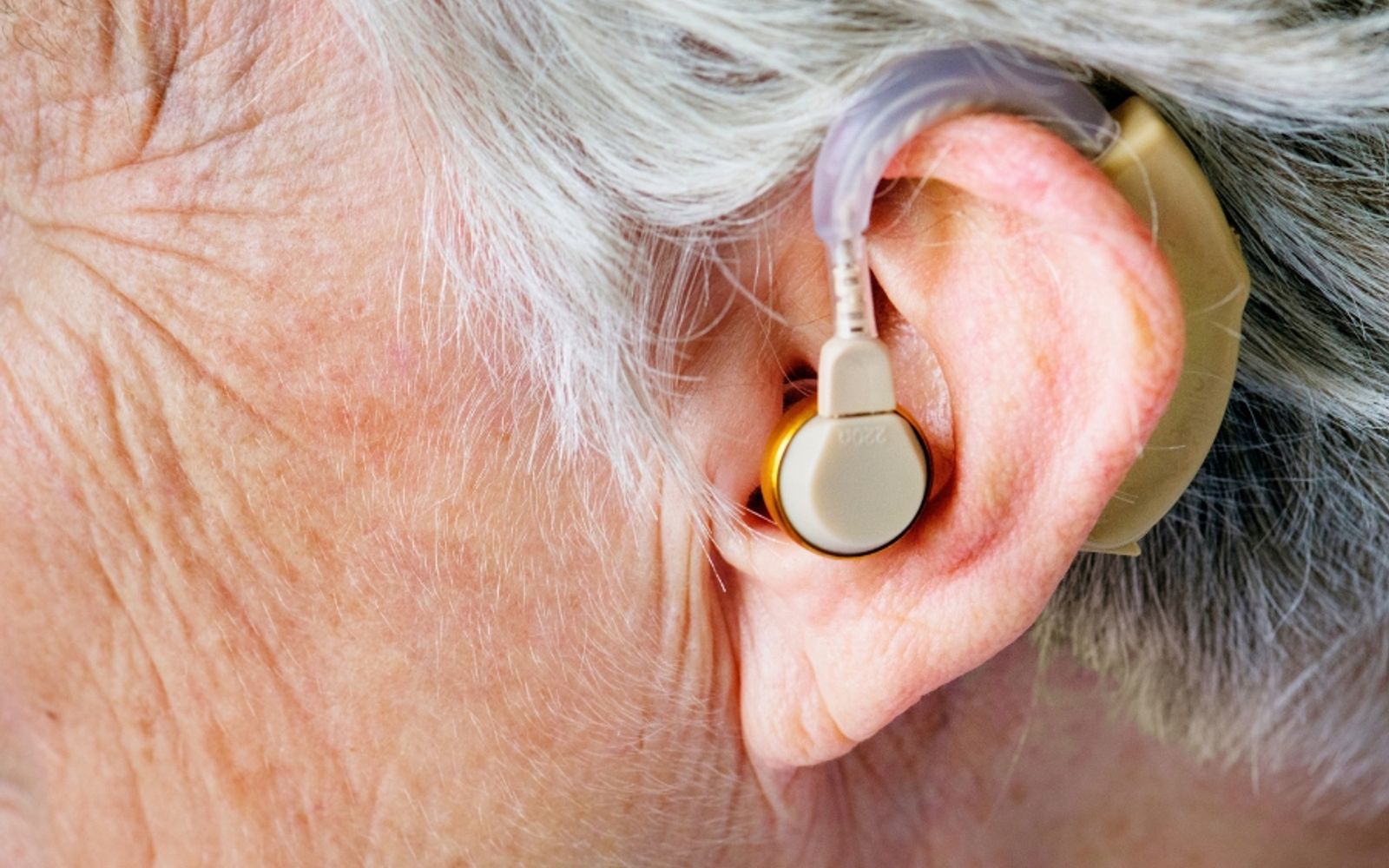
On 14 January this year, the journal Neurology published a study that followed older adults with moderate hearing loss and compared those who were prescribed hearing aids with those who weren't. On the standard tests of memory and thinking, the two groups finished level. On dementia diagnosis they split: 5% among those fitted with aids against 8% among those who weren't. That split is the most useful thing published in brain health in 2026, and it points at a clinic appointment rather than something you can add to a cart.
- 1The Absolute Numbers Are Small: The 33% figure that dominated brain health coverage this year works out to 5% versus 8% dementia risk in the cohort studied. Three percentage points, arriving years later, is the size of the prize.
- 2Cheap Checks Hold a Third of the Share: Hearing loss and high LDL cholesterol each account for about 7 of the 45 percentage points the Lancet Commission calls modifiable. That's roughly a third of the preventable total sitting in an audiogram and a blood test.
- 3Structure Beats Self-Tracking: The largest multidomain lifestyle trial in older adults found a structured two year program outperformed self-guided change. Recovery metrics measure the proxy, not the risk factor.
The story that hardened through 2026 is that cognitive longevity is a habit stack: sleep architecture, recovery scores, a methylene blue dropper, a chamber session on a Saturday. The Salk Institute has named 2026 its year of brain health research, and a panel at this year's Milken Institute Global Conference spent its hour on how markets should separate credible science from the rest. The goal behind all of it is right. The mechanism being sold is mostly not.
Where the consensus gets the sequence wrong is the order of operations. The popular version says track yourself, tune the inputs, and the brain follows. The evidence says find and fix the risk factors you can't feel, then wait a decade for a payoff you'll never be able to attribute to anything. Those are different projects with different budgets, and only one of them has produced an absolute risk number worth arguing about.
Why the 33% Figure Shrinks to Three Points
The 33% was the number that travelled, and on its own it's close to meaningless. Against a base rate of 8%, a one third reduction lands at 5%, which is three fewer diagnoses per hundred people across the follow-up period. Inverted, it becomes an operational figure: roughly 33 people with moderate hearing loss need to be fitted for one dementia diagnosis to be avoided.
That is a good trade by the standards of prevention, where effects are small, slow and unglamorous. It's also nothing like the pitch, because nothing about it feels like optimisation and no dashboard can show it working. At the level of one person the outcome is binary and arrives years later, which means the value lives in the population arithmetic, and population arithmetic doesn't sell memberships.
The second half of that study is the part the market skipped. Hearing aids had little effect on the cognitive test scores. Track your own memory, processing speed or reaction time and the devices would have read as a failure while quietly lowering your odds of a diagnosis. Consumer health is built the other way round, on the assumption that the metric you can see is the thing that matters.
The Largest Levers Have No Business Model
The 2024 Lancet Commission on dementia prevention put the modifiable share at roughly 45% of cases across 14 risk factors, from air pollution to social isolation. Two sit at the top of the list, tied: hearing loss and high LDL cholesterol, at about 7 percentage points each. That is one hearing test and one blood draw.
The arithmetic is worth doing out loud. Seven plus seven gives 14 of the 45 modifiable points, close to a third of the entire preventable share, sitting in two routine clinical checks that a large share of people in their forties have never had. Now compare that with where the funding, the conference slots and the advertising budgets actually go.
Neither lever needs a protocol or a community. A hearing aid is a fitted device, subsidised in some health systems and paid for out of pocket in others, and a statin has been generic for years. Thin margin is not evidence against a treatment, but it does explain why these two appear so rarely in the content that shapes behaviour.
Loading Diagram...(Hard refresh if it doesn't appear)
Structure Beats Self-Guided, Which Beats Self-Tracked
The 2025 US POINTER trial is still the most useful design lesson in the field. It took 2,111 older adults at risk of cognitive decline and compared a structured two year lifestyle program, with sessions, coaches and follow-up, against self-guided lifestyle change. The structured group improved global cognition more. The active ingredient wasn't information, which both groups had.
That result cuts against nearly every product in the category. A ring, an app or a supplement stack is self-guided by construction, because the alternative requires another human in the room on a schedule. The part of the intervention that did the work is the part that doesn't convert into a monthly fee.
Wearables also measure the wrong end of the chain. A readiness score tells you something real about sleep and strain, which is useful if you're training for something. It can't tell you that your hearing has drifted, that your LDL is high, or that your social contact has collapsed into one weekly phone call. Those are the inputs on the Lancet list, and none of them have an API. The phrase going around for this is nervous system hygiene. What it usually describes is measurement with a subscription attached.
Enrichment Is an Access Problem Wearing a Habit Costume
In February, the American Academy of Neurology published a study of 1,939 adults on lifetime cognitive enrichment: atlases and newspapers in the childhood home, a library card in middle age, reading, writing and language learning across the decades. The top 10% by enrichment had a 38% lower risk of Alzheimer's disease and a 36% lower risk of mild cognitive impairment than the bottom 10%, with onset pushed back by up to five and seven years. It's an association, not a trial, and the authors said so.
Look at what the markers are. A library card. Newspapers in the house. That's infrastructure, not willpower. The habit framing assumes shelves, time and attention already exist, and a 2025 critique of the Commission's framework made the limit explicit: researchers writing in eBioMedicine argued that poverty, wealth shocks, income inequality and HIV need adding before the 14 factor list travels outside high income countries. Daily habits are what you build once the ground stops moving.
There's a quieter point buried in the enrichment data. What those cohorts were doing is production and retrieval, writing, languages, reading, which is the same gap that explains why your second brain fails at retrieval rather than note-taking. Most of what the last five years sold us is capture. A vault full of highlights is not cognitive enrichment, and no amount of tagging turns it into one.
The change worth making this month takes one afternoon: an audiogram and a lipid panel, booked inside the same fortnight and handled as a single project rather than two chores. Everything else on the shelf is a subscription to something adjacent to the outcome being sold. Three percentage points is a small number to build an industry on, and it remains the largest one currently on offer.
Comments (0)
No comments yet. Be the first to share your thoughts.