
The Quiet Migration of Data Away From Big Cloud
Why governments and businesses are pulling data back from global cloud providers to sovereign local alternatives.

The round-trip time for a data packet between an edge terminal in Singapore or São Paulo and a centralized cloud facility in Frankfurt or Northern Virginia sits between 110 and 160 milliseconds, give or take the routing bottlenecks of transoceanic subsea fiber cables. That delay sounds trivial until you factor in how modern microservice application stacks execute. A single user request or checkout transaction can trigger eight, ten, or twelve sequential internal API round trips between services. Multiplied across millions of concurrent users, speed-of-light propagation latency ceases to be a background detail and becomes a permanent structural tax. Photons traveling through fiber optic glass move at roughly two-thirds the speed of light in vacuum. You cannot negotiate with physics; you can only shorten the physical distance between compute and user.
This is the constraint quietly reshaping the cloud computing industry in 2026, and it has a name most consumers have never heard. Geopatriation. The deliberate, sometimes mandated relocation of data and applications away from global public cloud platforms toward sovereign local alternatives. According to All Covered's analysis of cloud trends for 2026, geopatriation stands as the single most consequential shift in enterprise infrastructure strategy this year. Not because the big cloud providers lost any technical edge. The reason is more structural. The assumptions that made global public cloud attractive are grinding against the physical realities of distance, the regulatory demands of national governments, and a creeping recognition that control of data infrastructure is control of economic destiny.
The Physics That Broke the Global Cloud Promise
The original pitch for public cloud was seductive in its simplicity: outsource capital infrastructure to centralized hyperscalers, and enjoy infinite elasticity. For a decade, that economic model appeared invincible. But the paradigm failed to anticipate the geopolitical balkanization of the global internet. Every time an enterprise customer's data packet crosses international borders, it traverses jurisdictions enforcing strict digital sovereignty rules. From the European Union's GDPR and the EU Data Act to statutory localization mandates across Asia, the Middle East, and Latin America, cross-border data transfers now carry immense regulatory and financial liability.
The compliance burden has inverted the cost calculation. According to Shapeblue's analysis of cloud trends for 2026, VMware licensing disruption remains the largest trigger for cloud strategy change. When Broadcom acquired VMware in late 2023 and restructured its licensing model, eliminating perpetual licenses and pushing all customers into subscription arrangements, enterprise customers saw their infrastructure costs spike unpredictably. That shockwave is still propagating. Companies that had bet their entire cloud architecture on VMware's ecosystem suddenly faced a choice. Absorb the new pricing or rebuild on something else. Many chose to rebuild, and in that rebuilding, they're asking a question they hadn't asked in years. Where should this data actually live? The answer increasingly points to local infrastructure, not distant data centers.
A Word That Describes a Movement
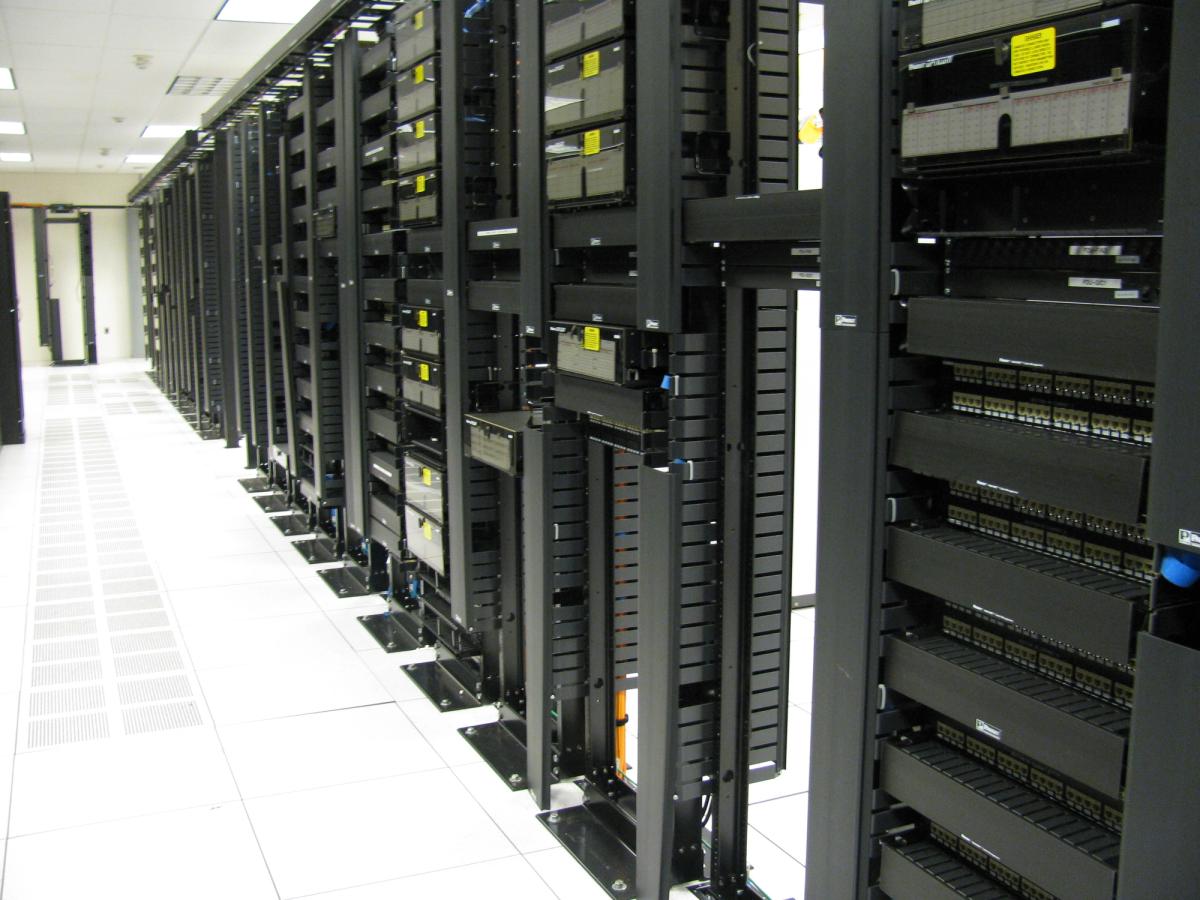
Geopatriation is an ungainly word for an elegant shift. It combines geo and repatriation, and what it describes is companies pulling workloads back from faraway cloud regions and placing them on local infrastructure. Not on-premises in the old sense, necessarily. Local can mean a sovereign cloud operated by a domestic provider, a colocation facility in the same city, or a government-regulated national cloud. The common thread is that the data stops traveling long distances. Gartner has identified geopatriation as a defining enterprise trend for 2026, forecasting sovereign cloud infrastructure-as-a-service spending to reach $80 billion, a 35.6% increase from 2025. That's not pocket change. That's a structural reallocation of capital.
This is not a fringe trend driven by paranoia. It's a structural response to measurable problems. The public cloud model optimized for cost per gigabyte of storage. It did not optimize for latency per packet of real-time data. It did not optimize for regulatory clarity. And it certainly did not optimize for national economic sovereignty. Put differently, the public cloud was designed for the world of batch processing and file storage. That world is shrinking. The world of real-time inference, sensor networks, and cross-border data regulation is growing. And that world demands local infrastructure.
The Transatlantic Sovereign Infrastructure Pivot
Europe moved first on geopatriation, partly because GDPR gave it no choice. Germany's Sovereign Cloud Stack initiative, France's national cloud certification program, the Netherlands' push for government data to stay on Dutch infrastructure. These aren't anti-American moves in any technical sense. German cloud providers use plenty of American hardware and software. But the control plane, the governance layer, the data residency guarantee sits with local entities. The architecture is the same. The jurisdiction is different. That distinction matters more than most architectural decisions.
In the United States and Canada, private market repatriation is motivated less by statutory mandates and more by brutal unit economics. Financial institutions and high-volume SaaS companies processing billions of transactions cannot afford the recurring data egress taxes levied by major cloud providers. When a database cluster transfers hundreds of terabytes between internal microservices and external clients, public cloud bills can escalate exponentially. For mature software companies, moving primary database instances and high-throughput analytics pipelines onto dedicated colocation racks running bare-metal Linux servers delivers predictable cost modeling and immediate margin expansion.
The enterprise calculation has fundamentally shifted from pure rental convenience to total cost of ownership (TCO). While the raw hourly rate of a virtual machine in a mega-region may appear low, the compounding fees for managed storage, outbound bandwidth, enterprise support tiers, and proprietary tooling create an unsustainable overhead for established applications. When companies evaluate the capital expense of purchasing high-performance server hardware, depreciated over three to five years, against the recurring annual bill of equivalent public cloud instances, the self-hosted colocation option frequently wins by a wide margin.
The VMware Trigger Nobody Planned For
The Broadcom acquisition of VMware deserves its own accounting because it functioned as a forced migration event. VMware's virtualization stack was the foundation of countless enterprise cloud architectures. When Broadcom raised prices and changed licensing terms, the cost impact hit budgets hard. Companies started looking at alternatives. Some moved to open-source virtualization platforms like KVM or Proxmox. Others shifted workloads to different cloud providers entirely. But the most interesting response was the companies that used the disruption as an excuse to rethink where their data lived geographically.
This is the hidden second-order effect. The immediate story was about rising costs. The longer story is about a wave of infrastructure redesigns that happened under cost pressure, and those redesigns embedded geographic sovereignty into the architecture from the start. Once a company has rebuilt its data pipeline to run on local infrastructure, the switching cost to go back to a global public cloud is just as high as the switching cost that pushed them out of it. The migration is sticky in both directions. Sovereign local alternatives are now competing directly with global public clouds not just on compliance grounds but on performance grounds, particularly for latency-sensitive workloads. The VMware disruption accelerated a timeline already moving in this direction.
What Serverless and Edge Bring to the Picture
Serverless architectures, where code runs in stateless containers that scale automatically, have become a natural fit for the geopatriation trend. The reason is straightforward. Serverless functions are small, portable, and easy to move between cloud environments. A company running its customer authentication layer on AWS Lambda can, with moderate engineering effort, migrate that same logic to a local cloud provider's equivalent service. The abstraction layer that serverless provides lowers the switching cost between providers, which is exactly what makes geopatriation feasible for companies that don't have massive engineering teams.
Go Deeper
Content Farms: How Websites Turn Empty Words Into Millions (And What Google Does About Them)Edge computing pushes that logic to its logical conclusion. Instead of centralizing execution inside a handful of massive hyperscale facilities, edge architectures distribute stateless compute across hundreds of regional points of presence (PoPs) directly adjacent to users and devices. For mission-critical workloads like industrial robotics in the Ruhr Valley, autonomous fleet telematics in Shenzhen, or millisecond fraud detection in London and Chicago, edge placement is not an architectural preference; it is the only design that satisfies sub-5-millisecond latency budgets.
The Question Nobody Has Answered Yet
The deeper technical debate beneath cloud repatriation is whether independent colocation facilities and regional sovereign clouds can keep pace with hyperscaler innovation. Amazon, Microsoft, and Google invest tens of billions annually in custom silicon, managed database engines, and proprietary AI orchestrators. A mid-market enterprise or sovereign regional provider cannot duplicate that R&D pipeline. What they can offer, however, is deterministic cost structures, predictable bare-metal performance, zero punitive egress fees, and total jurisdictional immunity from extraterritorial subpoenas. For core transactional workloads, that focused value proposition is proving compelling.
Gartner's data reveals that Europe and East Asia represent the largest geographic markets for sovereign cloud infrastructure, collectively driving the majority of the projected $80 billion expenditure. However, tier-two metropolitan hubs across North America, Latin America, and Southeast Asia are experiencing rapid colocation expansion as regional enterprises pull data out of centralized zones into domestic facilities to comply with localized banking and healthcare data residency laws.
Hyperscalers are countering the repatriation trend by deploying localized sovereign regions and hybrid appliances. AWS Outposts, Azure Stack, and Google Distributed Cloud now allow enterprises to run cloud-managed APIs on physical hardware installed inside domestic private data centers. Yet while hybrid appliances resolve physical latency constraints, they do not resolve the commercial problem: customers remain locked into proprietary cloud billing meters and subject to unilateral software licensing changes.
That's the open question. The data centers are getting built. The cables are getting laid. The regulatory frameworks are taking shape. But nobody has yet solved the problem of how a small sovereign cloud ecosystem keeps up with the global frontier of cloud innovation without turning into a satellite of the very providers it moved away from. That tension defines the cloud industry in 2026. It will define the next decade after that.
Comments (0)
No comments yet. Be the first to share your thoughts.