Your Next Employee Costs $24K. No Healthcare.
Agility Robotics just went public at $2.5B. Here's what the humanoid robot boom means for small business owners, not just VCs.

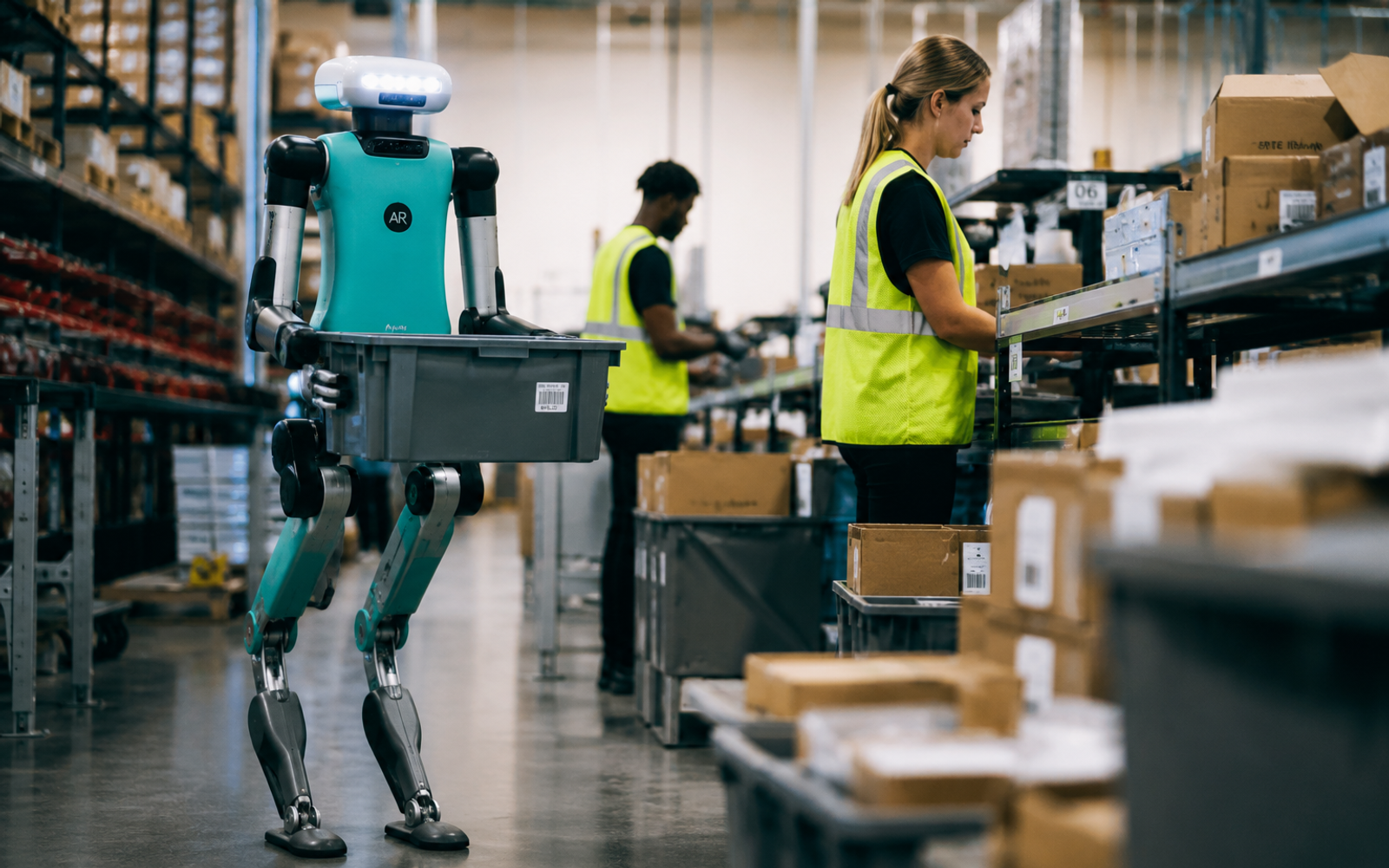
Across major fulfillment centers and logistics hubs in North America, a profound labor transition is quietly moving from experimental testing to commercial deployment. Machines with two legs, articulated arms, and advanced spatial vision are lifting standard shipping totes, sorting parcels, and navigating warehouse aisles alongside human shift workers.
The commercial leader of this wave is Digit, the bipedal humanoid platform engineered by Agility Robotics. In July 2026, Agility completed its public listing through a merger with Churchill Capital Corp XI, establishing a $2.5 billion enterprise valuation and securing over $620 million in gross transaction proceeds. The deal marks the arrival of the first pure-play humanoid robotics company on public financial markets, transforming humanoid automation from a speculative science experiment into a standardized capital expenditure.
The Brutal Math of Warehouse Labor Economics
The commercial justification for deploying bipedal robots is driven entirely by cold operational math. In the United States, logistics operators face chronic warehouse turnover rates that routinely exceed 100 percent annually. A full-time warehouse associate costs employers between $38,000 and $48,000 per year when factoring in hourly wages, workers' compensation insurance, health benefits, and recurring recruiting fees.
By contrast, bipedal platforms deployed under modern Robotics-as-a-Service (RaaS) contracts operate at an effective annualized cost of roughly $24,000. These machines can operate across multiple consecutive shifts, do not suffer repetitive strain injuries, and fit directly into existing warehouse infrastructure designed for human proportions without requiring multi-million-dollar facility redesigns.
Specialization Versus Volume: The Global Landscape
While American firms like Agility Robotics, Figure, and Boston Dynamics dominate Western venture headlines, the global competitive dynamics are dividing into two distinct philosophies: Western certified integration versus Asian hardware volume.
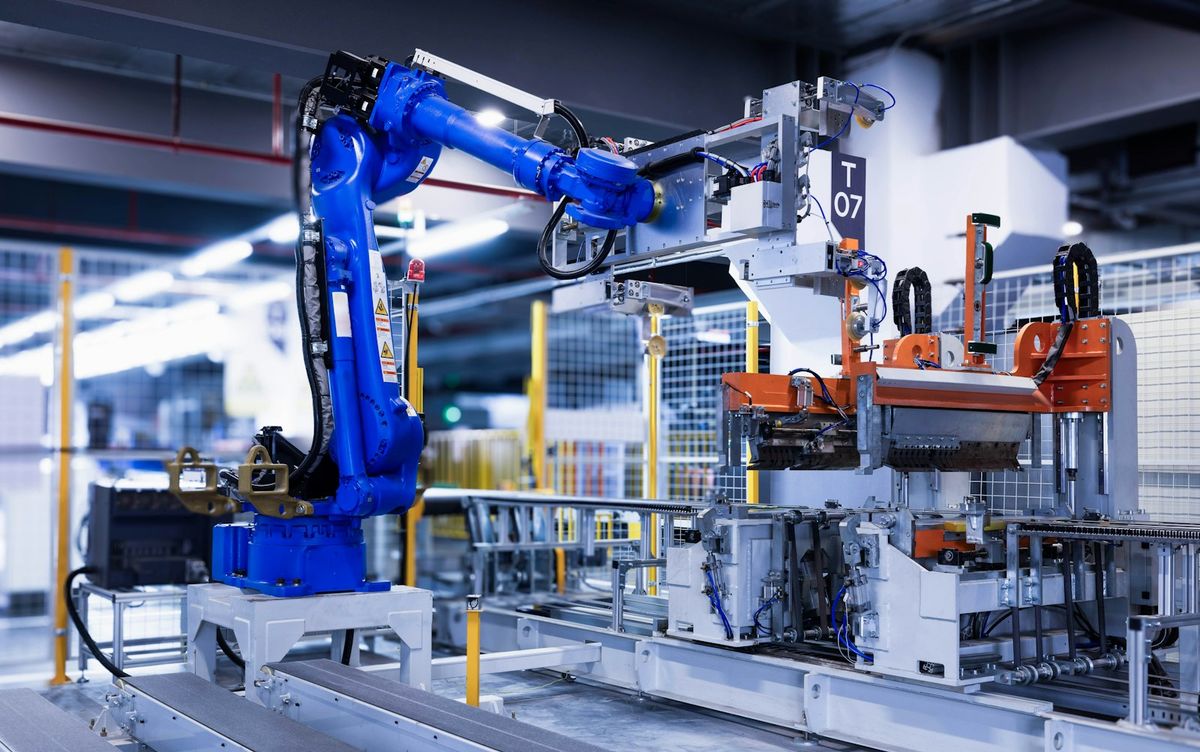
Chinese robotics manufacturers, including AgiBot in Shanghai and Unitree in Hangzhou, have rapidly scaled production capacity, shipping thousands of commercial units supported by deeply integrated domestic component supply chains. Outside China, competing purely on actuator manufacturing costs is impossible. Western players are instead defending their margins through enterprise software integration, OSHA safety compliance, and direct compatibility with major Warehouse Management Systems (WMS).
The Software and Middleware Bottleneck
The true operational bottleneck facing the humanoid robotics sector is not the mechanical construction of joints or carbon-fiber limbs; it is embodied artificial intelligence and spatial software middleware. Building a bipedal robot that can walk in a controlled lab is straightforward; building one that can autonomously parse unexpected obstacles, handle irregular parcels, and interface with SAP or Manhattan Associates logistics software without human intervention is extraordinarily complex.
This software deficit represents the largest greenfield opportunity for technical entrepreneurs. The founders who will capture enduring enterprise value over the next decade are not those bending metal in machine shops, but those building the operating systems, computer vision models, and simulation tools that make robotic fleets safe and programmable.
The Bottom Line
Agility Robotics going public signals that physical automation has reached an irreversible economic inflection point. When the annualized cost of a robotic worker undercuts human warehouse labor by nearly 50 percent while delivering higher uptime, industrial adoption ceases to be a debate.
For business leaders and technology founders, the signal is unmistakable: prepare for a world where physical labor is software-defined. Operators who understand how to orchestrate, integrate, and deploy autonomous systems will command massive commercial advantages over competitors still reliant on legacy human staffing models.
Comments (0)
No comments yet. Be the first to share your thoughts.