Lithium, Trust, and the Week That Shook Health Policy
Low-dose lithium, a CDC shake-up, and what the data actually says about your health.

Every few months, the wellness internet seizes upon an unglamorous psychiatric drug and rebrands it as an over-the-counter fountain of youth. Recent headlines proclaimed that micro-dose lithium had finally unlocked the formula for halting cognitive decline in aging brains. Influencer podcasts and wellness retail storefronts immediately flooded social feeds with bottles of lithium orotate, marketing the mineral as a daily cognitive shield.
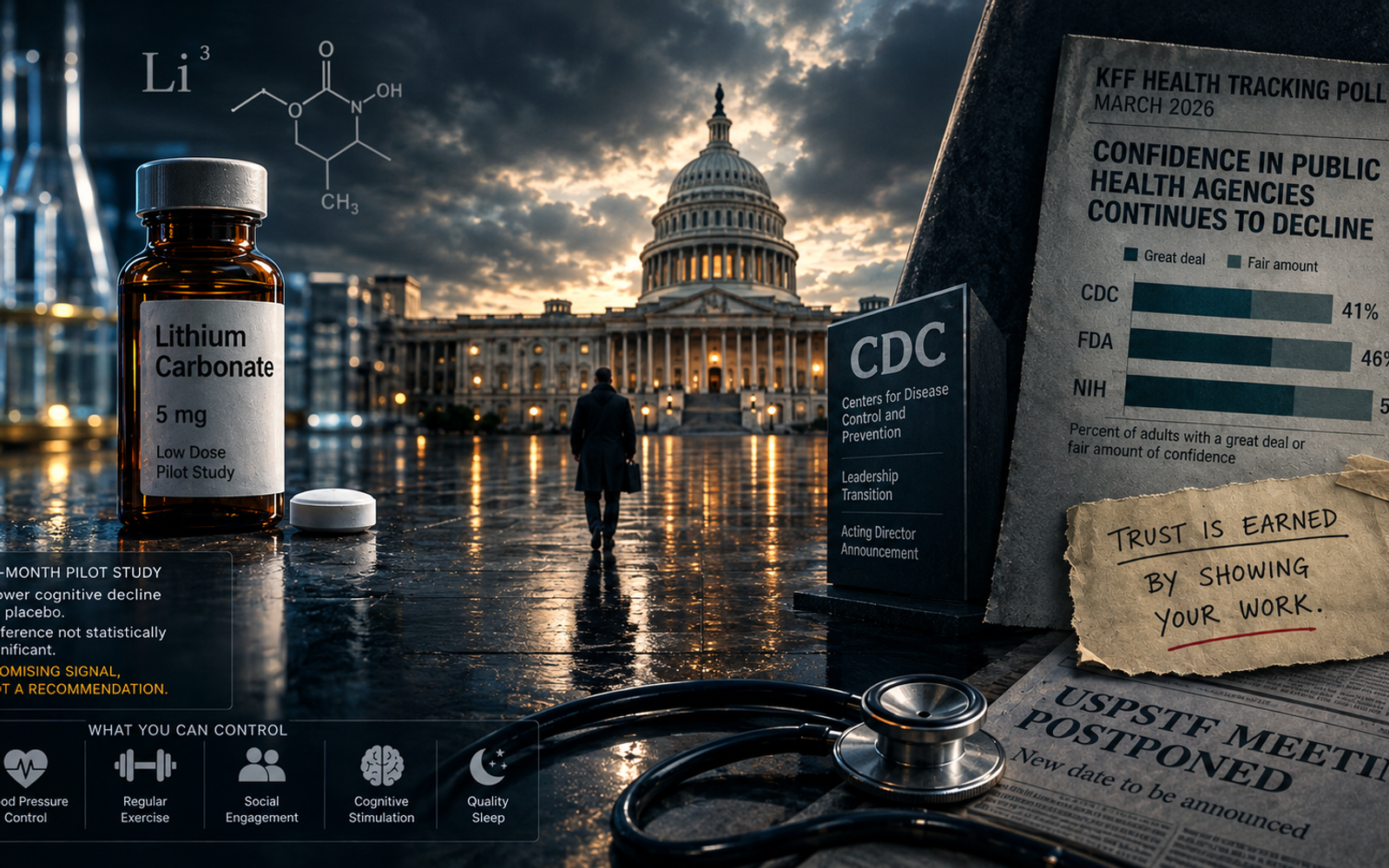
The underlying clinical paper published by the LAT research group told a far more modest story. In a controlled twelve-month pilot study of older adults showing early markers of memory loss, participants receiving monitored daily low-dose lithium carbonate exhibited a slightly slower rate of cognitive degradation than the placebo cohort.
The crucial detail omitted by social media commentary was statistical significance. The experimental gap between the two cohorts did not clear standard mathematical thresholds: in trial vernacular, the researchers identified an interesting biological whisper, not a validated medical recommendation.
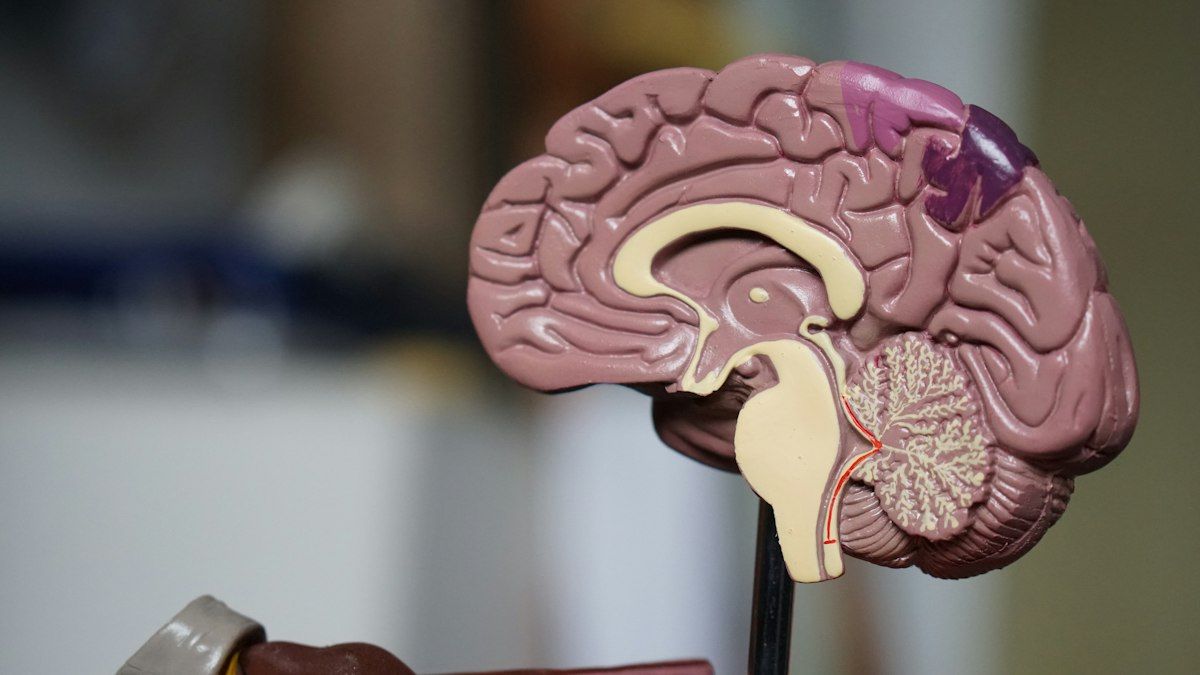
Statistical Noise vs Clinical Breakthroughs
The gap between early-phase clinical research and public health communication has reached a dangerous tipping point. In pharmacology, Phase 2 pilot studies are designed primarily to evaluate compound safety, establish tolerability ranges, and determine whether a massive Phase 3 investment is warranted.
When a pilot study demonstrates a positive trend that fails to achieve statistical significance, random variance cannot be ruled out as the primary cause. Converting an exploratory signal into an affirmative health recommendation is a fundamental misrepresentation of the scientific method.
Real pharmaceutical breakthroughs look fundamentally different. An effective oncology drug or blood-pressure therapeutic demonstrates clear, statistically undeniable survival separation across thousands of randomized patients, accompanied by rigorous long-term adverse effect profiles.
The Chemical Risk of Over-the-Counter Lithium
The most alarming downstream effect of the lithium hype cycle is consumer self-medication. Well-meaning individuals seeking to protect their memory are purchasing over-the-counter lithium orotate supplements, assuming they are consuming the same compound evaluated in hospital laboratories.
Prescription lithium carbonate has been prescribed for bipolar disorder for more than seven decades, but it carries an exceptionally narrow therapeutic window. The concentration required for clinical efficacy sits uncomfortably close to the threshold that triggers severe renal impairment, thyroid failure, and neurotoxicity.
Hospital trials administer pharmaceutical-grade lithium carbonate accompanied by regular venous blood draws to verify serum concentrations remain strictly between 0.4 and 0.8 mEq/L. Over-the-counter orotate compounds evade federal inspection standards entirely, leaving consumers with unpredictable active ion concentrations and zero organ function monitoring.
The Leadership Vacuum at Public Health Agencies
This surge in health misinformation coincides with structural instability across federal health agencies. In Washington, leadership transitions at the Centers for Disease Control and Prevention have left key directorships operating under interim appointments.
The appointment of dual-hatted leadership across overlapping agencies like the National Institutes of Health and the CDC raises severe governance questions. Each institution operates with a distinct charter: the NIH funds early-stage biomedical discovery, while the CDC translates epidemiology into actionable public guidance.
When executive attention is divided between research funding and operational crisis response, regulatory momentum stalls. Key advisory panels responsible for updating national cancer screening recommendations and preventive medication guidelines have postponed statutory sessions, delaying updated clinical standards for practicing physicians nationwide.

The Trust Deficit and Algorithmic Medicine
The structural paralysis within public health bureaucracies has accelerated a devastating collapse in public trust. National polling data from the Kaiser Family Foundation reveals that only four in ten adults maintain confidence in federal health recommendations, a staggering decline compared to historic baselines.
When institutional authorities fail to communicate transparently, consumers do not stop seeking medical guidance. They simply migrate their queries into algorithmic feeds, short-form video aggregators, and unvetted online communities.
This algorithmic information ecosystem treats a peer-reviewed double-blind trial and an influencer's affiliate-linked supplement review as functionally equivalent data points. The resulting vacuum creates fertile soil for wellness fads that promise simple chemical solutions to complex neurodegenerative diseases. While institutional confidence in centralized federal agencies has plummeted, patient trust in personal primary-care physicians remains remarkably high, offering the only reliable buffer against online misinformation.
What the Evidence Actually Supports for Cognitive Longevity
Preventing neurodegeneration is not an insoluble mystery requiring unvetted chemical shortcuts. Decades of robust clinical epidemiology confirm that the most potent cognitive interventions are already well-understood and clinically validated.
Maintaining systolic blood pressure below 120 mmHg reduces the risk of mild cognitive impairment by nearly twenty percent, as demonstrated in landmark trials like SPRINT MIND. Longitudinal studies consistently show that adults engaging in regular resistance training preserve greater hippocampal volume and cerebral blood flow into their seventies.
Deep slow-wave sleep operates as the brain's natural glymphatic rinse cycle, facilitating the clearance of metabolic byproducts accumulated during waking hours. Sound medical policy requires the courage to distinguish between an interesting laboratory signal and a proven therapy: until large-scale Phase 3 trials demonstrate clear cognitive preservation without renal toxicity, low-dose lithium belongs in research laboratories, not in your morning supplement routine.
Comments (0)
No comments yet. Be the first to share your thoughts.