Movie Studios Are Booking 2028 Before 2026 Ends
Studios have booked Memorial Day 2028 while this week's releases go straight to rental. The calendar now says more than any review.

On the first weekend of November, a quiet independent drama titled The Return of the Projectionist slipped into select American arthouse theaters. The film follows a television repairman in a secluded mountain settlement between Iran and Azerbaijan who drags a Soviet-era film projector out of a dusty cellar, determined to get his neighbors sitting side by side in a darkened room again. If you open Metacritic to check its showtimes, past the streaming carousels and the premium digital rentals, and scroll down to the bottom of the master calendar, you hit May 2028.
There, four years in advance, The Resurrection of the Christ: Part Two is locked in for a Thursday evening preview. Disney's Lilo & Stitch 2 claims the following Friday. Six weeks later, Pixar's Incredibles 3 takes the mid-June Father's Day corridor. On one end of the document sits an aging technician nursing a mechanical sprocket so seventy villagers can watch a single print. On the other sits a corporate multinational claiming real estate before anyone knows whether a director will stay attached, whether the lead actor will sign a contract, or whether the multiplex down the road will still be solvent.
Release calendars used to be clerical trade documents circulated among regional theater bookers. Today, they are the most candid strategic memos Hollywood ever produces. A date on a master schedule is the only commitment a studio makes before hiring a crew, approving a script draft, or securing insurance bonding. It functions like a real estate developer buying options on raw acreage. Long before marketing budgets are assigned, that calendar entry signals rival distributors to back away, gives theater chains an economic benchmark for multi-million-dollar laser projector upgrades, and hands Wall Street analysts a tangible pipeline figure for quarterly shareholder presentations.
The Memorial Day Weekend With Two Audiences
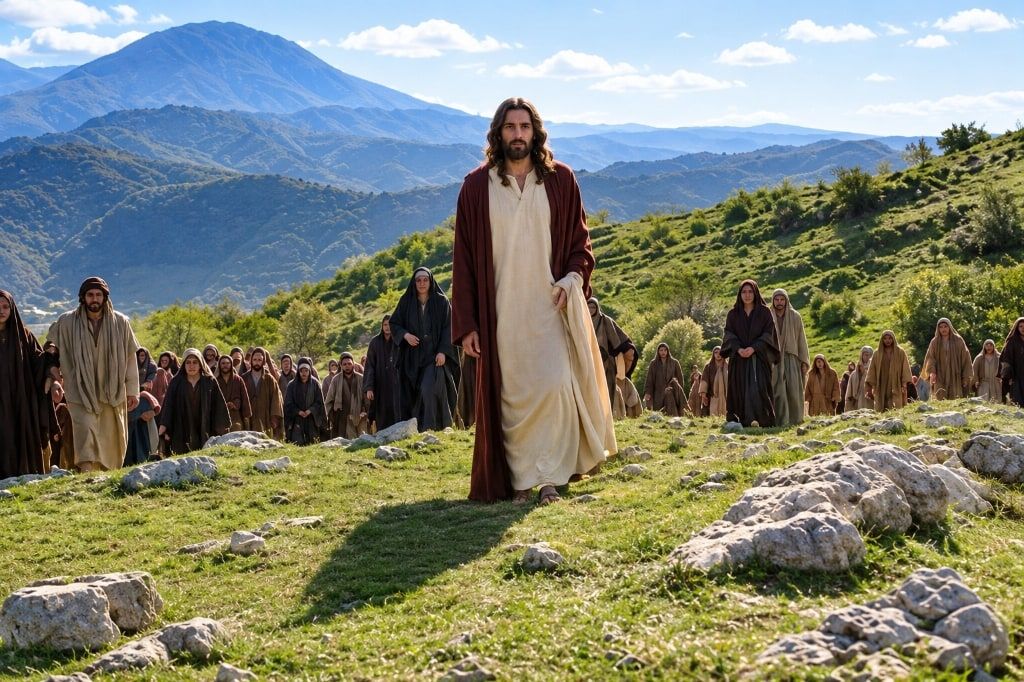
May 25, 2028 is a Thursday. The following day, May 26, kicks off Memorial Day weekend, traditionally one of the four most lucrative box office corridors of the North American calendar. Two titles already sit parked on that four-day frame, and on paper, they represent opposite ends of the cinematic universe: a sprawling biblical sequel recounting the resurrection, and a Disney summer franchise vehicle about a Hawaiian orphan and a mischievous genetic experiment.
In theatrical distribution, counterprogramming is straightforward arithmetic. When an exhibitor programs twenty screens across a suburban multiplex on a long weekend, overlapping demographics can dilute per-screen averages. If two PG family animations open simultaneously, they split parents, carpools, and concessions revenue down the middle.
A faith-based epic and a colorful Disney family sequel do not compete for the same ticket buyers. The family picture packs the three hundred-seat premium large-format auditoriums with parents, grandparents, and elementary school children from early morning matinees through late afternoon. The religious drama fills the remaining mid-sized auditoriums with church congregations and adult audiences during late afternoons and evenings. Neither project cannibalizes the other. Exhibitors maximize total ticket throughput, parking lots stay full, and theater concession stands sell popcorn across eleven consecutive hours.
Disney understands this mathematical balance better than anyone. The live-action reimagining of Lilo & Stitch was crafted specifically to bridge legacy millennial nostalgia with young Generation Alpha viewers, setting up a predictable three-year sequel turnaround. Staking May 2028 so early serves as an unmistakable warning to rival family entertainment studios: keep your animated projects away from late May, because Disney intends to monopolize family auditoriums from coast to coast.
Ten Years Between Blue Suits
Look six weeks past Memorial Day to June 16, 2028, and you run into Incredibles 3. The date is anything but arbitrary. Incredibles 2 premiered on June 15, 2018, grossing over $1.24 billion worldwide. Pixar is landing the third chapter ten years and one day after the second, in the exact same mid-June weekend corridor.
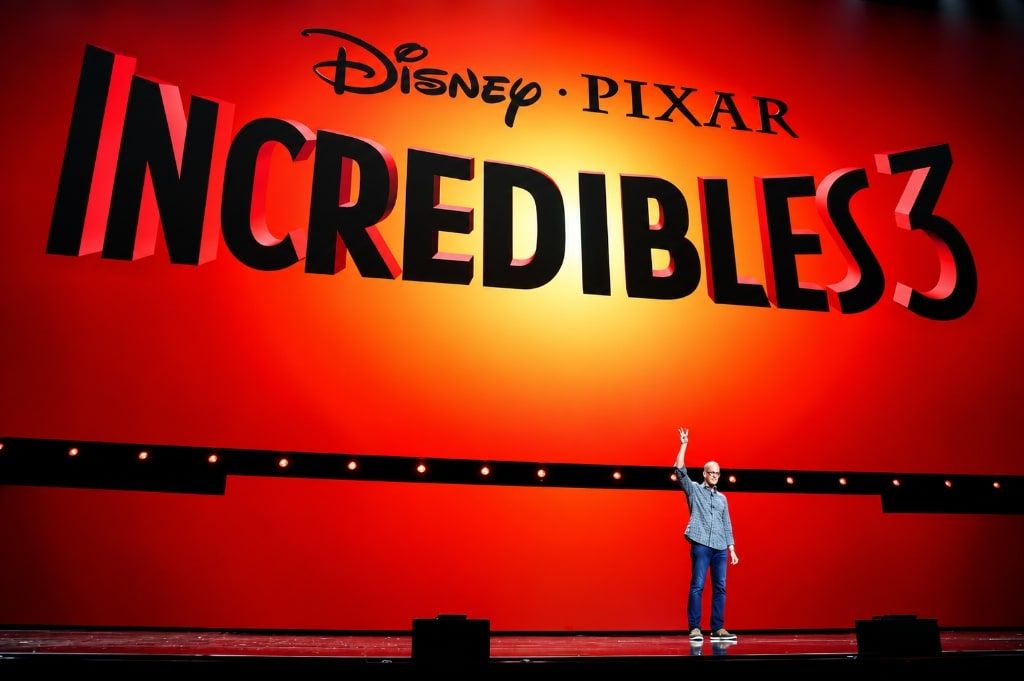
Pixar spent fourteen years navigating the gap between the original 2004 Incredibles and its 2018 sequel. The studio is now taking a full decade to deliver the third installment. That deliberate pacing reveals a sophisticated generational calculation that few film reviews ever capture.
When a studio waits ten years to produce a sequel, it is placing a high-stakes bet on human aging. A seven-year-old child who sat in a theater seat in 2018 clutching a plastic soda cup will be seventeen years old when Incredibles 3 opens in 2028. That teenager no longer needs a parent to drive them to the cinema or buy their ticket; they show up with high school friends during evening showtimes. At the same time, the parents who brought that child in 2018 are now in their forties and fifties, looking back on the franchise with genuine affection and buying tickets for themselves or younger siblings.
Contrast that ten-year generational marathon with Disney's live-action schedule. Lilo & Stitch arrived in late May 2025, and Lilo & Stitch 2 arrives on May 26, 2028. That is a disciplined thirty-six-month harvest cycle, aimed squarely at keeping merchandise shelves stocked and extracting maximum brand value before the child actors age out of their roles. Both models are visible on the 2028 calendar years before either production records a line of dialogue.
The 2028 Slate Is Mostly Controllers
As you work your way down the 2028 schedule, another unmistakable structural shift emerges: Call of Duty, Elden Ring, Ghost Rider, Hello Kitty, Donkey. Aside from legacy comic adaptations and animation spin-offs, the backbone of Hollywood's long-range slate is now built directly on video games and consumer toys.

For two decades, superhero comic books served as Hollywood's primary risk shelter. Studios purchased pre-existing graphic novels because they offered built-in brand awareness and proven narrative arcs. But as superhero fatigue set in and box office returns softened across major franchises, film executives migrated toward an even larger, more lucrative consumer base: active console and PC gamers.
A video game property arrives with an advantage no original screenplay can ever replicate: tens of millions of verified consumers who already spend $70 on software updates, log hundreds of hours in virtual worlds, and identify passionately with the intellectual property. Studio heads do not have to guess who will show up for an opening weekend of Call of Duty or Elden Ring; the demographic is already mapped, quantified, and reachable through direct digital storefronts.

Adapting an interactive medium brings unique creative friction. Modern titles like Elden Ring or live-service shooters do not follow linear three-act structures. They are sprawling atmospheric ecosystems that players inhabit for months at a time. Transforming an open-world fantasy into a two-hour theatrical narrative is an enormous gamble, but Hollywood executives view that narrative challenge as acceptable collateral. What matters to executive suites is that the prospective audience has spent years clutching controllers, buying battle passes, and anticipating live events.
This structural shift accelerates the disappearance of mid-tier theatrical releases. When studios commit vast distribution budgets to gaming behemoths and multi-generational family sequels, the $20 million adult drama and the $35 million mid-budget comedy lose their space on the marquee, a migration analyzed in The Box Office Is Back, but the Middle Is Gone. The modern release calendar is an economic mirror of studio risk aversion, and today that risk is anchored to gaming controllers.
Meanwhile, This Side of the Page
Compare those ambitious 2028 multi-year commitments with the reality of current theatrical releases. On November 6, 2026, Godzilla Minus Zero, Takashi Yamazaki's anticipated follow-up to the Academy Award-winning Godzilla Minus One, arrived on commercial screens backed by enthusiastic critical notices across thirty-eight reviewers. Alongside it sat titles like Bad Apples, Charlie Harper, and Warner Bros. Pictures Animation's The Cat in the Hat.
The contrast between the two ends of the calendar reveals how drastically domestic distribution has shifted. Toho demonstrated with Godzilla Minus One that an authentic, masterfully executed cinematic spectacle made for a modest budget could generate over $115 million in global ticket sales. The film succeeded because it offered visual scale and emotional resonance that demanded an auditorium screen.
Yet look closely at the near-term November listings and notice the commercial tag sitting beside mid-tier titles: rent or buy on digital platforms within weeks of opening. Lionsgate's Beware Boiúna, an atmospheric action-horror centered on an Amazonian mythological serpent, was booked directly adjacent to the Godzilla sequel and animated releases, only to be shunted toward premium video-on-demand carousels almost immediately.
A decade ago, a mid-budget horror or thriller enjoyed an exclusive ninety-day theatrical window to generate word-of-mouth momentum and build box office legs. Today, that theatrical protection window has collapsed to thirty or even seventeen days for anything outside the top five percent of blockbuster releases, an ongoing contraction documented in FAST Channels Aren't Winning. They're the White Flag.. The calendar no longer differentiates between a wide 3,500-screen theatrical rollout and a premium home rental drop because studios stopped treating them as distinct businesses long ago.
What a Date Can't Promise
When an entertainment conglomerate stakes a flag in May or June 2028, it is projecting absolute corporate certainty onto an industry defined by volatility. An entry four years away is fundamentally a placeholder wearing a tuxedo. Directors depart over creative differences, lead actors face scheduling conflicts, production budgets balloon during pre-visualization, and entire executive regimes get overhauled following media mergers.
Yet despite their provisional nature, release dates possess tangible market power. Staking a date discourages rival studios from financing similar projects in the same quarter. It dictates when visual effects vendor houses in London, Vancouver, and Seoul hire digital artists. It guides how theater owners allocate capital toward auditorium refurbishments, and it frames Hollywood trade reporting for multiple years.
The most poignant aspect of Metacritic's release schedule is how effortlessly it flattens the business. The Return of the Projectionist will vanish from independent theaters in a matter of weeks, having completed its humble mission to gather human beings in front of light and shadow. Four scrolls down the very same web page, Incredibles 3, Call of Duty, and Lilo & Stitch 2 sit patiently in their 2028 slots, waiting for scripts to be finalized and cameras to turn on. A studio can replace an entire creative team and discard a dozen script revisions along the way, but it will defend that calendar date at all costs, because staking that weekend is the only element of the future Hollywood truly controls.
Comments (0)
No comments yet. Be the first to share your thoughts.