The $50,000 Emergency Fund Target Is the Wrong Goal
Nearly half of Americans can't cover a $1,000 shock. The problem isn't discipline. It's the target they've been sold.

The median emergency fund balance in the United States has fallen to about $5,000, half its 2025 level, according to 2026 household survey data. The same body of research puts the average amount households say they need for emergencies close to $50,000. Most coverage treats the distance between those numbers as evidence of indiscipline. It reads more cleanly as a product design failure, because the target being sold was built for a balance sheet most households don't have and won't have for a decade.
- 1The Target Is the Problem: Households name an emergency-fund goal near $50,000 while the median balance sits around $5,000, a gap that takes seven and a half years to close at $500 a month.
- 2The Fund Is Doing Two Jobs: 37% of US adults drew on emergency savings in the past year, and most of those withdrawals went to recurring bills rather than one-off catastrophes.
- 3The First Thousand Dollars Carries the Return: Cash yielding 4.25% against debt revolved at 22.36% produces roughly a $160 swing per $1,000 a year, which makes the floor more valuable than the target.
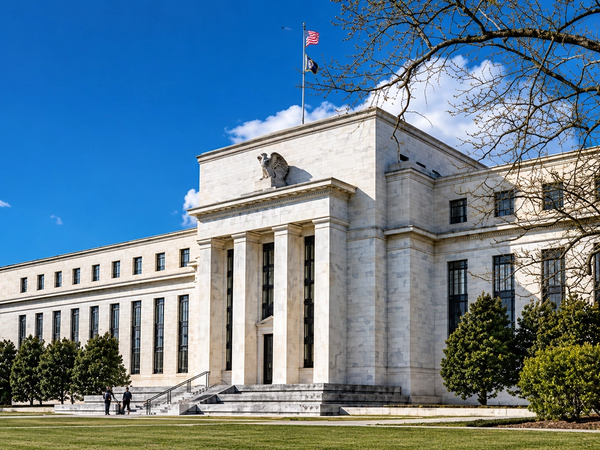
The timing matters. Cash pays again. The best widely available high yield savings accounts are paying above 4% APY, with the top tier near 4.25% in WSJ Buy Side's November rate table, while the effective federal funds rate sits just under 3.9%. Against that, the Federal Reserve's own series puts the average APR on card accounts carrying a balance at 22.36% as of August. A household with a buffer is being paid to keep it. A household without one is renting the same money at one of the highest retail borrowing costs in the developed world, and doing it every time a water heater fails.
The Gap That Produces Paralysis
Roughly 43% of Americans say they couldn't cover a $1,000 emergency from savings, and about a third say their savings wouldn't fund a single month of living expenses. Those figures get published every year. What's different in 2026 is the shape of the distribution around them: a median balance of about $5,000 sitting beneath an average stated target near $50,000. A household reading that research is being told, in effect, that the typical American holds one tenth of what they ought to. Translated into time, the recommendation becomes an instruction to run a seven year race before feeling safe.
Figures assume $3,500 of essential monthly costs and no interest earned, which understates the savings-account case slightly and flatters nothing else.
The first row is achievable inside a single quarter and changes the household's cost of borrowing from the day it's filled. The last row is more than eight years of uninterrupted discipline for a household that, by the survey's own measure, is one car repair away from a card balance. Most people quit somewhere in the middle, and the quitting is what the survey then records as an absence of savings.
The standard objection to holding idle cash is opportunity cost, and it's a weaker objection at a 4% yield than it was when savings paid nothing. The same math that makes a five percent bond yield a problem for equities makes a four percent savings account a real alternative for a household deciding where its next thousand dollars sits. For most of the past fifteen years that comparison was a joke. It isn't now.
Where the Withdrawals Actually Go
Bankrate's 2026 emergency savings research found 37% of US adults had tapped their emergency savings in the previous 12 months. Among those who did, 51% cited unplanned emergency expenses, 38% pointed to monthly bills, and 32% to day to day spending. Millennials were the most likely cohort to have done it, at 42%.
That breakdown is the most useful data point in the entire debate, because it shows an account doing two incompatible jobs. One is absorbing genuine shocks: a transmission, a hospital copay, a layoff. The other is smoothing income that doesn't line up with obligations. Once more than a third of withdrawals are ordinary bills, the fund is a checking account buffer with a different label, and it will always look underfunded because it's draining on a monthly cycle and not just an annual one.
There's a practical consequence buried in that. A household building six months of expenses inside an account it also raids for the electricity bill is climbing a staircase where every third step goes down. Separation between the shock account and the bill account matters more than the balance in either.
Automate the transfer for the day after payday into an account at a different institution, and leave it without a debit card. Buffers survive on friction, not willpower.
What the First Thousand Dollars Is Worth
The marginal return on an emergency buffer isn't linear, and the math on the first thousand dollars is the clearest number in household finance.
Take $1,000 charged to a card at the Fed's August average of 22.36% and repaid at $100 a month. The balance clears in twelve months and costs about $117 in interest, so the household pays roughly $1,117 for a thousand dollars of liquidity. Put the same $1,000 in an account paying 4.25% and it earns about $42.50 over the year. The swing between funding the buffer and borrowing against its absence is roughly $160 per $1,000 per event, before counting the credit score damage and the reduction in available credit.
That number falls with every additional thousand, because each one displaces a cheaper alternative. The first month of expenses removes the most expensive borrowing a household can access. The sixth month removes an option the household might never need and could finance with a 401(k) loan. A $2,000 floor and a $50,000 target shouldn't be presented as points on the same line.
The other asymmetry runs the other way. Moving $5,000 from a traditional savings account paying the FDIC's 0.38% average to one paying north of 4%, as CNBC Select's current ranking shows, is worth about $190 a year for one afternoon of paperwork. Nothing else in household finance returns that much for that little effort, and it's the only part of this problem that doesn't require new income from anyone.
Why the Buffer Only Needs to Match the Alternative
An emergency fund functions less as insurance than as a substitute for the next cheapest source of liquidity, and its correct size is whatever makes that next source unnecessary. In the United States the next source is a revolving card at 22%, which is why the floor matters so much and why the pitch for a $50,000 cash pile can feel so urgent.
Where the alternative is cheaper, the buffer can be smaller. In economies where formal credit is expensive or unavailable, households build the same protection through rotating savings groups, mobile money wallets, or family obligations, and the balance is a social claim rather than a bank line. Those structures carry their own costs and they aren't superior. They do change the math, which is why importing an American six month rule into a market with different credit infrastructure misreads the problem entirely. In economies with real inflation or currency risk, holding cash is itself the loss, and a saver's buffer migrates into gold, dollars, or land for reasons no savings account fixes. That's the dynamic that hits savers before it hits importers, and it's a large part of why the six month rule has never travelled well.
What the Target Should Be Instead
The three to six month rule is a heuristic about how long it takes to replace an income. It's reasonable for a single earner in a volatile industry. It's over-engineered for a two-income household with salaried jobs and short unemployment spells, and it ignores three variables that now matter more than the heuristic itself: the price of the alternative credit, the presence of a second income, and the limited penalty free retirement withdrawal federal law now allows for personal emergencies.
The ordering is the argument. A household should build the floor before it builds the buffer, and it should build the buffer in an account that pays something. Every dollar that moves from 0.38% to 4.2% is a guaranteed return with no market risk, and it's available to anyone with a phone and an afternoon.
The Variable That Hasn't Been Settled
The question the 2026 data can't answer is whether the household buffer is a savings product or a shock absorber for wages that no longer clear fixed costs. If the share of withdrawals going to ordinary monthly bills keeps climbing past 38%, no account design fixes the problem, because the buffer will keep getting converted into rent and the survey will keep finding it empty. The current policy conversation, which is almost entirely about financial literacy and automatic enrolment, assumes the first explanation. The distribution of withdrawals points at the second.
What hasn't been settled is whether the shortfall closes through the income line or the expense line. Until it does, the median balance will keep halving while the stated target climbs, because the two numbers are being generated by different systems, and the household is being asked to save its way out of a gap that opened somewhere else.
Disclaimer: This article is for informational purposes only and does not constitute financial advice. Past performance is not indicative of future results. Consult a qualified financial advisor before making investment decisions.
Comments (0)
No comments yet. Be the first to share your thoughts.