Why $400 Phones Caught Up to $1,200 Flagships
Flagship chips hit a power wall, so last year's premium silicon ships in $400 phones. The engineering behind the collapse.

Twenty-four watts isn't much power in absolute terms. It's roughly what a bright LED bulb draws, less than a cheap kettle, a small fraction of what a data-center accelerator burns while idling. Put those 24 watts into a sealed 200-gram slab of aluminium and glass resting in someone's palm, and you have a heat problem with no clean exit. There's no fan and no vent, and the frame can only spread warmth across a surface that a hand is already covering. Published stress tests of Qualcomm's Snapdragon 8 Elite Gen 5 have recorded package power near that figure while GPU frame stability fell to roughly a quarter of its opening number once the chassis heat-soaked. Nothing breaks. The phone simply decides, several minutes in, to stop being the device its spec sheet advertised. That single physical constraint explains more about 2026 pricing than any launch event did.
- 1The ceiling is thermal, not computational: Flagship chips peak near 24 watts in a passively cooled body that can shed a fraction of that, so the performance a buyer actually feels is set by the chassis, not the die.
- 2Last cycle's flagship silicon got cheap: As foundries push into 3nm and 2nm, 4nm capacity frees up. That's how eight big cores and a 2.1 million AnTuTu score end up in a phone under $500.
- 3The value window is narrowing: Memory prices jumped more than 50% in a single quarter of 2026, and the bill-of-materials hit lands hardest, proportionally, on exactly the $400 phones that made this argument possible.
The power wall a flagship chip hits inside a phone chassis
A passively cooled phone can shed a few watts continuously. Anything above that gets stored as heat in the frame, the battery, and eventually the user's hand, and that storage fills fast. So every flagship SoC ships with a governor that spends its peak budget in bursts, opening the taps for a few seconds and pulling back before surface temperature crosses a threshold the manufacturer is willing to defend. A phone's thermal budget is a narrow drain. You can pour a bucket into it for twenty seconds and it looks like the drain is coping. Hold the bucket upside down for ten minutes and the water just pools on the floor.
MediaTek's Dimensity 9500 and Qualcomm's 8 Elite Gen 5 make the point from opposite directions. Published stress testing puts the 8 Elite near 24.1 watts at peak with frame stability around 25% under extended load, while the Dimensity caps draw near 18 watts and holds sustained GPU performance better. Both numbers sit well above what any phone body can dissipate, which means the flagship's advantage across a long gaming session is far smaller than its advantage in a thirty-second benchmark. The ratio that matters to a buyer is first-minute frame rate against tenth-minute frame rate.
Most of what fills a day on a phone doesn't stress a modern CPU at all. Scrolling, camera preview, maps, messaging, video, payment flows, all of it leans on memory latency, image signal processing throughput, and how quickly the scheduler wakes the right cores. A mid-tier chip that holds its clocks is more useful there than a flagship chip that sprints and throttles. I'd argue the power envelope, not the instruction set, is the whole story of why a $400 handset feels indistinguishable from a $1,200 one for the first ten minutes of use.
Why last year's flagship silicon ends up in cheap phones
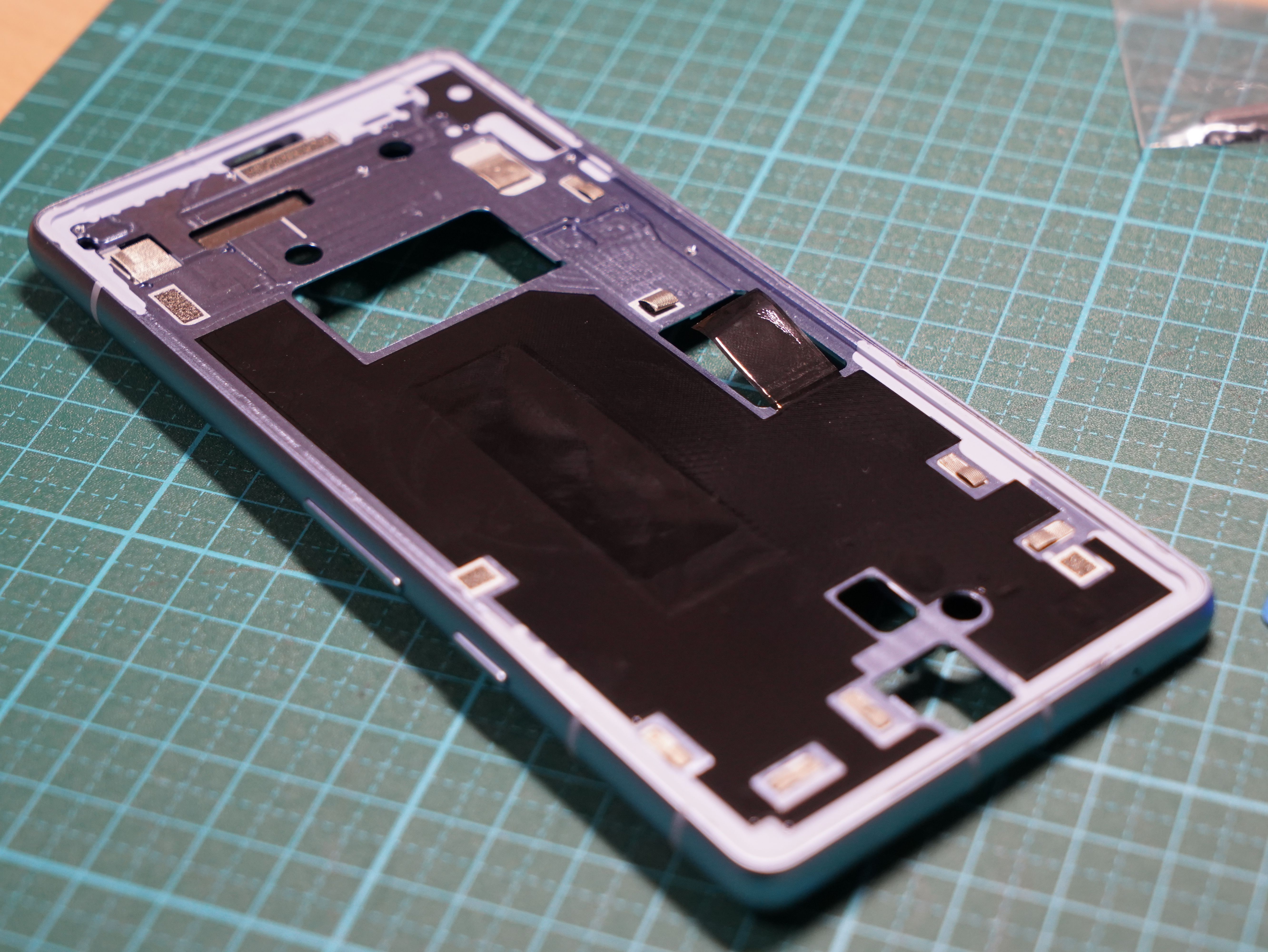
The trickle-down is a foundry story before it's a marketing story. Leading-edge wafer capacity is scarce and expensive, and every square millimetre goes to parts that can carry the highest price: the 8 Elite, the Dimensity 9500, Apple's A-series Pro. Once a node matures and the next one ramps, older capacity becomes abundant and cheap, and the mid-tier gets to design on it without rationing area. That's how MediaTek shipped the Dimensity 8500 on 5 January 2026 as a 4-nanometer part with an all-big-core layout: one Cortex-A725 at 3.4GHz, three at 3.2GHz, four at 2.2GHz, and a Mali-G720 MP8 for graphics. Geekbench 6 lands around 1,555 single-core and 6,405 multi-core, with AnTuTu 11 near 2.12 million.
Deleting the little cores is a die-area bet. Efficiency clusters exist because they're small and they sip power at idle, and you only replace them with four more big cores when area is cheap and the node leaks little enough that idle draw doesn't wreck battery life. That layout is a direct readout of the economics: mid-tier silicon in 2026 has room to be extravagant in the exact dimension that used to define flagship parts.
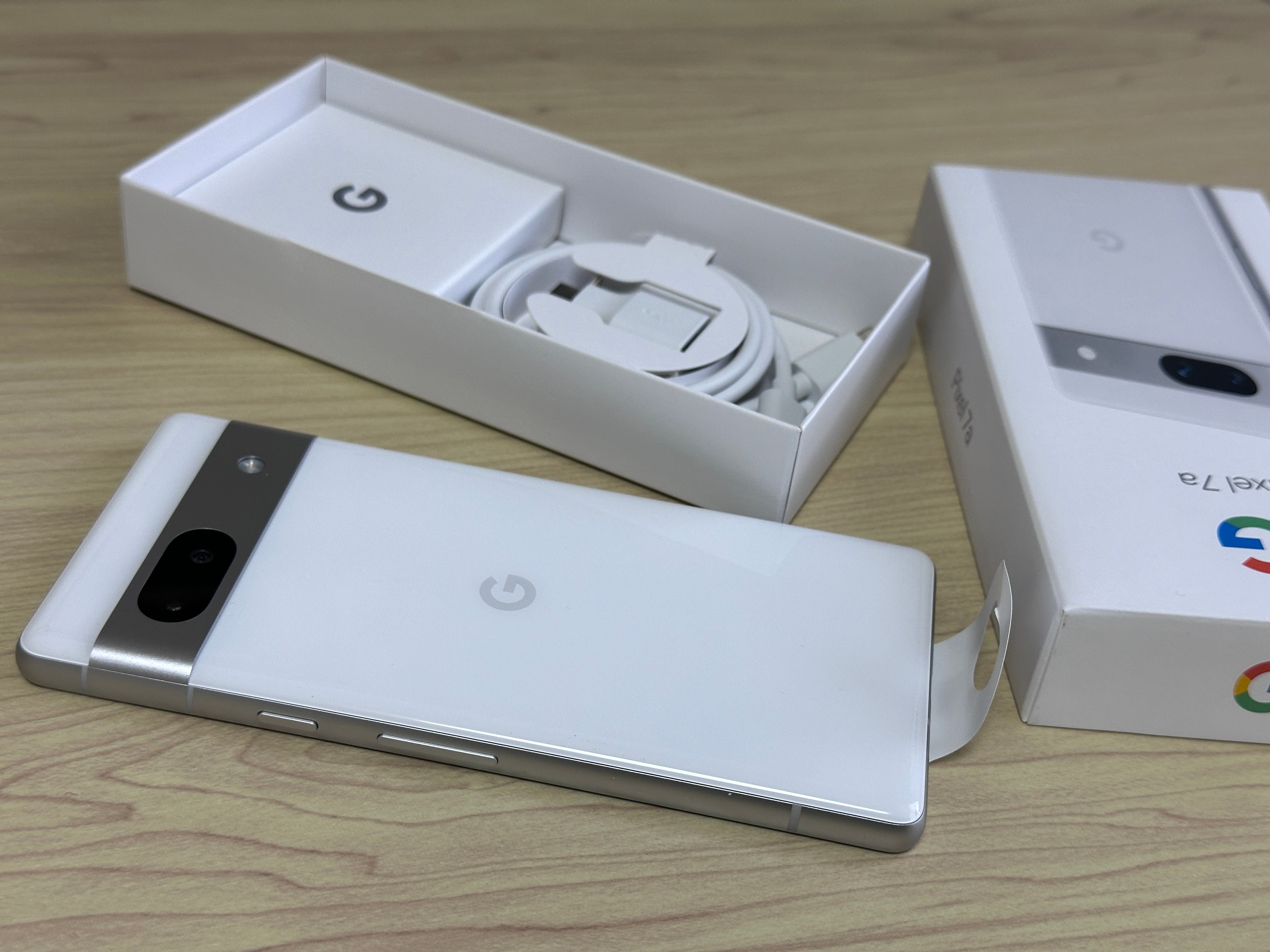
Reuse does the rest. Google launched the Pixel 10a on 5 March 2026 at $499 running Tensor G4, a chip that first appeared in its 2024 flagships, paired with 8GB of LPDDR5X and a 5,100mAh battery. Putting two-year-old flagship silicon in a $499 body isn't purely a cost compromise. It's a statement that the compute inside a mid-range phone is now last cycle's premium compute, and that Google would rather spend the savings on camera tuning and seven years of OS updates.
What a $499 handset now carries line for line
The spec sheet of a good mid-range phone in late 2026 reads like a flagship sheet from three years ago with the exotic parts removed. The Pixel 10a runs a 6.3-inch pOLED at 1080x2424 with a 60 to 120Hz range and 3,000 nits peak, brighter than several phones that cost twice as much a generation back. It carries IP68, Gorilla Glass 7i, 10-watt wireless charging, 30-watt wired charging, and a 48MP main sensor with optical stabilisation.
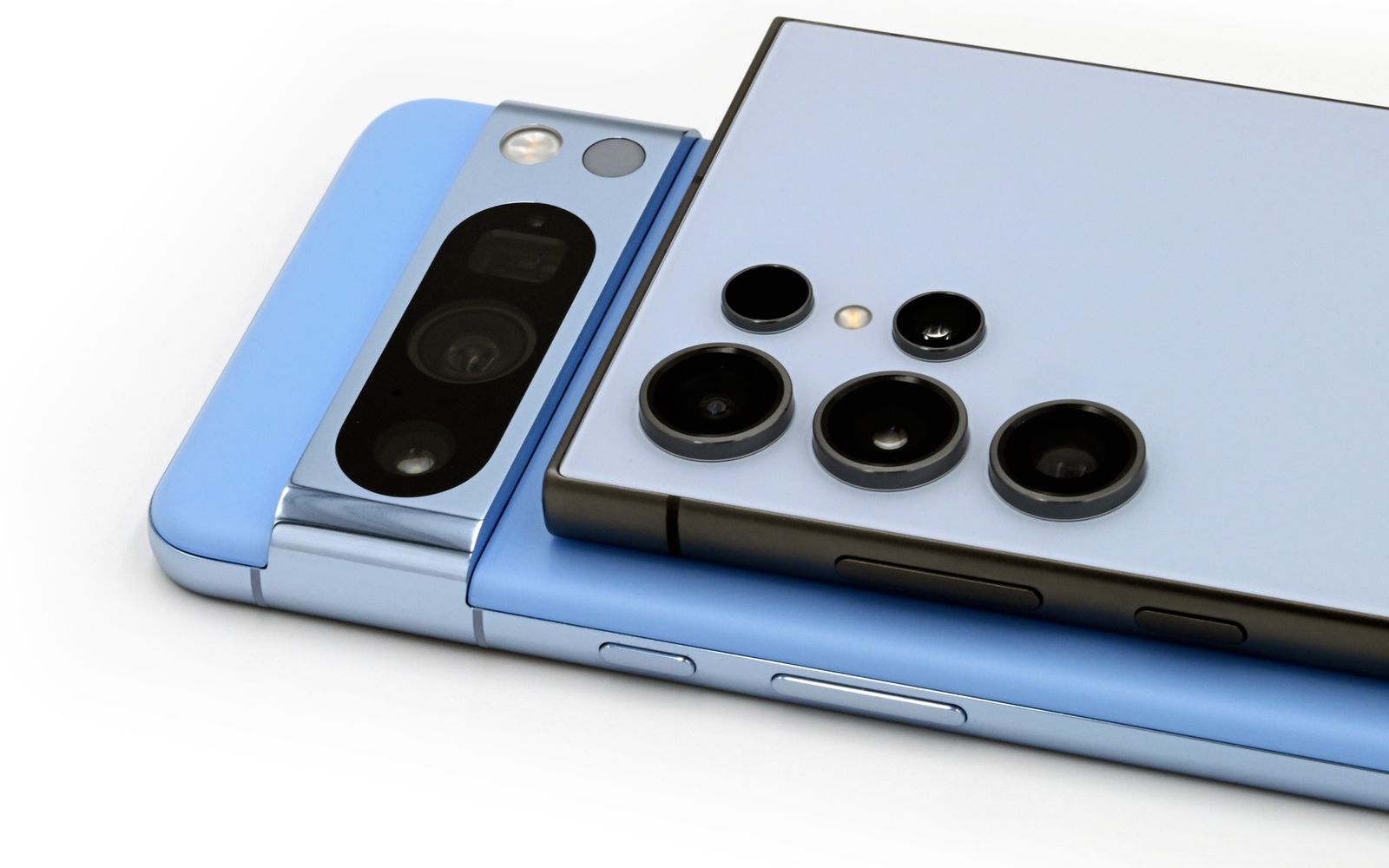
The honest comparison isn't spec against spec. It's which line items a buyer would notice if they vanished, and on that test most of what the $700 premium once bought has been commoditised by suppliers who now sell the same panel, the same haptics, and the same charging controller to everyone. WIRED's phone testing puts the Pixel 10a alongside the Galaxy S26 Ultra in the same shortlist, which would have been an absurd sentence to write three years ago.
Where the extra seven hundred dollars still shows
Memory is the first place. LPDDR5X is the same standard at both ends of the market, but capacity and channel count aren't. Twelve to sixteen gigabytes changes how many apps survive a switch, how much of a camera burst stays in RAM, and how gracefully the system behaves with forty browser tabs open. UFS 4.x storage roughly doubles sequential read throughput against the UFS 3.1 in the Pixel 10a, which shows up in app installs, video capture, and the pause before a large game loads.
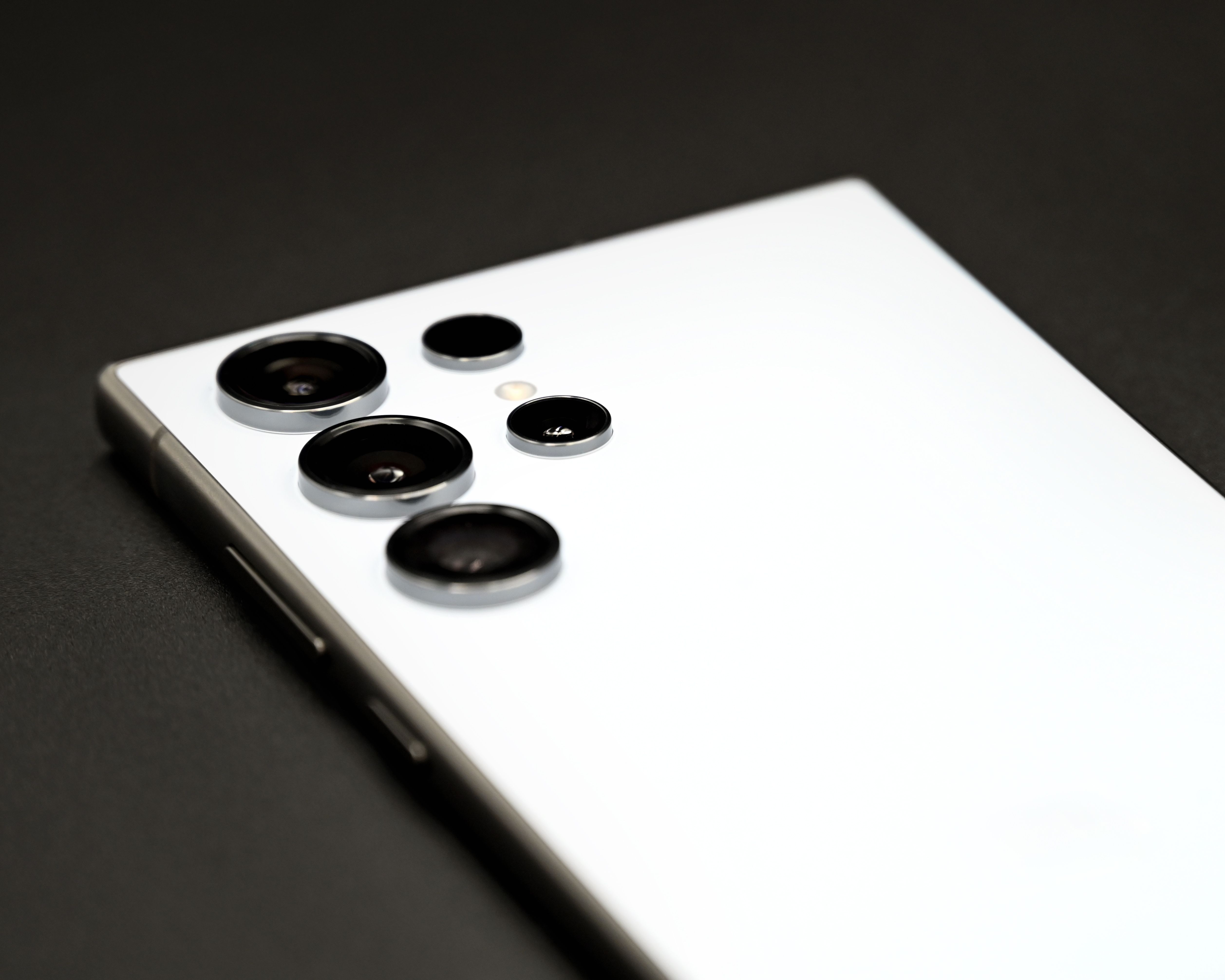
Camera hardware is the second. Sensor area governs how many photons arrive per pixel, and no amount of computational photography invents light that never hit the silicon. A 48MP main sensor at $499 produces genuinely good daylight images because multi-frame stacking has become cheap. In a dim room at a slow shutter, the larger sensor and the extra ISP headroom in a flagship start to separate, mostly in how the pipeline handles motion between frames.
Display is the third and the least decisive. LTPO panels that drop to 1Hz for an always-on clock save real power and cost real money. A fixed 120Hz LTPS panel delivers nearly the whole experience for most people and none of the bragging rights.
The fourth item, software support, has stopped being a differentiator. Google ships seven major OS updates with the $499 Pixel 10a, the same promise it makes on its flagships, and Samsung has pushed long support down its A-series. That was the last honest argument for paying double, and it has mostly evaporated.
The memory squeeze is repricing the sweet spot
The uncomfortable part is financial. The mid-range's rise has been financed by cheap components, and the cheapest of those is no longer cheap. Counterpoint recorded DRAM prices rising more than 50% quarter on quarter in the first three months of 2026, with NAND flash up more than 90% over the same period, driven by data-center demand that keeps bidding memory away from phones, a dynamic I examined in the context of the wider AI capital spending boom. The bill-of-materials damage is uneven: devices below $200 wholesale absorbed a 20 to 30% jump, while the mid and high tiers saw 10 to 15%, according to CNBC's reporting on Counterpoint's figures. Gartner's February forecast projected a 130% rise in combined DRAM and solid-state pricing by the end of 2026, with phone prices up 13% and shipments down 8.4%.
Run the numbers on a $400 handset and the shape of the problem becomes plain. If the bill of materials sits near $200, a 12% increase is roughly $24 of added cost on a device whose gross margin per unit is often a small fraction of that. Absorb it and the SKU stops making money. Pass it on and the $400 phone becomes a $450 phone, which is how a sweet spot shifts without anyone announcing it.
There's a counterintuitive wrinkle. Flagships absorb memory inflation more easily because their margins are larger, so the percentage gap between tiers may narrow even as the absolute price of a good mid-ranger climbs. The premium tier can eat the cost. The value tier has to pass it along.
What model residency does to the gap
The next separation point probably isn't a CPU benchmark. It's capacity. On-device models live in memory and stay resident, and the math is unforgiving: a 4-billion-parameter model quantised to four bits occupies about 2 gigabytes of weights before you add the key-value cache that grows with context length. Put that on a phone with 8GB of RAM, where the OS and a handful of apps already claim several gigabytes, and the model has to be swapped, streamed, or shrunk. Put it on a 16GB flagship and it sits there permanently, waking instantly, running against the NPU with room to spare. That's the axis the next round of differentiation will follow, and it's the one place where the memory crisis cuts against the mid-range twice: capacity is what the premium tier gets to keep, and capacity is what just got expensive.
What nobody has demonstrated yet is whether a four-billion-parameter model compressed hard enough to fit a $400 phone can do the work people actually expect from it, or whether the useful threshold sits far above the memory those devices can afford. That question belongs to quantisation and sparsity research as much as to silicon, and it will be settled in labs, not at launch events. Until it is, the $400 phone's claim on flagship territory holds. The thing that eventually ends that claim will be a capacity figure, not a clock speed.
Comments (0)
No comments yet. Be the first to share your thoughts.