Adam Keys on Why the AI Model Race Is Pausing
Adam Keys thinks the frontier race is pausing. The capex math and the retry tax on coding agents suggest he's read the room right.

Open a terminal on any working developer's machine in 2026 and you can hand a coding agent a repository carrying a few hundred thousand tokens of history. It reads the whole thing, drafts a patch, runs the test suite, watches four assertions fail, and repairs its own work without being asked twice. The patch lands. It's also, in a way that's hard to name until you've read a few hundred of them, dull.
- 1The Pause Thesis: Adam Keys argues the frontier capability race is heading into a lull, and the cause is financial rather than physical: IPO quiet periods and the bad optics of autonomous systems failing in public.
- 2The Capex Arithmetic: The big five hyperscalers are on pace for roughly $602 billion of capital spending in 2026, about three quarters of it AI infrastructure. Against Anthropic's $47 billion annualized revenue, that's close to $10 of buildout for every $1 of run rate.
- 3The Retry Tax: An agent that succeeds on its first attempt 70% of the time still costs about 43% more per finished task than its listed price implies, and that overhead is where the boredom comes from.
Adam Keys, a staff software engineer in Portland, Oregon, has been circling that dullness for most of this year. His blog is the sort of place where the posts are short, the sentences are worked over, and the conclusions arrive sideways. One post from July put the problem in a line worth quoting in full. Writing about the coding agents he uses daily, Keys said: "They are boring as nails and write like an entrance exam question." He described the same tools, in the same paragraph, as "an always-on, amazingly deep collaborator."
Both things are true at once, and the tension between them is a better guide to where the AI industry sits in late October 2026 than most benchmark charts.
The Lull Is a Financial Event Before It Is a Technical One
Keys has argued, across a stretch of posts, that the frontier capability race is entering a lull, and his reasoning has nothing to do with broken scaling laws or exhausted data. It's about incentives, which have quietly inverted for the companies doing the racing.
The IPO calendar is the clearest case. Anthropic confidentially submitted a draft Form S-1 to the SEC on June 1, 2026, off a $965 billion post-money valuation from the $65 billion Series H round that closed days earlier. Reuters reported the listing window shifting toward mid-October. A company in registration is restricted on what it can say about forward prospects while everyone outside the company keeps talking. In that window a splashy capability demo becomes a liability, because a model that behaves unpredictably inside a customer's pipeline turns into a risk-factor paragraph in a document that sets the valuation.
The capital points the same direction. The big five hyperscalers are on pace to spend something near $602 billion in 2026, up about 36% on 2025, with roughly three quarters of it tied directly to AI infrastructure. Set that against Anthropic's $47 billion annualized run rate and you get nearly $10 of industry buildout for every $1 of the leading lab's revenue. That ratio doesn't have to resolve this quarter, but it does explain a preference for billable, incremental improvement over a capability jump that resets pricing across the stack.
If you build on these APIs, the quiet period has an operational signature. Pricing commitments and deprecation schedules announced inside a registration window tend to be conservative, and the changes that matter usually land after the review clears.
Where the Money Actually Goes in a Session
The move from demos to production changes which numbers in the stack cost anything. During the training-run era, the interesting figure was the amortized cost of one frontier run, growing at about 2.4x per year since 2016 and heading past $1 billion. In an agent era the interesting figure is the cost of one completed task, and that cost has a shape most teams never model.
Two mechanisms dominate. Prefill is the work of ingesting context into the model, and it scales with everything stuffed into the window. Decode is the token-by-token generation, and it scales with output plus every tool call the agent decides to make. An agent session resends its own history each turn, so a loop with thirty steps re-reads a growing context thirty times. Generated tokens are the visible expense. The re-reads are the one that turns up on the invoice.
That last row rewards arithmetic. Suppose an agent resolves a task on its first attempt with probability p, and each failed attempt costs the same as the first. Expected attempts per success then equals 1/p. At a 70% first-pass rate you're paying for roughly 1.43 attempts per finished task, which is 43% overhead on whatever the per-call sticker price told you. At 50%, the overhead is 100%. The retry tax never appears in a benchmark table and it never goes away in a budget, and it's the single biggest reason agent economics feel worse in production than they look in a launch post.
Loading Diagram...(Hard refresh if it doesn't appear)
Why Correct Output Reads Like an Entrance Exam Question
The dullness Keys describes isn't a quirk of one model family. It's what the training signal asks for. Coding agents get trained and evaluated against things a machine can grade: unit tests that pass or fail, patches that apply cleanly, functions that satisfy a type signature. Optimize hard against a grader like that and the policy drifts toward the modal solution, the one a careful student produces under exam conditions, because the modal solution maximizes the probability of passing.
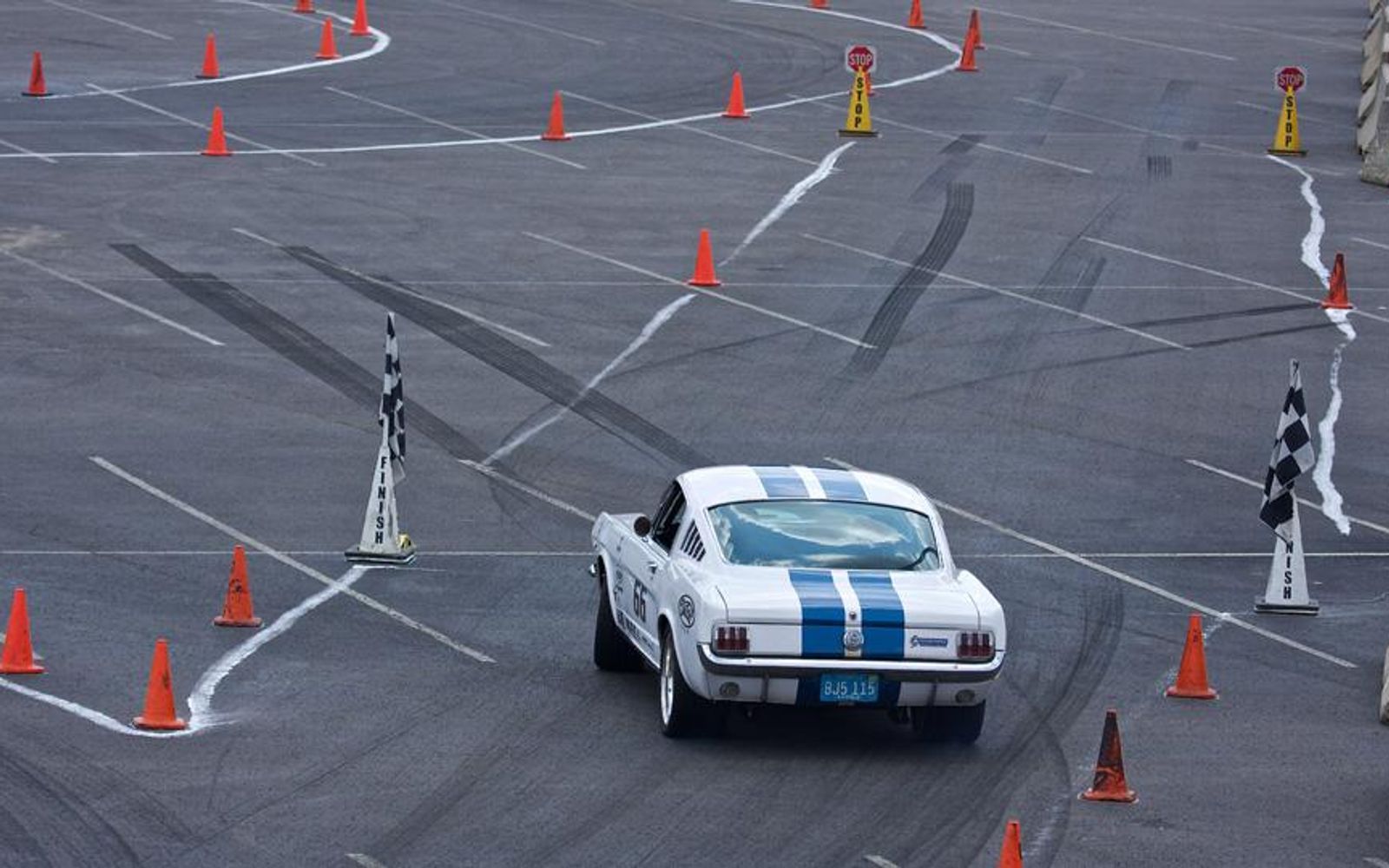
Picture setting up a car's suspension to survive the worst road it might ever hit. Stiffen it enough and the potholes stop hurting. Take that same car to smooth asphalt and it feels inert, disconnected, as though the steering wheel is attached to a suggestion box. Nothing about the setup is broken. It was tuned for the surface it expected, it got very good at that surface, and it surrendered everything else to do it.
Preference optimization does something similar to prose. Reward models trained on human comparisons learn what raters consistently prefer, and raters consistently prefer safe, structured, obviously defensible answers. Variance collapses. The output gets more reliable and less interesting, and both effects come from the same gradient. That trade is a bargain for a payment reconciliation script and a loss for any problem where the value sits in the sentence nobody expected, which is the same argument behind why memory architecture now matters more than raw benchmark scores.
A Pause Redirects Effort Into Reliability and Hardware
If the frontier stalls for a few quarters, the engineering energy goes somewhere, and the visible destination is the layer beneath the model. Smaller models that fit on one machine, quantization schemes that hold a 70-billion-parameter mixture-of-experts model inside 40 gigabytes of memory, speculative decoding to cut decode latency, prefix caching so the prefill bill stops compounding every turn. None of that is glamorous. All of it is what turns an agent from a demo into a colleague, and it's the same loop that keeps these systems churning through retraining long after the launch.
The hardware spec changes with it. Decode-bound inference behaves more like a memory bandwidth problem than a FLOPS problem, so the machines that matter for local agents look nothing like the machines that matter for training runs. Wider memory buses, more unified RAM, cheaper capacity per gigabyte. The gap between open-weight and closed models has been measured in months rather than years for a while, and a frontier pause compresses it further, which makes the practical frontier for a lot of teams whichever weight file already fits on the desk.
The Measurement Problem at the Bottom of It
Keys's answer to all this wasn't to switch the tools off. In late October he wrote about feeling two-dimensional, about attention-hungry algorithms making his feeds predictable, about wanting more shape and variety in his life and then going out and finding some of it around the city he lives in. Read that as a lifestyle post if you like. Read it as an engineering post and it says something sharper: what keeps a person's judgment calibrated is ambient variety, exposure to inputs they didn't choose.
What the industry has not built is a cheap instrument for telling whether output is merely correct or genuinely generative, and the instruments that exist collapse under pressure. Pass rates reward the modal answer. Novelty scores get gamed the moment anyone optimizes against them, because a fixed novelty metric is a target and targets get hit. I'd hold onto that as the constraint that actually defines 2027: the lull ends when someone works out how to grade surprise without turning it into a leaderboard, not when the next training run finishes. Whether a training signal for surprise can exist at all, in a regime where the grader and the graded are both machines, is the open question. Until someone answers it, the industry will keep shipping work that is correct, defensible, and about as lively as an entrance exam, because that is precisely what the grader pays for.
Comments (0)
No comments yet. Be the first to share your thoughts.