Top African Startups to Watch Before Everyone Else Does
Bloomberg's 2026 Africa Startups to Watch list surfaced 25 private companies building real infrastructure across the continent. These ten, from a Nigerian defense drone manufacturer to a Tanzanian alternative credit scorer, represent the most compelling cases for long-term attention.

Every year, the same recycled names dominate "startups to watch" lists across the continent. Most of them are consumer fintechs burning venture capital on customer acquisition in capital cities that already have multiple competing apps. I wanted to do something different with this list. The ten companies below were drawn from Bloomberg's 2026 Africa Startups to Watch list, which evaluated 25 private companies across the continent. I cross-referenced each against reporting from TechCabal and Techpoint Africa, verified their latest funding rounds, and investigated the operating backgrounds of the founders.
Living and working in West Africa, one pattern becomes obvious very quickly. The startups that survive here are not building glossy lifestyle apps. They are building where basic infrastructure and state systems have failed to deliver. Drones for asset defense, cross-border mobile money rails, pharmaceutical verification, rural water kiosks, and smallholder farm logistics: these are unglamorous problems with real, paying customers.
1. Terra Industries
Nigeria | Defense Technology | Founded 2024

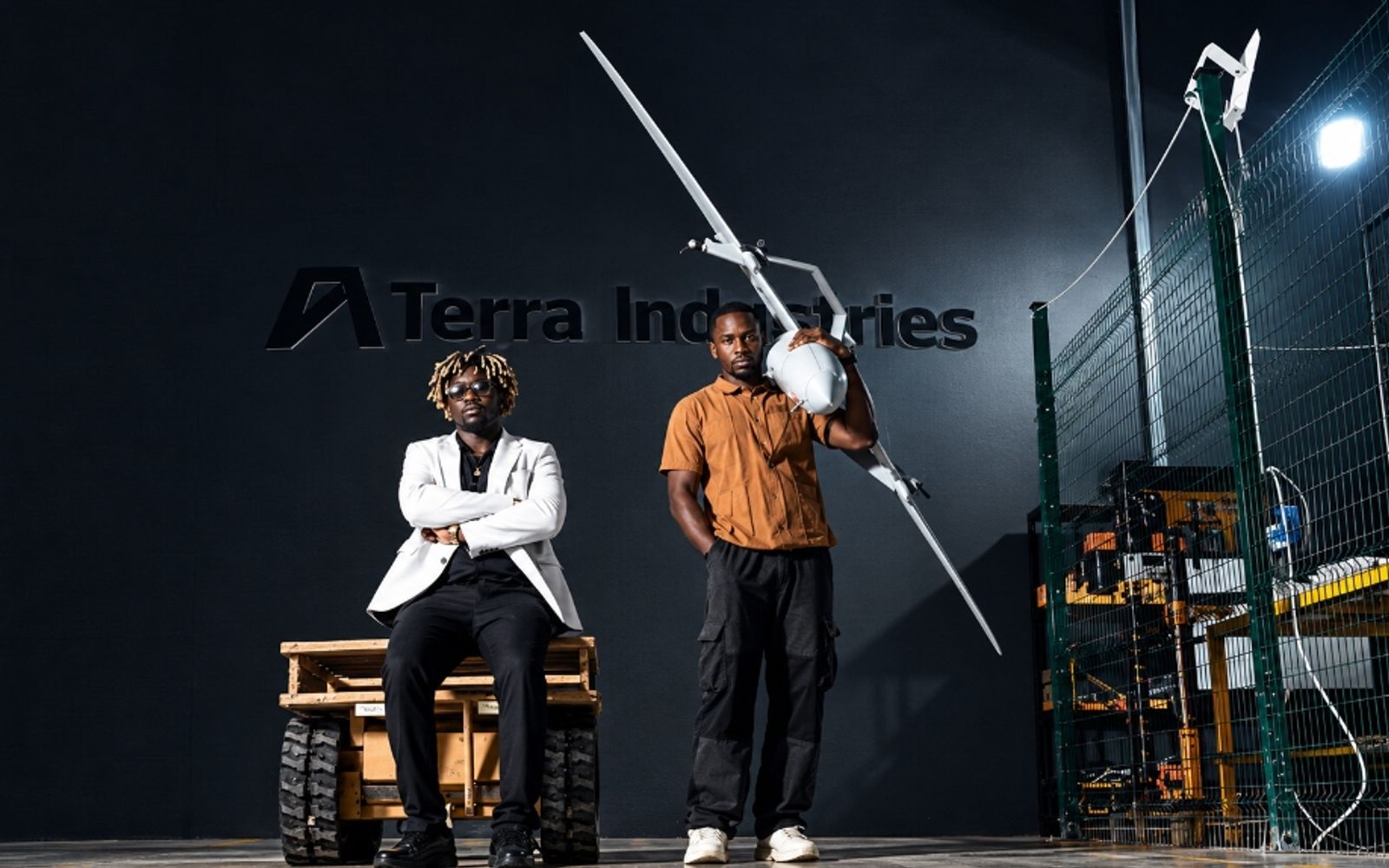
Terra Industries builds surveillance drones, sentry towers, and autonomous ground vehicles designed to protect critical infrastructure like oil pipelines, mines, and electrical substations across Nigeria. Its proprietary operating system, ArtemisOS, ties these hardware nodes together for automated mission planning and threat detection. In August 2026, the company raised an additional $18 million, expanding its seed funding to $52 million with backing from venture capital firm 8VC. To scale production, Terra is commissioning a 34,000-square-foot manufacturing plant in Accra, named Pax-2, designed to produce up to 50,000 autonomous units annually by 2028, alongside opening a commercial office in London.
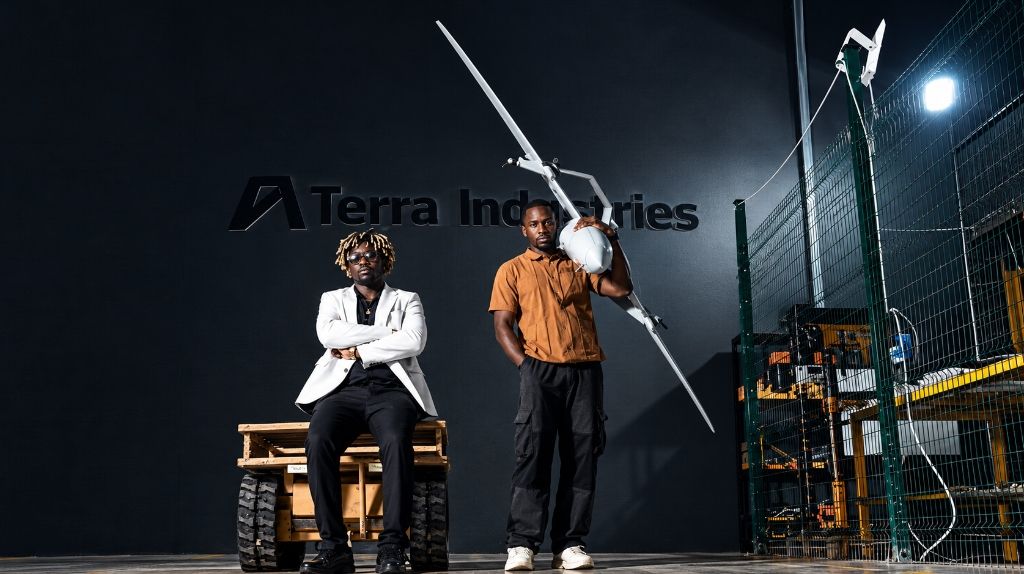
The founding pedigree explains the speed. CEO Nathan Nwachuku was 22 when the first seed tranche closed. He previously represented Nigeria at the International Physics Olympiad and built the digital learning platform Klas at 18. CTO Maxwell Maduka grew up in Nigerian Navy barracks, served as the Navy's lead drone engineer at 18, and later founded micro-drone company Spatial Nova, which was acquired by Nigerian automaker Nord Motors in 2022. Nwachuku has stated that building defense hardware locally is the only sustainable way to secure African infrastructure without relying entirely on foreign suppliers.
If I had to follow only one company from this entire cohort, Terra would be my personal standout. That conviction comes with clear eyes about the operational hurdles: defense procurement moves at the agonizing speed of government committees, and established drone manufacturers from Turkey, China, and the United States are aggressively bidding on African security tenders. The critical milestone to watch is whether their Accra facility meets its 2028 output targets on schedule.
2. PawaPay
Pan-Africa | Payments Infrastructure | Founded 2020
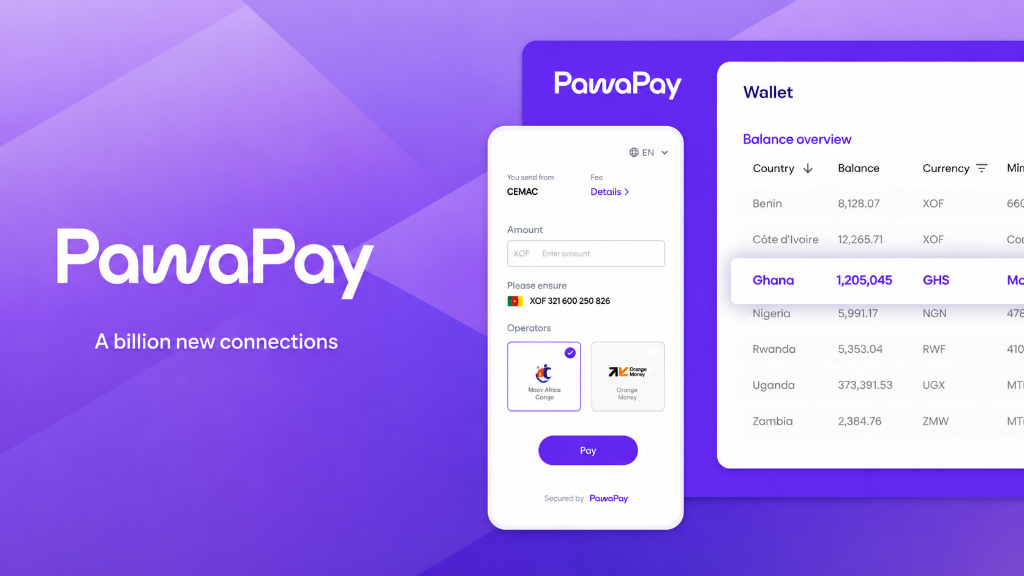
Mobile money dominates personal and merchant payments across sub-Saharan Africa, but telecom operators operate in walled gardens. A multinational enterprise attempting to collect payments in Kenya, Ghana, and Cameroon previously had to negotiate separate integrations, escrow terms, and currency conversions in every market. PawaPay solves this by providing a unified API gateway covering roughly 20 African markets, handling automated settlement, foreign exchange, and multi-network reconciliation. Its daily transaction volume expanded from 2.4 million to over 5 million, and Bloomberg confirms the business has operated profitably since 2023.

CEO Nikolai Barnwell spun PawaPay out of African sports betting operator BetPawa, which gave the founding engineering team early, painful visibility into the high failure rates and liquidity snarls of cross-border telecom wallets. The company raised an initial $9 million seed round from 88mph, MSA Capital, and singer Mr Eazi's venture fund Zagadat Capital. Barnwell's explicit operational goal is connecting every mobile money wallet in Africa to each other and to global financial networks.
Payment plumbing rarely generates viral headlines, but every consumer enterprise attempting to operate across African borders eventually runs into it. Building a multi-market financial layer is grueling regulatory and technical work, which is why PawaPay reaching profitability while sustaining five million daily transactions makes it such an operational standout.
3. Remedial Health
Nigeria | Health Technology | Founded 2021

Nigeria's pharmaceutical supply chain suffers from extreme fragmentation, leaving community pharmacies and patent medicine vendors vulnerable to counterfeit medications, arbitrary wholesaler pricing, and stockouts. Remedial Health operates a digital procurement and inventory management platform that verifies drug manufacturers, delivers authentic inventory within 24 hours, and provides pharmacies with working-capital financing. Backed by global technology giant Tencent, the platform has financed tens of millions of dollars in pharmaceutical inventory and earned recognition from both Bloomberg and the Financial Times.

Co-founder and CEO Samuel Okwuada is a licensed pharmacist who taught himself software development at age 14, while COO Victor Benjamin brings more than a decade of ground-level pharmaceutical sales and distribution experience across Nigerian commercial hubs. Their system replaces informal pen-and-paper ordering with barcode batch-tracking and digital invoices.
Anyone who has spent time around West African commercial centers knows that counterfeit pharmaceuticals are an existential public health crisis. By combining supplier batch authentication with embedded inventory financing, Remedial is not merely building supply chain software; it is creating a clinical quality firewall that community pharmacies can afford to use.
4. WorkPay
Kenya | HR and Payroll Software | Founded 2019

Processing payroll across multiple African jurisdictions is an administrative quagmire. Statutory deductions, pension regulations, local income tax brackets, and union rules differ drastically between Kenya, Nigeria, South Africa, and Ghana. WorkPay provides a cloud-based human resources, payroll compliance, and employee benefits suite operating across more than 30 African countries. A graduate of Y Combinator's W2020 cohort, the company has raised over $10 million from investors including Visa, Norrsken22, and Saviu Ventures.

Co-founders Paul Kimani (CEO) and Jackson Kungu (COO) started the venture as TozzaPlus before pivoting directly into multi-country workforce infrastructure. Kimani holds an electrical and electronics engineering degree from the University of Nairobi, and his engineering approach is visible in the product's emphasis on automated tax filing and banking integrations.
With cross-border hiring accelerating across the continent, payroll compliance has shifted from an administrative nuisance into a severe legal exposure. WorkPay's direct integrations with local tax authorities and multi-currency salary rails give it a structural moat that global platforms like Deel will struggle to replicate without heavy local presence.
5. Complete Farmer
Ghana | Agricultural Technology | Founded 2017

This one is close to home for me. Living and working in Ghana, you see that smallholder farmers do not suffer from a lack of effort; they suffer from a lack of guaranteed market access and precision inputs. Complete Farmer operates an end-to-end digital marketplace that connects smallholders to international commodity buyers who require produce grown to strict export specifications. The company provides farmers with certified inputs, satellite monitoring, and cultivation protocols to meet global quality standards. It supported over 12,000 farmers across five regions of Ghana when it secured a $10.4 million pre-Series A round ($7 million equity, $3.4 million debt), followed by $2.5 million from the European Union-backed AgriFI facility to expand its seven fulfillment hubs across Ghana and Togo.
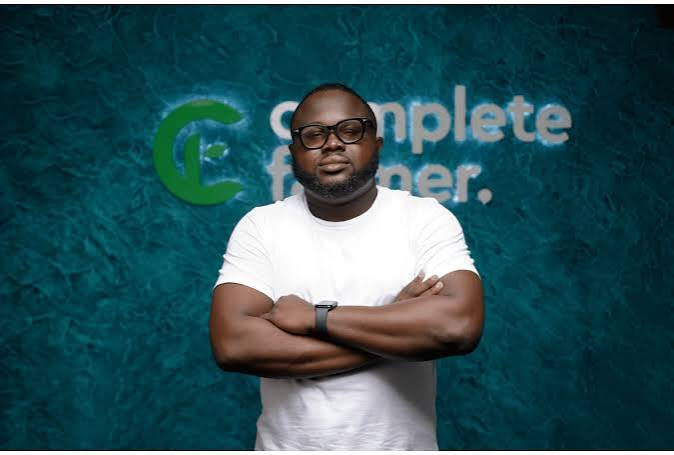
Founder and CEO Desmond Koney is a mechanical engineer who grew up watching his father manage a smallholder pineapple farm. Before launching Complete Farmer, he experimented with kitchen-waste biogas generators and vertical hydroponics. Those early experiments shaped the pragmatic, infrastructure-first operational model he runs today, targeting 150,000 contracted farmers by 2028.
Farming employs more people in West Africa than any other sector, yet smallholders continue to be crushed by post-harvest losses and predatory local middlemen. By securing guaranteed off-take contracts before a single seed is planted, Complete Farmer addresses the fundamental economic uncertainty that keeps growers trapped at subsistence scale.
6. Deaftronics
Botswana | Health Technology | Founded 2009

In developing economies, standard hearing aids are frequently abandoned because disposable zinc-air batteries cost roughly $1 each and last only a week, creating an annual maintenance bill that exceeds the device cost. Deaftronics manufactures Solar Ear: the world's first hearing aid equipped with rechargeable batteries that charge via sunlight or household solar lamps. Complete units retail around $200, compared to $1,000 or more for imported alternatives, with batteries lasting up to three years. The company operates a social enterprise manufacturing model, employing hearing-impaired technicians to assemble and calibrate the devices, with backing from Johnson & Johnson.

Founder Tendekayi Katsiga, an electronics technician originally from Zimbabwe, relocated to Botswana and conceived the device after meeting an adolescent boy whose donated hearing aid sat useless due to dead batteries. While several recent media summaries mistakenly report 2019 as its founding year, archival records and Katsiga's participation in the Unreasonable at Sea initiative (mentored by Archbishop Desmond Tutu) confirm the company launched in 2009. Co-founder Sarah Molema has guided regional community deployment across Southern Africa.
Deaftronics is a masterclass in frugal engineering. Instead of retrofitting expensive Western medical electronics that depend on continuous disposable purchases, Katsiga built a durable device tailored to the reality of intermittent electricity and constrained household budgets. Surviving for over fifteen years in an overlooked hardware niche demonstrates rare staying power.
7. Oye
Kenya | Fintech and Insurtech | Founded 2021
Kenya has over one million commercial motorcycle taxi riders, known locally as boda boda, who form the backbone of urban transport but face daily accident risks with virtually zero access to insurance or bank credit. Oye embeds accident insurance and fuel credit directly into the daily routine riders already perform: buying petrol. Every time a rider fuels up at partner filling stations, they earn loyalty points that fund personal accident insurance underwritten by Britam Holdings, alongside fuel advance credit, without paying cash premiums upfront.

Founder and CEO Kevin Mutiso established the insurtech startup in 2021, partnering with Kenya's National Transport and Safety Authority to promote road safety compliance. Mutiso has targeted enrolling one million active riders across Kenya's urban transit corridors.
Micro-insurance in Africa usually fails because the cost of collecting small monthly premiums exceeds the margin on the policy. Oye bypasses that entire hurdle by embedding coverage into fuel purchases that motorcycle taxi riders make multiple times a day anyway, turning an everyday operational expense into automated financial protection.
8. Jem
South Africa | HR Technology | Founded 2020

In South Africa, the majority of frontline and deskless workers in retail, hospitality, and agriculture do not have corporate email addresses or reliable desktop access, but virtually all of them use WhatsApp. Jem (formerly SmartWage) delivers digital payslips, leave requests, HR policy acknowledgments, and earned wage access directly through WhatsApp. The platform serves over 200,000 workers across 200 enterprise clients, including major McDonald's franchise operators and agricultural conglomerates.

Co-founders Simon Ellis (CEO) and Caroline van der Merwe (COO) built the platform after recognizing that standalone mobile apps faced near-zero retention among deskless employees who conserve phone storage and mobile data.
Enterprise software frequently fails frontline African workforces because deskless workers simply will not spend mobile data downloading another heavy app. By running its entire HR, payroll, and earned-wage platform directly through WhatsApp, Jem eliminated the adoption curve completely, proving that intelligent distribution beats proprietary app interfaces every time.
9. SafeSip
Tanzania | Water Technology | Founded 2023

SafeSip develops autonomous, solar-powered water purification kiosks, branded as WaterBank, to supply clean drinking water to off-grid communities across Tanzania. Monitored through automated IoT telemetry, each solar-powered filtration station purifies local groundwater and dispenses water through prepaid RFID smart cards, providing a direct alternative to expensive, single-use plastic bottles.

Co-founders Faith Kuya (CEO) and Costantine Edward (COO) launched SafeSip in 2023 out of university engineering research and field water trials. Kuya has led community pilot deployments recognized by regional innovation programs across East Africa.
SafeSip is the earliest-stage enterprise on this list, and rural water infrastructure is notoriously difficult to sustain once initial grant funding expires. The critical metric to watch over the coming year is whether their automated IoT telemetry and prepaid smart card revenue generate enough recurring cash flow to maintain filtration hardware in remote villages.
10. Black Swan
Tanzania | Credit Scoring and Fintech | Founded 2022

Traditional banks across East Africa routinely turn down micro-enterprises and informal traders because they lack conventional credit bureau histories, audited financial statements, or collateral. Black Swan builds alternative credit intelligence infrastructure that evaluates mobile money transaction flows, utility payment histories, and merchant point-of-sale turnover to construct reliable risk profiles for unbanked borrowers. Backed by Germany's develoPPP Ventures program, the company won the prestigious MEST Africa Challenge, securing competitive non-dilutive equity financing.

Co-founders Derick Kazimoto (CEO) and Rwebu Mutahaba developed their algorithms to translate informal cash-flow patterns into institutional underwriting data, serving as the sole Tanzanian enterprise selected for Bloomberg's 2026 cohort.
Alternative credit scoring has long been the holy grail of African financial inclusion, but algorithms only prove their worth during severe macroeconomic downturns. If Black Swan's cash-flow underwriting models can keep non-performing loan ratios manageable for institutional bank partners during inflationary spikes, it will establish an indispensable data layer for unbanked commerce.
The Infrastructure Logic
Read across all ten companies, a decisive pattern emerges that is distinct from the consumer-facing African tech narrative that dominated coverage between 2015 and 2022. These are infrastructure plays: payment rails, supply chain software, HR compliance layers, credit scoring datasets, clean water distribution utilities, and domestic defense manufacturing capacity. They are building the underlying systems that other commercial businesses and public institutions will operate on top of.
Building infrastructure is a slower, capital-intensive, and less glamorous trajectory than launching another consumer mobile app, but it produces stickier revenue and more durable competitive positions when it succeeds. The ten companies above met that standard, and several have already proven that their core product delivers. The remaining challenge, as is always the case in emerging markets, is whether the broader economies they serve develop at the pace their capital structures require. For investors and operators watching the continent, these are the ten balance sheets that will define the next chapter of African enterprise.
Comments (0)
No comments yet. Be the first to share your thoughts.