The S$2.1B Cleanse Every Builder Needs to See
Frasers Property's portfolio optimization offers tactical lessons on capital efficiency for every entrepreneur.

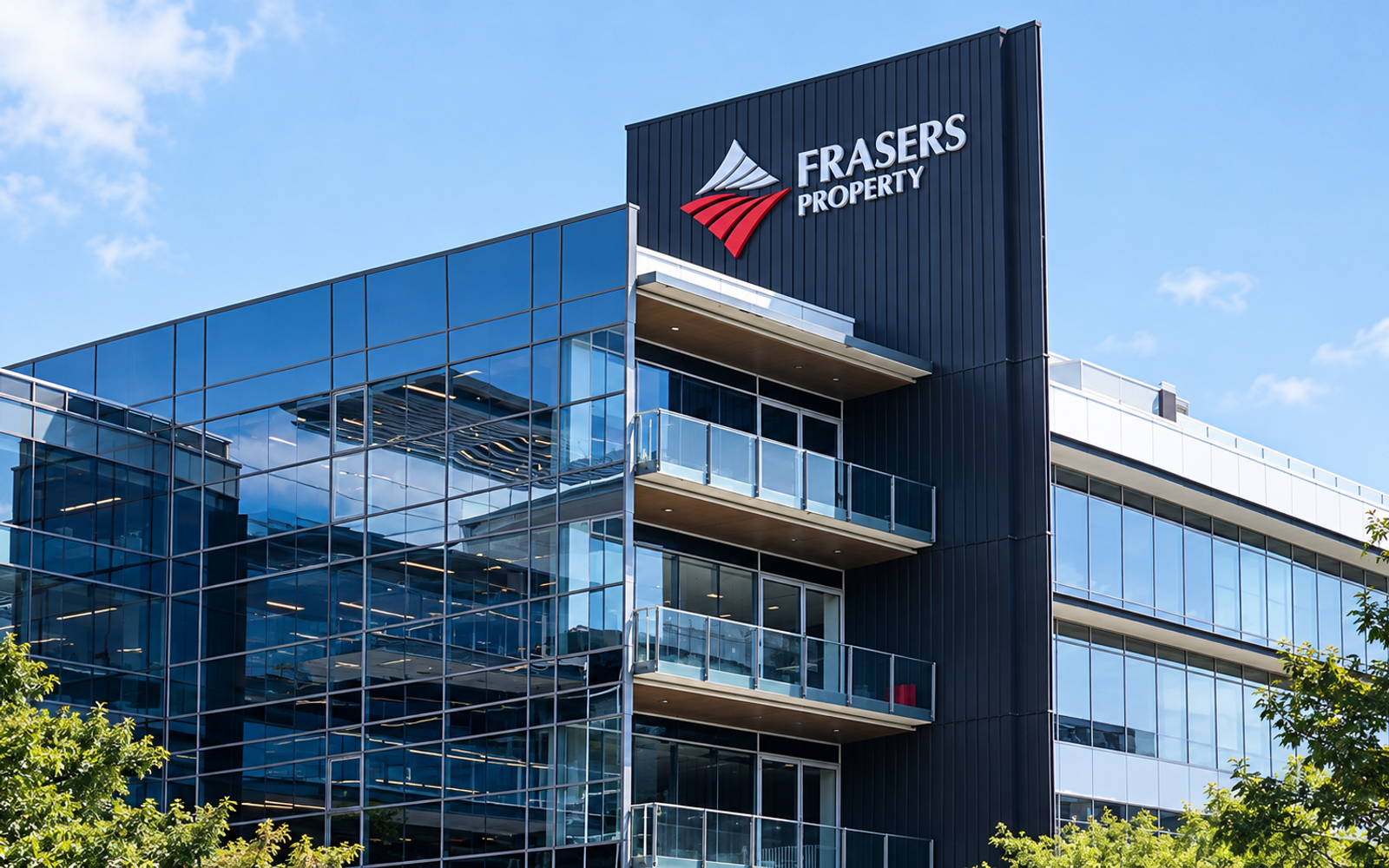
On June 25, 2026, Frasers Property, the multinational real estate conglomerate listed on the Singapore Exchange (SGX), filed a comprehensive restructuring proposal that caught the attention of institutional analysts across the Asia-Pacific region. The company announced a S$2.1 billion portfolio optimization designed to overhaul its hospitality holdings and streamline its relationship with Frasers Hospitality Trust (FHT).
The financial mechanics of the transaction tell a compelling story. According to reporting from The Business Times, the restructuring will reduce Frasers Property's on-balance-sheet hospitality assets from S$3.7 billion to S$2.5 billion, while maintaining total assets under management (AUM) across the platform at roughly S$4.2 billion. The group is effectively shrinking its direct physical ownership footprint while retaining operational control and expanding recurring fee revenue.
For business operators, corporate strategists, and growth-stage founders, this balance-sheet restructuring illustrates a masterclass in modern capital efficiency: sustainable enterprise value is created not by accumulating heavy physical assets, but by controlling high-margin operating platforms.
Deconstructing the "Asset-Light" Playbook
To understand why Frasers Property willingly carved S$1.2 billion in physical real estate off its balance sheet, one must examine the evolution of hospitality economics over the past two decades. Global hospitality giants like Marriott, Hyatt, and Hilton underwent a structural transformation beginning in the early 2000s, divesting their physical brick-and-mortar hotels to independent REITs and institutional funds while retaining long-term brand management and franchise agreements.
Direct property ownership carries severe financial drag: recurring capital expenditures, maintenance cycles, depreciation, interest rate sensitivity, and illiquid exposure during macroeconomic downturns. By transitioning to an asset-light model, hospitality platforms replace volatile, capital-intensive property yields with predictable, high-margin management fees. Frasers Property's S$2.1 billion move is a disciplined application of this exact thesis.

The Accumulation Fallacy in Growing Companies
The fundamental trap that ensnares most growing enterprises is the reflexive impulse to accumulate. When companies experience early market validation, leadership teams instinctively add: new ancillary service lines, experimental software products, complex partner integrations, and sprawling headcount.
Over a three-year horizon, this unconstrained accumulation creates severe operational calcification. Senior leadership spend the bulk of their cognitive energy managing legacy commitments, servicing low-margin legacy client tiers, and maintaining deprecated technical infrastructure. Gross revenue may appear larger on an income statement, but Return on Invested Capital (ROIC) and operating margins quietly degrade.
What made Frasers Property's announcement noteworthy was its unsentimental willingness to reverse legacy structures established years earlier. Rather than treating past listing arrangements as sacrosanct, executive management acknowledged that the historical structure no longer optimized capital returns, and they executed a public, decisive course correction.
Conducting a Rigorous Capital and Operational Audit
Every operating company carries its own equivalent of heavy, illiquid balance-sheet assets. Translating the principles of institutional portfolio optimization into day-to-day business leadership requires a deliberate quarterly audit across three operational dimensions:
- Legacy Client Contracts and Rate Architecture: Identify long-standing client accounts operating on outdated pricing terms agreed upon years ago. In many professional services and agency businesses, legacy clients consume 40 percent of internal team bandwidth while contributing less than 15 percent of net profit. Renegotiating or gracefully sunsetting these accounts frees immense capacity for higher-margin engagements.
- Infrastructure and Software Overhead: Evaluate technical architecture and third-party software subscriptions against actual utility. Many digital firms build custom internal tools or retain redundant cloud micro-services that create ongoing engineering debt without contributing to core customer value. Migrating toward managed services and eliminating redundant SaaS tools restores cash flow.
- Ancillary Product Lines: Examine product offerings that generate modest top-line revenue but disproportionate support tickets and developer triage. Sunseting non-core products allows cross-functional teams to pour full resources into the singular offering where the company enjoys genuine competitive superiority.
Go Deeper
Content Farms: How Websites Turn Empty Words Into Millions (And What Google Does About Them)The Courage of Subtraction
Organizational psychology naturally resists subtraction. Scaling back an asset base, shutting down an underperforming division, or letting go of historic partnerships feels counter-intuitive to leaders accustomed to measuring progress by headcount or gross footprint.
Yet the empirical evidence across global markets consistently proves that strategic subtraction is the primary prerequisite for sustained high performance. Frasers Property recognized that carrying S$3.7 billion in physical hospitality assets was limiting its strategic agility. By shedding illiquid weight and refocusing on management fee generation, the group positioned itself to deploy capital into opportunistic acquisitions when market conditions favor buyers.
The Bottom Line
True business longevity is not defined by how many assets an organization can amass during favorable economic conditions. It is defined by the agility and capital efficiency with which it operates when conditions change.
Proactive restructuring is always less painful than reactive triage forced by external creditors or shifting markets. Builders who possess the discipline to periodically prune their operations will consistently outperform competitors who confuse balance-sheet bulk with commercial strength.
Comments (0)
No comments yet. Be the first to share your thoughts.