Inside the Laser Bay: Fusion's Real Test Just Started
Xcimer Energy's Phoenix prototype fires up in Denver, pushing laser fusion beyond the lab and into an industrial timeline that could reshape global power.

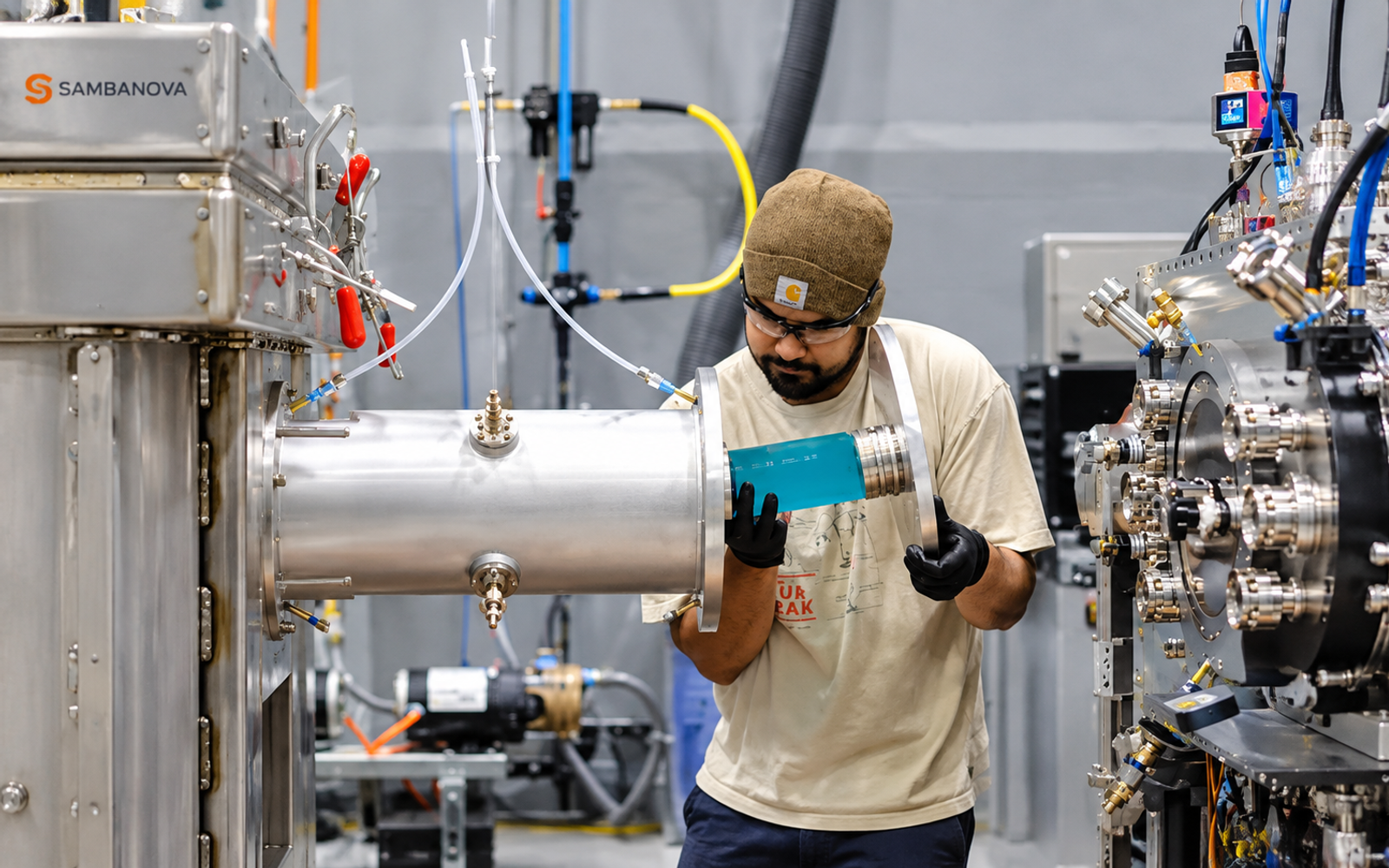
The thing about laser fusion is that the laser itself has never been the hard part. Building a laser that fires is a solved problem. Building one that fires a billion times a day, reliably, without cracking its own optics to pieces, without demanding a maintenance crew the size of a small army, that is the unsolved question. And that is the question Xcimer Energy just parked a 40,000-square-foot answer to in Denver, Colorado.
On June 23, 2026, the company announced that Phoenix, its prototype laser system for commercial-scale fusion, had begun operations. The U.S. Department of Energy had already approved the preconceptual design for Xcimer's planned fusion power plant earlier that month. The pieces are sliding into place. But the gap between a prototype that works and a power plant that runs is not a straight line. It's a staircase. Each step costs years and billions.
The Pulse Problem That Broke Previous Attempts
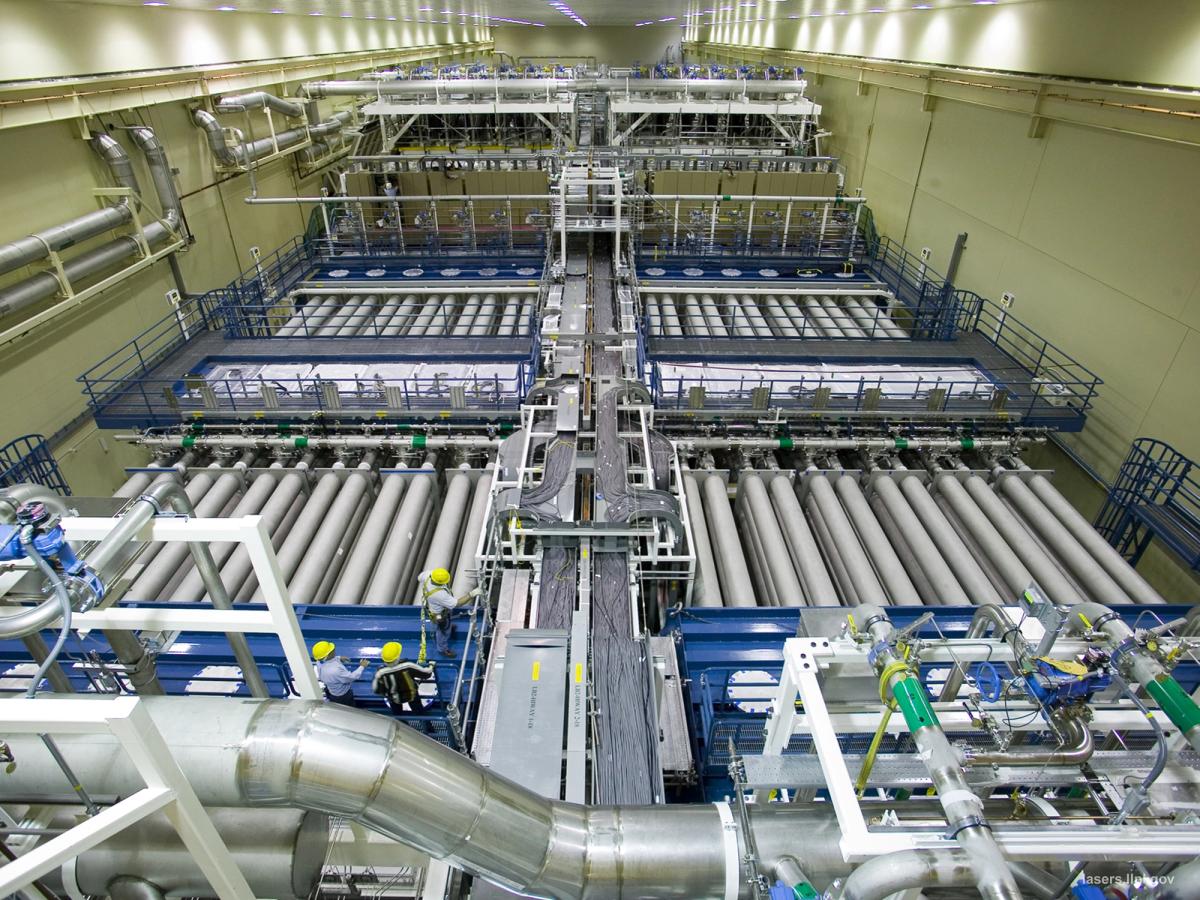
To understand why Xcimer's approach matters, you have to understand the physics constraint that has haunted laser fusion since the 1970s. Inertial confinement fusion works like this: you blast a tiny pellet of fuel with an enormous laser pulse. The outer layer of the pellet ablates, the inner core implodes, and if you get the timing and energy right, hydrogen atoms fuse into helium and release net energy. The National Ignition Facility at Lawrence Livermore proved this was possible in December 2022, achieving the first laboratory fusion ignition in history. But NIF fires one shot per day. A commercial power plant needs to fire roughly ten times per second. That is not an incremental improvement. It is a different sport entirely.
The standard approach uses short-pulse lasers, measured in nanoseconds, that dump their energy so fast that the optics degrade. After a few hundred shots, the lenses and crystals need replacing. At ten shots per second, that means swapping optics every minute. No grid operator on earth would sign up for that maintenance schedule.
Xcimer's Long-Pulse Bet
Xcimer's architecture flips the assumption. Instead of short-pulse, high-peak-power lasers, Phoenix uses long-pulse excimer lasers. The pulses last longer, measured in microseconds rather than nanoseconds. This lowers the peak power and spreads the energy load across the optics, meaning the lasers don't destroy themselves. The company's proprietary Marx pulsed power technology drives the system, and the whole thing is designed around a single question: what does a laser system look like if you design it for industrial repetition rates from day one?
According to Xcimer's technical update to U.S. Energy Secretary Chris Wright in late 2025, Phoenix was on schedule and on budget. That combination of words is rare enough in fusion that it deserves its own paragraph. Most fusion timelines read like science fiction novels with optimistic endings. This one reads like a construction project.
Phoenix is not a full fusion reactor. It is a laser system that demonstrates the core building blocks of Xcimer's architecture: the long-pulse excimer operation, the pulsed power delivery, the thermal management at scale. It is, if you want the plain language, a really expensive flashlight that proves the flashlight won't melt. But that proof has been the bottleneck for laser fusion for thirty years. If Phoenix holds up under sustained testing, the pathway to a grid-connected plant becomes visible rather than theoretical.
The company has not announced a timeline for its first commercial plant. The DOE's preconceptual design approval is a signal but not a commitment. What matters more is that Xcimer is now producing data from a system that represents, by the company's account, the largest privately owned laser facility in existence. That data will either validate the architecture or reveal the next problem.
The Broader Grid: Who's Buying What
Xcimer is one piece of a fusion industry that, as of September 2025, had attracted $10 billion in private and public investment since 2021, according to the Fusion Industry Association. That number tripled from 2024 to 2025 alone. The money is flowing because the offtake agreements are real.
Commonwealth Fusion Systems, the MIT spinout, signed a deal on June 30, 2025 to sell 200 megawatts of fusion power to Google, with the ARC plant in Virginia expected online in the early 2030s. In April 2026, CFS applied to connect that plant to the PJM grid, the largest wholesale electricity market in the United States. That application is a mundane regulatory document. It is also the moment fusion stopped being a science experiment and started being an infrastructure project.
On the other side of the country, Helion Energy began construction of its Orion fusion power plant in Malaga, Washington, in July 2025, with a power purchase agreement already signed with Microsoft. The target is 2028. That timeline is aggressive to the point of audacity. But Helion has raised over $600 million and has a different technical approach based on field-reversed configuration rather than tokamaks or lasers. The point is not which approach wins. The point is that the market is now placing multiple bets simultaneously, across multiple architectures, which is exactly what you want to see in a technology that nobody has yet made commercially viable.
The nuclear fusion market was valued at roughly $381 billion in 2026 and is projected to grow to $647.5 billion by 2035, according to Research Nester. Those numbers include both fusion energy and adjacent applications. The compound annual growth rate sits around 6%. That is not hockey-stick growth. It is steady, industrial expansion that assumes the first commercial plants come online between 2030 and 2035. The projections do not require heroics. They require execution.
Europe Organizes While Others Build
The European Union, sensing that the fusion race is accelerating beyond ITER's long arc, established a Task Force on Fusion Energy in early 2026. The inaugural meeting took place on May 26-27 in Cadarache, France, at the same site where ITER is under construction. Representatives from Finland, France, Germany, and other member states gathered to develop a fusion-specific legal framework. The European Commission had already included fusion as a priority in its 2026 Work Programme, signaling that Brussels sees fusion not as a distant possibility but as a regulatory question that needs answering now.
This matters because fusion does not fit neatly into existing nuclear regulatory categories. Fission reactors produce long-lived radioactive waste and require containment structures designed for worst-case meltdown scenarios. Fusion reactors produce negligible long-lived waste and cannot melt down in the same sense. Their fuel, deuterium and tritium, has different handling requirements. Every country that wants fusion on its grid will need a regulatory framework that distinguishes the two. The EU is trying to write that framework before the first plant applies for a license. That is prudent. It is also a race against the timeline of companies like CFS, which is already talking to PJM.
Abu Dhabi-based Plynth Energy made an equity investment in Commonwealth Fusion Systems in June 2026, signaling Gulf interest in diversifying beyond oil. The UAE has been building a position in advanced nuclear for years, with the Barakah fission plant already online. Fusion is the next logical step.
The Repetition Rate and Target Injection Bottleneck
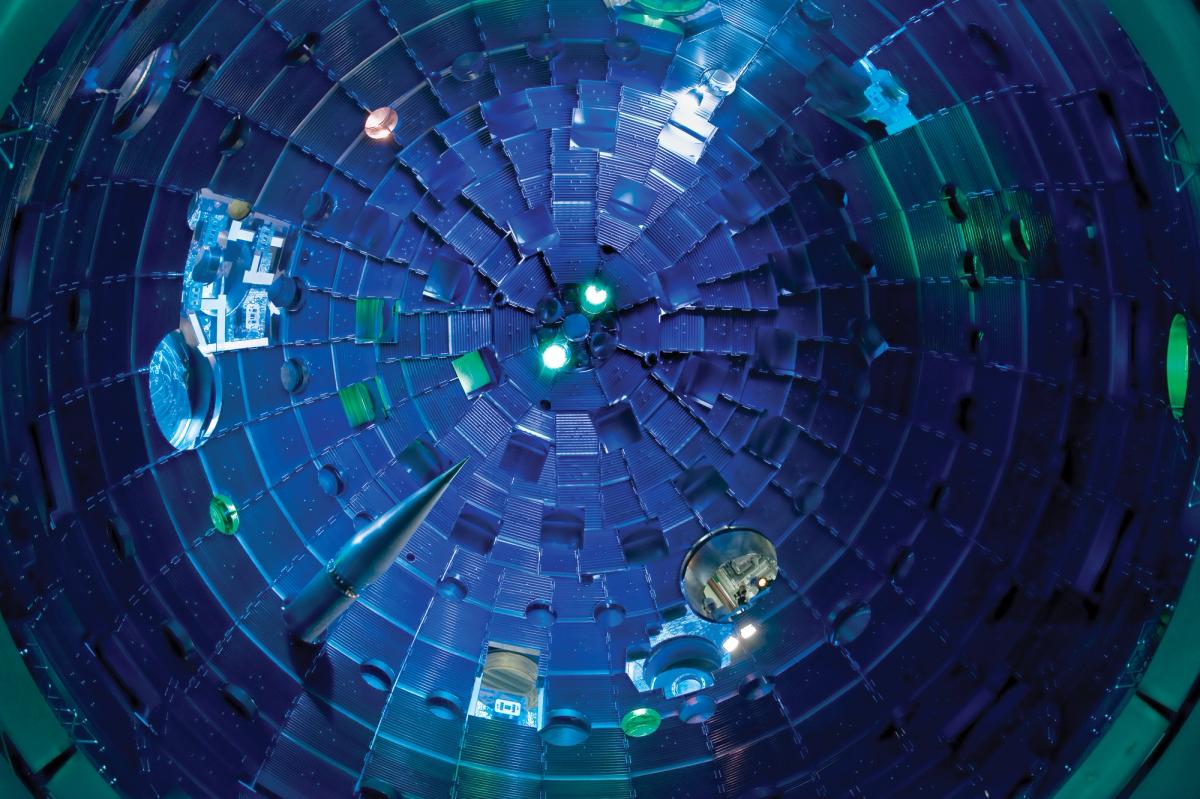
For all the excitement surrounding net-energy milestones, inertial confinement fusion faces a stark operational hurdle: repetition rate. Facilities like the National Ignition Facility fire at most one or two shots per day because massive flashlamps and neodymium glass slabs require hours to cool, while micro-targets must be aligned manually inside a high-vacuum chamber. In contrast, a commercial baseload fusion power plant must inject cryogenic deuterium-tritium fuel pellets and fire driver beams at five to ten hertz continuously. Transforming a monolithic physics laboratory into an industrial engine that survives hundreds of thousands of micro-explosions daily remains the defining materials engineering challenge of the coming decade.
- High-Frequency Pellet Injection: Delivering cryogenic deuterium-tritium capsules into the focal zone at speeds exceeding 100 meters per second with sub-millimeter trajectory accuracy.
- Chamber Wall Protection and Debris Mitigation: Deploying sacrificial liquid lithium curtains or magnetic deflection to shield final focusing optics from x-ray bursts and fast target debris.
- Closed-Loop Tritium Self-Sufficiency: Engineering a breeding blanket with a Tritium Breeding Ratio greater than 1.05 to replenish consumed fuel from neutron capture in surrounding lithium.
The structural decentralization of power-intensive compute workloads is directly relevant here. Hyperscale operators are exploring dedicated on-site generation to power sovereign clusters without overloading regional transmission infrastructure. Fusion power plants co-located with high-density compute facilities would resolve localized grid capacity bottlenecks, providing firm baseload electricity that eliminates dependence on battery-buffered intermittent generation. The data center industry's appetite for power and fusion's commercialization timeline are converging in a way that makes corporate power purchase agreements between tech giants and fusion developers a strategic necessity rather than experimental research.
What Phoenix Actually Means
The Xcimer facility in Denver is not a power plant. It is a laser bay. Concrete floor, steel walls, optical tables, power conditioning cabinets, cooling loops. The people who work there wear cleanroom suits and talk about beam quality in units that most humans will never encounter. But it represents something that fusion has lacked for most of its history: a testbed designed for repetition. Phoenix is built to fire thousands of times. Not once. Not a hundred times. Thousands. The data from those firings will tell the engineers whether their optics hold, whether their pulsed power delivery stays synchronized, whether the thermal management can keep up. If it works, the next step is building a prototype that integrates the laser system with a fusion target chamber and a tritium breeding blanket. That facility does not exist yet. Xcimer has not announced it.
There is a tendency in fusion coverage to treat every milestone as a revolution. It is not. It is grinding engineering work. Xcimer fired a laser. That is the news. But the fact that the laser is designed for the repetition rates that a power plant demands, and that it is the largest privately owned laser system in existence, and that the DOE has already signed off on the plant design, and that the company is on budget, well. In a field where timelines slip by years and budgets balloon by billions, on budget is the most radical statement anyone has made.
The Unanswered Questions
The fusion industry has cleared some high bars. $10 billion in investment. Real offtake agreements. Regulatory frameworks under construction. A laser prototype running in Denver. But the bars that remain are higher. Nobody has demonstrated net electricity from fusion. Nobody has operated a fusion system continuously for more than a few seconds. The materials science challenges of a fusion environment, where neutrons bombard reactor walls at energies that degrade any material over time, remain unsolved at commercial scale. The tritium supply chain is not built. The regulatory pathways for grid connection are untested.
Phoenix is running. The data sheets are filling. The next question is whether the answers on those sheets point toward a reactor that can fire ten times a second, every day, for years, without requiring a rebuild. That question will take the rest of the decade to answer. But for the first time in fusion's long, patient history, somebody is asking it in a building that is not a national lab and the answer is not pre-written.
The silence in the control room between laser pulses. That is where the real test lives.
Comments (0)
No comments yet. Be the first to share your thoughts.