Lost in Mandala Bets on Nepali Original Animation
Nepal spent years handling backend VFX for Hollywood blockbusters. With Kai Cech voicing 12-year-old Shanti and local private equity backing IP, Lost in Mandala puts the studio name on the poster.

For nearly two decades, international moviegoers watched digital water simulations, crowd extensions, and creature cleanup crafted inside Kathmandu without seeing Nepal near the top of the opening credits. Local technical artists built shots for major Western studios while copyright, streaming royalties, soundtrack rights, and merchandising stayed in Burbank or London.
- 1From Hollywood VFX vendor to original IP owner: Created by former Walt Disney Studios visual effects veteran Kiran Bhakta Joshi at Kathmandu's Incessant Rain Studios, Lost in Mandala shifts Nepal's animation workforce from fixed-fee contract outsourcing into owning a full-length theatrical feature.
- 2Himalayan thangka cosmology meets international voice talent: Voiced by Kai Cech as 12-year-old Shanti, the film translates Newari and Tibetan sacred mandala art into 3D character animation designed simultaneously for Nepalese cinemas and global family distribution via Apple Entertainment.
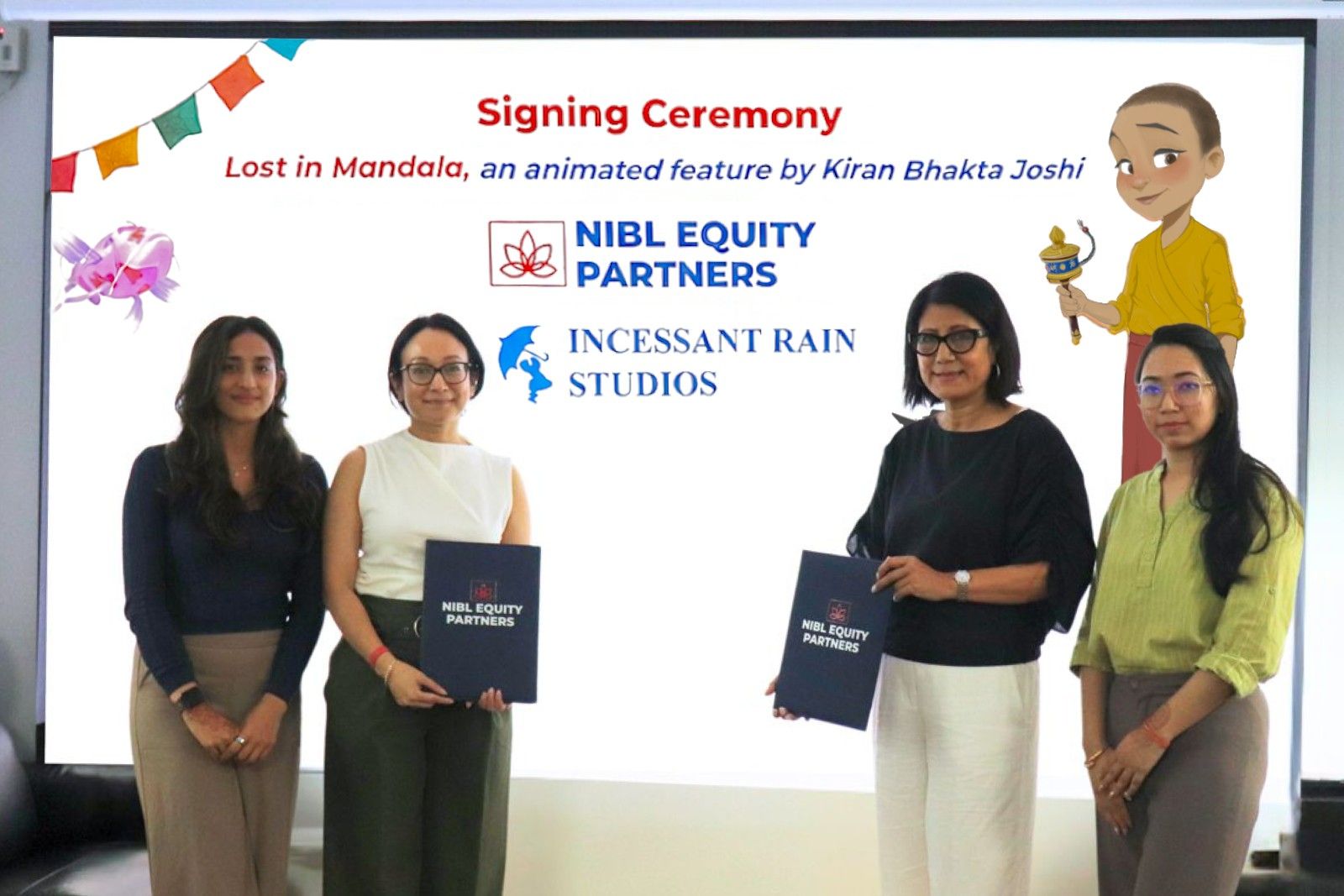
- 3Domestic private equity backs entertainment IP: NIBL Equity Partners (managed by NIMB Ace Capital Limited) signed an institutional investment term sheet backing the film, creating a rare template for private equity financing of intellectual property in South Asia.
Lost in Mandala is a direct attempt to break past that contract-vendor ceiling. Created by Kiran Bhakta Joshi and produced between Kathmandu and Los Angeles at Incessant Rain Studios, the animated fantasy is an original theatrical feature built from Himalayan visual traditions, backed by domestic Nepali institutional equity, and aimed at international family audiences.
From Disney Classics Back to Kathmandu
Understanding how a Nepali private equity fund ended up financing millions into original character rigs starts with the founder's resume. Before opening Incessant Rain Studios in 2008 to train local artists on Hollywood software pipelines, Kiran Bhakta Joshi spent years at Walt Disney Feature Animation during its 1990s renaissance, earning senior visual effects and technical credits across Beauty and the Beast, Aladdin, The Lion King, Pocahontas, Mulan, and The Hunchback of Notre Dame.
Most studio veterans who reach senior tiers stay in Southern California. Joshi spent nearly twenty years building Kathmandu into a look-development and visual effects hub capable of passing strict Hollywood security audits, TPN (Trusted Partner Network) content-protection checks, and rapid delivery schedules. From visual effects sequences on international streaming hits like Stranger Things to stereoscopic conversion, game cinematics, and episodic series, teams in Patan and Chhauni proved Nepal could deliver studio-grade frames on time.
Vendor work, though, hits a hard commercial wall. Contractors execute someone else's brief under fixed per-shot fees. Whenever Western production budgets tighten or guild strikes stall greenlights in Los Angeles, regional vendor houses face sudden idle capacity without owning a single character or frame in a lasting catalog.
Inside the Mandala World and Voice Cast
Moving into original intellectual property reverses that equation, even if it demands years of upfront payroll before a single ticket sells. Every shader library, cloth simulator, crowd system, and lighting pipeline refined over fifteen years of client work now stays inside one house building Nepal's own screen characters rather than patching background explosions for overseas franchises.
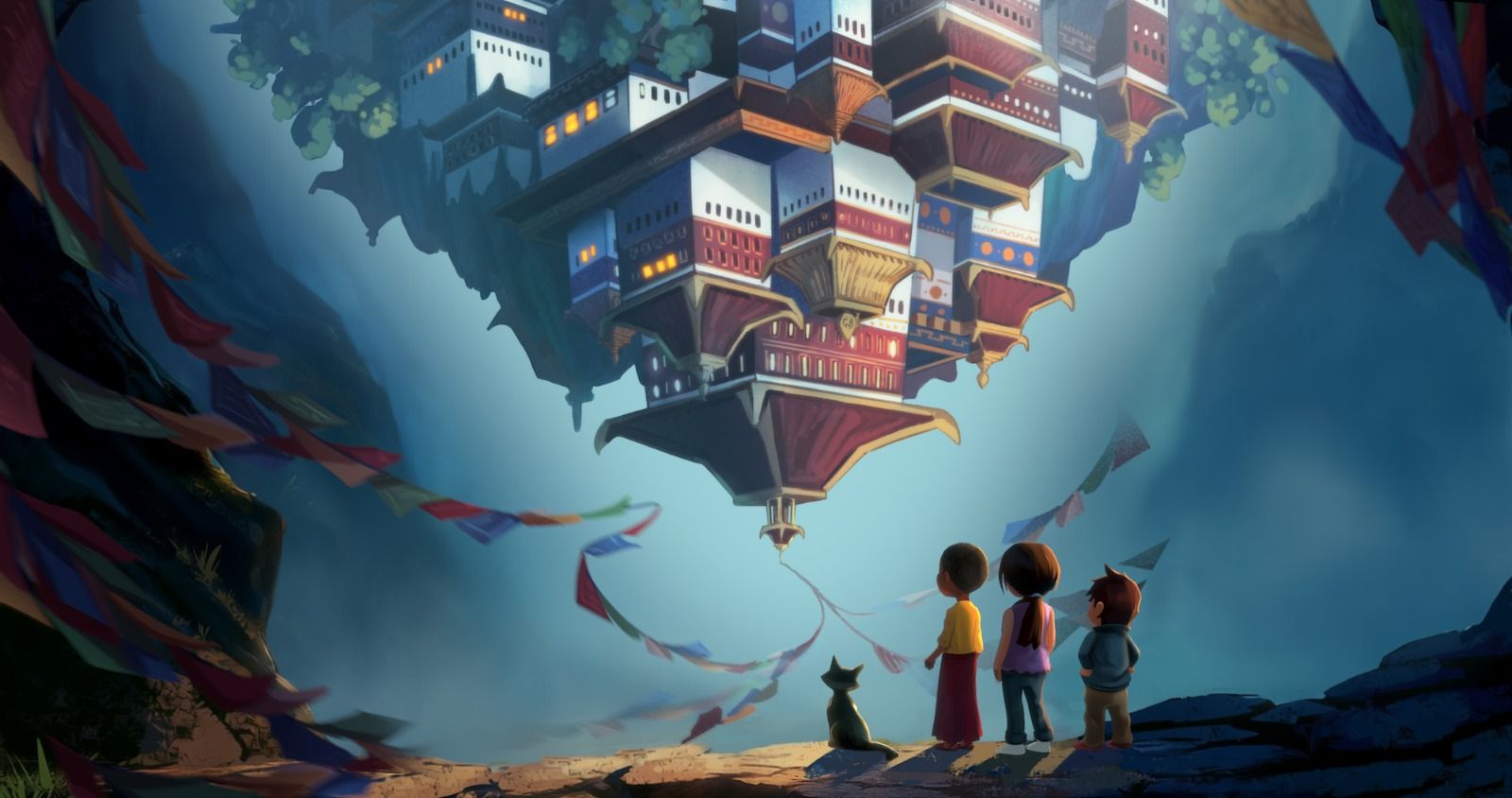
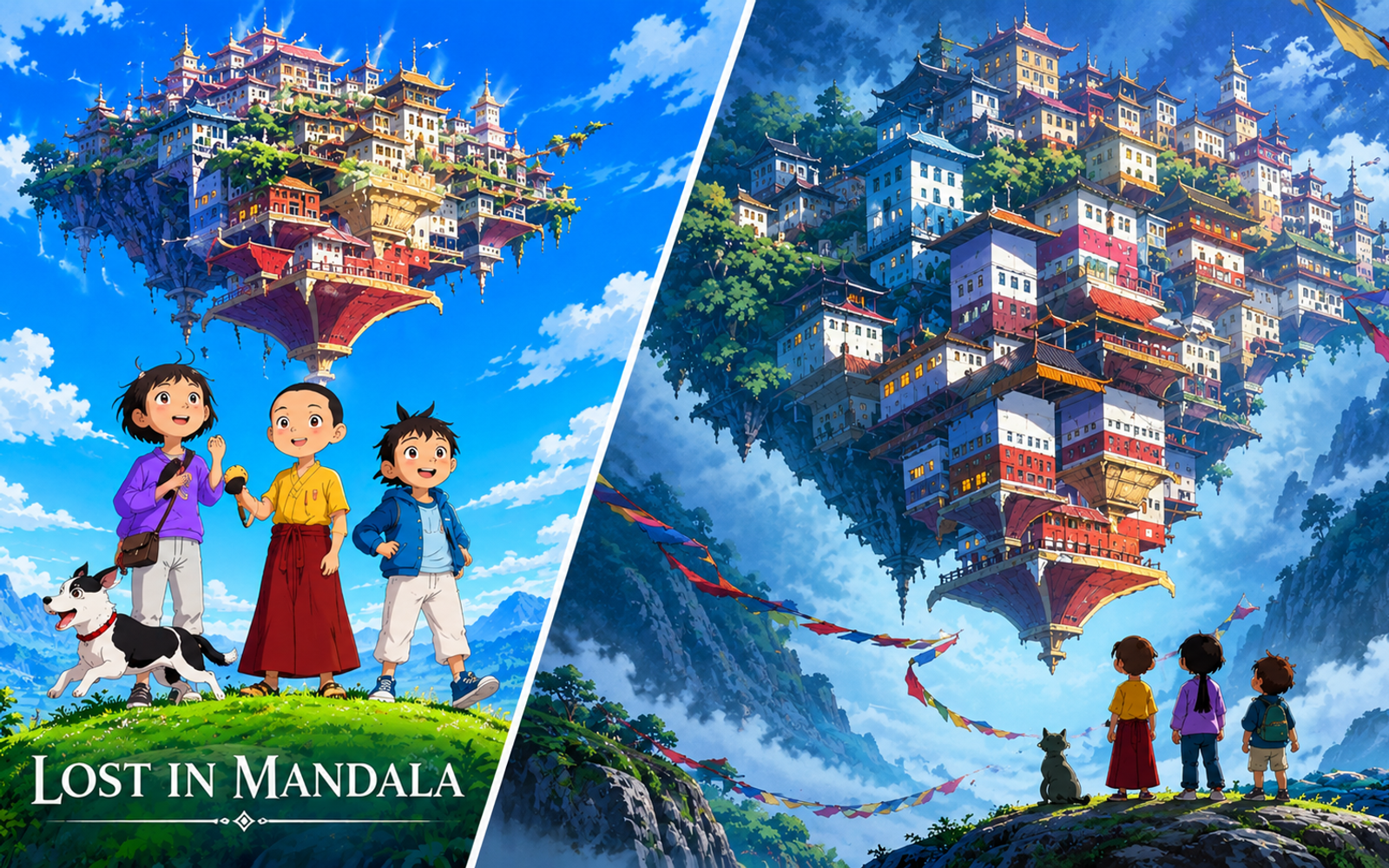
Rather than sanding down cultural roots behind generic European castles to look broadly commercial, Lost in Mandala builds directly around Himalayan sacred art. Twelve-year-old Shanti, voiced by American actress Kai Cech (Dear Santa, Marshmallow, American Girl: Corinne Tan), grows up inside a secluded Himalayan monastery before she and her young companions are pulled into a living cosmos hidden inside a sacred painted mandala.
Inside that painted realm, Shanti discovers the warmth, friendship, and sense of belonging missing from her isolated life outside, only to confront an encroaching darkness that tests loyalty, inner steadiness, and selflessness rather than comic-book superpower spectacle. Recording primary English dialogue led by Kai Cech alongside South Asian language tracks also avoids the stiff lip-sync compromises and awkward phrasing that often hurt exported dubbed animation at international festivals.
Translating Thangka Art Into 3D Animation
Turning Newari and Tibetan-influenced thangka iconography, crushed mineral and gold-leaf pigment palettes, and sacred geometric architecture into expressive three-dimensional animation pushes Kathmandu's technical artists beyond standard photoreal VFX matching. Every swirling cloud boundary, prayer-flag ribbon, and concentric mandala ring has to read clearly in stereoscopic depth without losing the handcrafted warmth of traditional scroll painting.
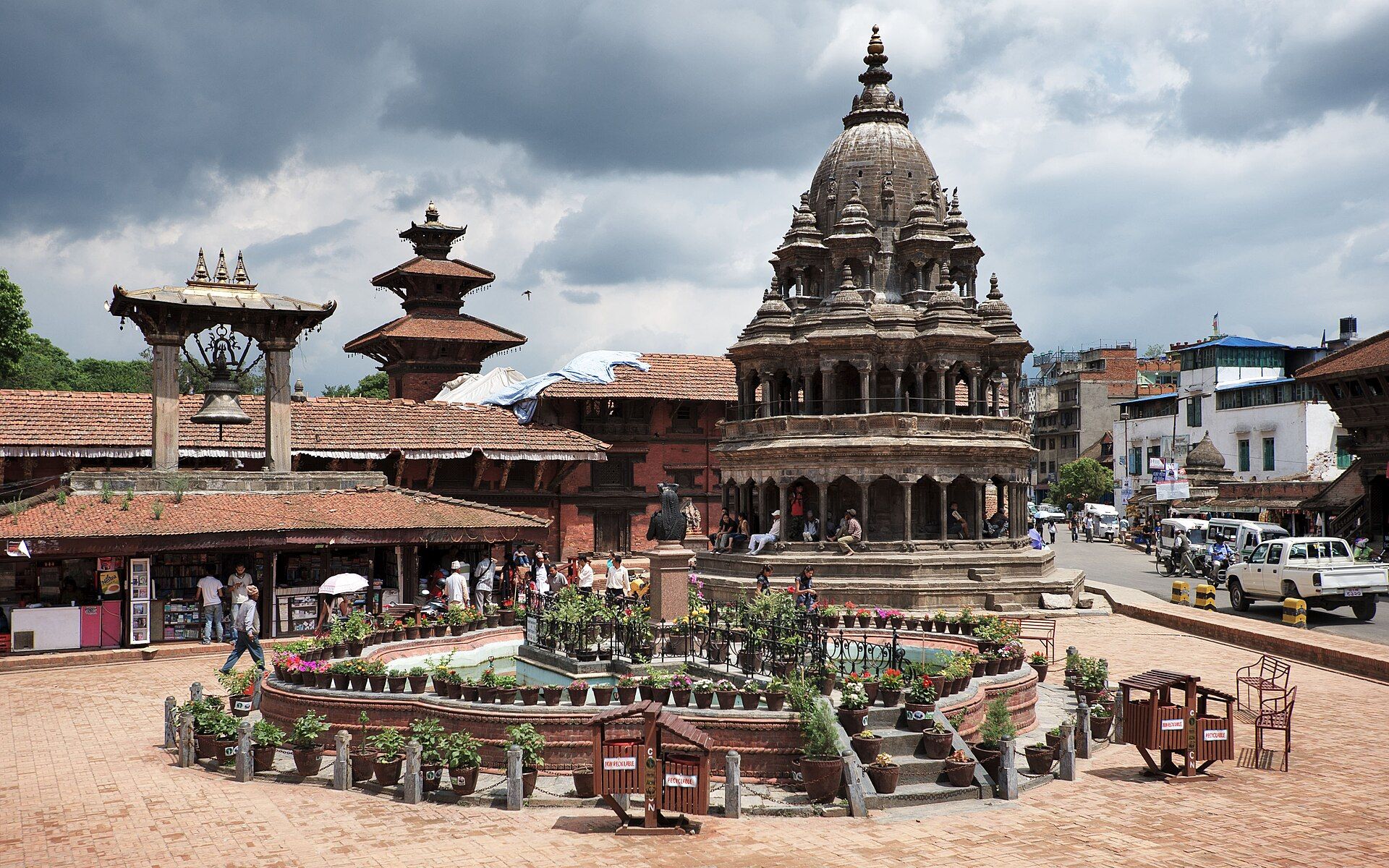
To achieve that balance, the art department drew directly from the carved wooden struts, gilt copper roofs, and courtyard temples of the Kathmandu Valley. Instead of treating Himalayan architecture as exotic background wallpaper for a foreign protagonist, the production design uses the spatial logic of a mandala (outer protective rings leading inward toward a spiritual center) as the actual geography Shanti must cross.
That visual specificity gives the film a clearer calling card than another generic talking-animal comedy. Young riggers, texture painters, compositors, and storyboarders coming out of Nepali universities and art schools get to build worlds drawn from architecture and folklore they already know firsthand, instead of buying one-way tickets to Mumbai, London, or Vancouver just to work on original theatrical features.
Global Rollout Through Apple Entertainment
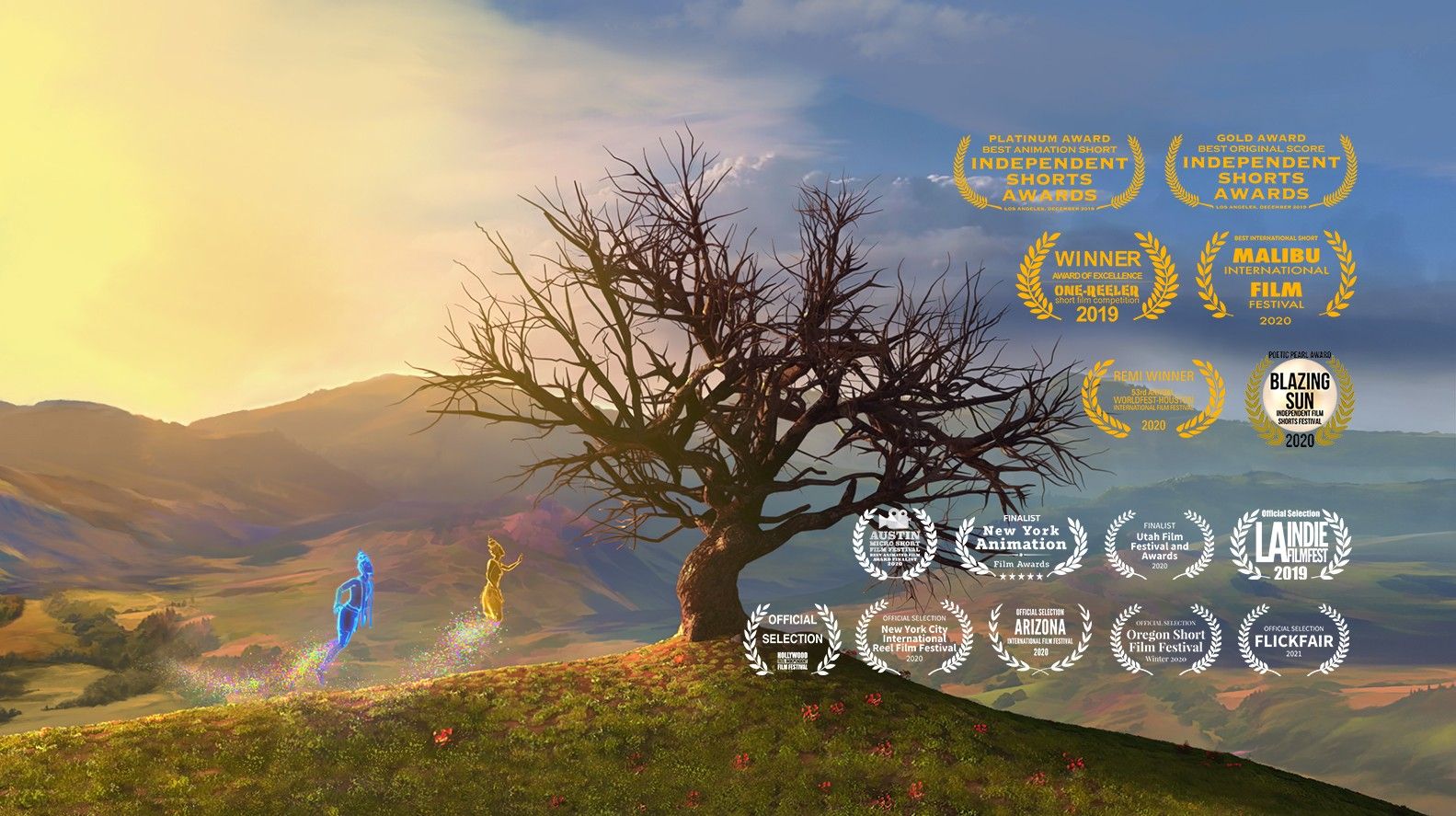
Distribution planning ran alongside storyboarding instead of waiting for festival premieres, building on the international festival run of the studio's earlier award-winning Mandala short proof of concept. Partnering early on theatrical rollout with Apple Entertainment, as detailed in OnlineKhabar's theatrical rollout report, tackles the distribution bottleneck that sinks most regional animated indies.
Non-Western animation often misses overseas theaters either by playing like a stiff civic history lesson or by stripping out every local detail to mimic Hollywood slapstick pacing. Keeping thangka cosmology central alongside seasoned three-act family storytelling lets Nepal's visual heritage feel distinctive on a multiplex screen without alienating viewers unfamiliar with the region.
Coordinated multi-territory scheduling through Apple Entertainment (a distribution division of the QFX Cinemas group that has expanded Nepali cinema exhibition across international diaspora markets) also gives South Asian communities across the UK, North America, Australia, Japan, and Gulf capitals synchronized launch windows beside Kathmandu multiplexes. Closing those release gaps cuts down the social-media spoiler clips and camcorder piracy that routinely drain independent South Asian films when overseas dates drift months behind the domestic premiere.
Why Domestic Private Equity Backing Matters
Creative ambition rarely keeps more than a hundred render engineers, character animators, lighters, and riggers paid across multi-year feature production cycles without institutional capital on the balance sheet. What makes Lost in Mandala a regional benchmark is where that growth funding landed: NIBL Equity Partners, managed by NIMB Ace Capital Limited, signed a formal investment term sheet supporting the feature directly alongside Incessant Rain Studios, per NIBL Equity Partners' official investment announcement.
In developing South Asian capital markets, domestic institutional money almost always flows straight into commercial real estate, run-of-river hydropower dams, cement plants, hospitality, and consumer imports. Software-heavy entertainment copyright tends to draw blank stares from traditional commercial bank lending committees that require physical land collateral and do not know how to value character IP, pre-sales, or twenty-year streaming library rights.
Seeing a major domestic private equity fund underwrite Nepali animation as an exportable hard-currency asset gives other regional creative studios a financing template they previously lacked. Institutional equity backing also enforces audited production milestones, completion-bond discipline, and transparent revenue waterfalls that reassure international sales agents before they commit marketing spend or minimum guarantees.
What Nepal's Animation Pipeline Faces Next
Global theatrical timing favors distinctive mid-budget animation more than it did five years ago. Even as mid-tier live-action films thin out while the box office polarizes around massive blockbusters and billion-dollar animated sequels cling tightly to safe nostalgia, international buyers and audiences have shown real appetite for visually singular features from smaller animation hubs, led by the global crossover of Latvia's Oscar- and Golden Globe-winning Flow.
Just as enduring recorded music catalogs beat fleeting weekly chart tricks, owning proprietary story worlds compounds across airline and educational licensing, global SVOD windows, publishing, and character merchandise long after opening weekend ends. For Incessant Rain Studios, keeping the copyright in Kathmandu means any second life on international family streaming queues pays royalties back into local artist training and follow-up features rather than vanishing upstream.
Hard commercial tests still sit ahead. The team has to maintain theatrical lighting and fur-and-cloth simulation consistency across eighty-plus minutes of complex mandala sequences, break outside diaspora bookings into mainstream family multiplex slots, and win word of mouth for an original heroine with no pre-existing comic book or toy franchise behind her. Whatever the opening weekend tally looks like, Kathmandu's animators have already crossed the hardest divide in global production: moving from invisible names at the bottom of a Hollywood end-credit crawl to the studio name above the title.
Comments (0)
No comments yet. Be the first to share your thoughts.