Three Small November Steam Games Worth Your Time
Between a death game warped by contagious cognitive disorders, an architectural Backrooms comedy, and a fire-fueled Metroidvania, November 2026 Steam indies beat bloated AAA checklists.

November usually turns into a crowded parking lot for ninety-dollar sequels asking for eighty hours of your winter evenings. Scroll through Steam wishlists and player clips in mid-November 2026, though, and three odd, tightly scoped releases priced far below blockbuster budgets keep pulling players away from bloated open-world checklists: Psycho-Sleuth, FailRooms, and Nocturnal 2.
- 1Psycho-Sleuth weaponizes unreliable perception: Released November 5 by PHOSEPO, Thermite Games, and Smilegate, this death-game detective thriller gives thirteen cult captives contagious cognitive disorders (prosopagnosia, spatial neglect, forced honesty) that distort physical crime-scene testimony.
- 2FailRooms parodies three years of Backrooms fatigue: Launched November 10 by Leonn Camayo and Andes Interactive, FailRooms flips solemn yellow-corridor walking simulators into deadpan architectural slapstick where concrete stairs ram straight into ceilings and doors open onto solid brick.
- 3Nocturnal 2 expands flame combat into a full Metroidvania: Swiss studio Sunnyside Games builds on its 2023 action-platformer with an interconnected hand-drawn Persian citadel (Ytash) where Ardeshir's Enduring Flame and customizable Fire Gems drive both visibility and aerial blade combos.
They share almost nothing in art style, controls, or tone. One traps investigators inside contagious sensory illusions; one flips internet liminal-space dread into architectural comedy; and one turns a burning blade into both weapon and lantern inside an ancient Persian citadel. Each studio bet on one sharp hook instead of padding forty progression menus.
Psycho-Sleuth Turns Perception Into an Unreliable Witness
Conventional mystery games assume physical crime scenes hold steady while suspects tell convenient lies. You inspect the smudge on the desk lamp, check the grandfather clock, and break an alibi from across the room. Psycho-Sleuth, developed by PHOSEPO and published across its Steam storefront with Thermite Games and Smilegate, removes that steady floor in the opening act.
Trapped inside a gothic survival trial run by a secretive cult called Li, thirteen captives known as the Afflicted Ones experience contagious cognitive disorders that warp how each person registers physical reality. One witness suffers from prosopagnosia that scrambles human faces into indistinguishable masks. Another carries unilateral spatial neglect severe enough that the entire left half of a room drops out of conscious awareness. Another has an obsessive compulsion that forces blunt, literal honesty even under direct threat of execution.

Because those perceptual conditions spread and shift across chapters, players cannot simply memorize who the "liar" is. A witness swearing that nobody entered through the western double doors may be telling the complete truth as their visual cortex recorded it, because their spatial-neglect blind spot erased the entire left side of the hallway. Solving each murder requires reconstructing two overlapping maps at once: the physical layout of the cathedral rooms and the neurological filter of whichever captive stood watch.
Debate Battles Inside a Fractured Cult
Rather than keeping cross-examination stuck in static visual-novel dialogue menus, Psycho-Sleuth channels conflicting testimonies into timed Debate Battles backed by expressive Live2D character animation and stained-glass staging. Timing matters alongside deduction: players cycle through physical clues on a live wheel, isolate which perceptual quirk warped an eyewitness statement, and fire back a refutation before the countdown bar drains.
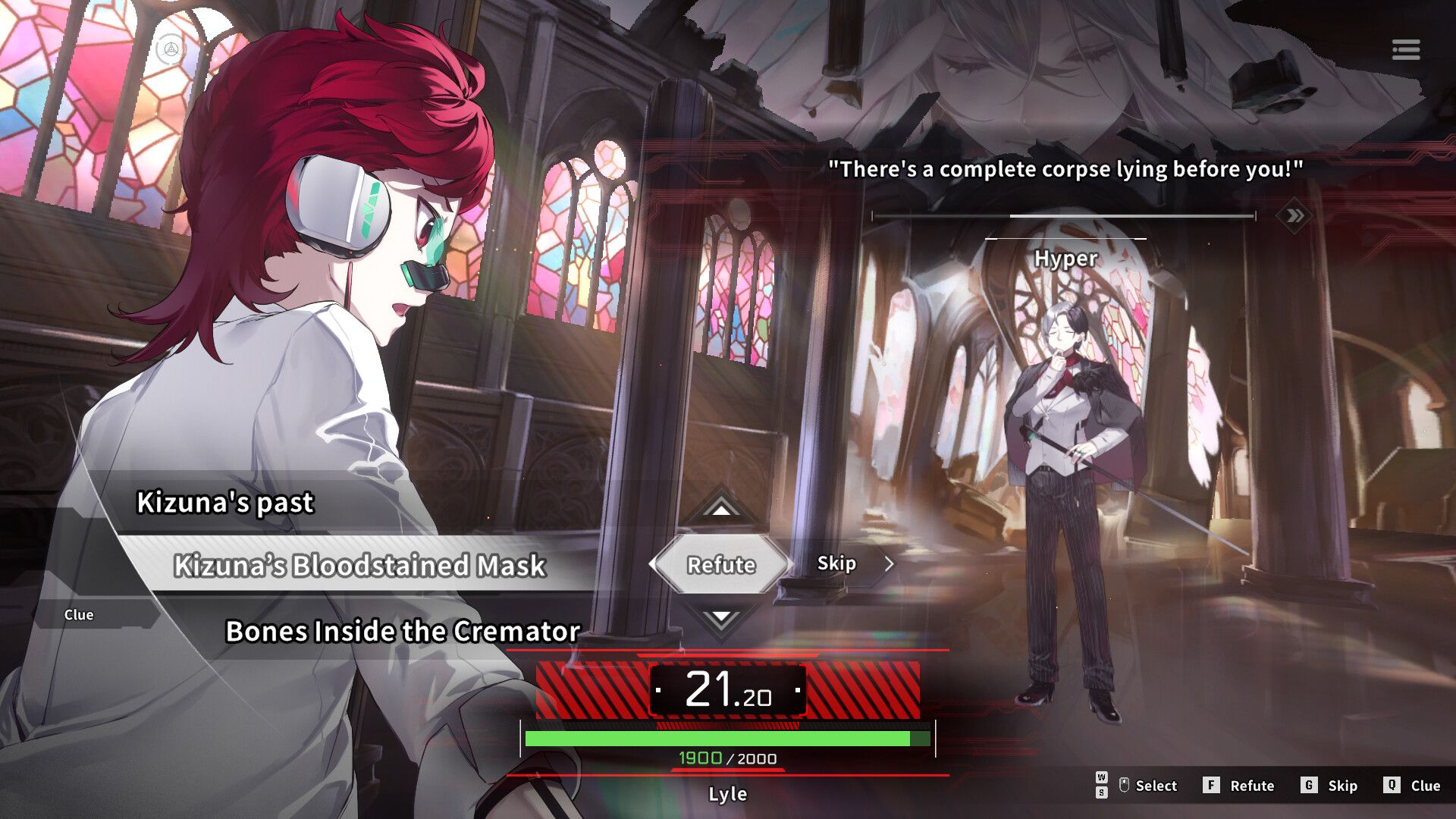
Managing thirteen unreliable captives inside Li's compound also twists standard death-game group trust. In classic courtroom or survival-trial games inspired by Danganronpa or Ace Attorney, catching a contradiction exposes malice. In Psycho-Sleuth, catching a contradiction frequently exposes a symptom the witness did not know they had caught yet.
When two survivors realize their perceptual blind spots complement each other, they start pairing up to watch opposite corners of corridors, creating fragile alliances that shatter the moment a new cognitive distortion passes through the group. That interplay between clinical perceptual quirks and gothic murder-mystery staging gives PHOSEPO's script a dark, cerebral tension that stands out immediately from standard anime detective tropes.
FailRooms Turns Backrooms Dread Into Architectural Slapstick
PC indie storefronts have been flooded with dim beige-carpet Backrooms clones for three solid years. Once streamers memorized humming fluorescent lights, wet carpet footsteps, and heavy VHS scanlines, recycled corridor games stopped scaring anyone inside ten minutes. FailRooms, launched on November 10 by solo developer Leonn Camayo alongside publisher Andes Interactive, clears that fatigue by mocking the genre straight to its face.
Stepping through sterile hallways in FailRooms on Steam, players start in convincing atmospheric dread: crisp concrete lighting, clinical silence, and faint footsteps echoing behind ajar service doors. Then the building geometry collapses into contractor farce. Flights of poured-concrete stairs ram straight into flat plaster ceilings. Empty tiled swimming pools sit bone-dry under flickering office drop-grids while exit doors swing open onto solid brick masonry and oversized yellow rubber ducks block narrow hallways.

What makes FailRooms work as more than a one-line parody is how carefully it paces its visual gags. Anyone who has seen viral photos of real-world construction blunders (balcony doors with no balconies, pillars poured squarely in the middle of wheelchair ramps, escalators terminating at load-bearing beams) recognizes the exact brand of bureaucratic incompetence Camayo imported into the liminal-space aesthetic.
That tonal whiplash makes clips travel fast on social feeds. Horror walking simulators drag whenever creators insist every shadowy doorway deserves grave solemnity. Deadpan timing, like an empty waiting bench facing a bricked-in stairwell right before genuine menace steps around a blind turn, keeps players laughing two seconds before they jump.
Nocturnal 2 Expands Its Flame Without Padding
Back in 2023, Swiss studio Sunnyside Games earned loyal word-of-mouth fans with Nocturnal, a focused three-hour linear action-platformer built around carrying flame through suffocating darkness. Compact games rarely feel thin when every room has rhythm, though players quickly asked what that torch-and-steel combat mechanic would feel like inside a larger, non-linear map.
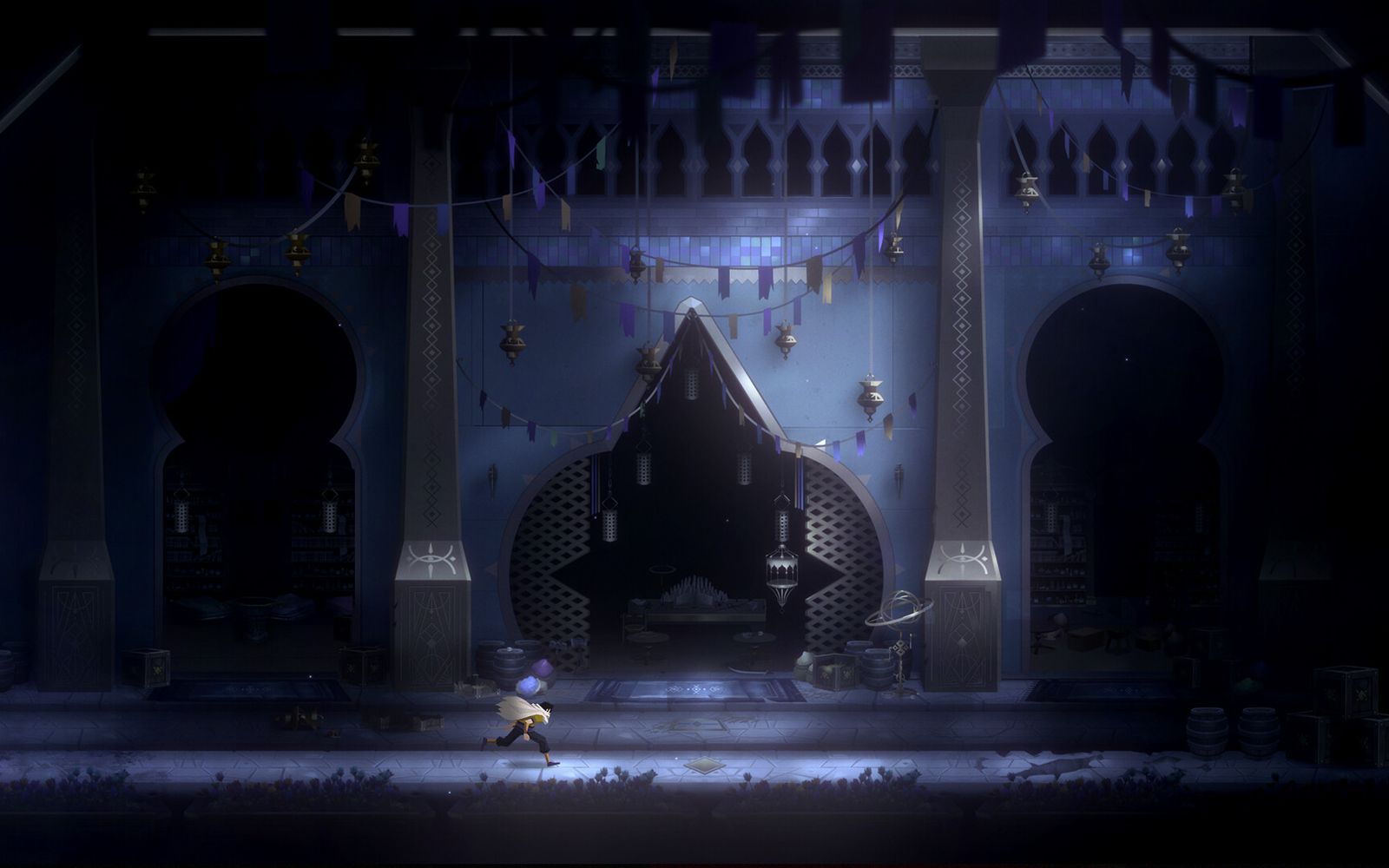
Arriving November 10, Nocturnal 2 delivers that broader ambition, opening an atmospheric campaign across Ytash, a hand-drawn Metroidvania island city built with Persian architectural silhouettes, vaulted domes, and shifting dark mist. Controlling Ardeshir with the Enduring Flame once again, survival and traversal depend on keeping your blade lit across interconnected districts.
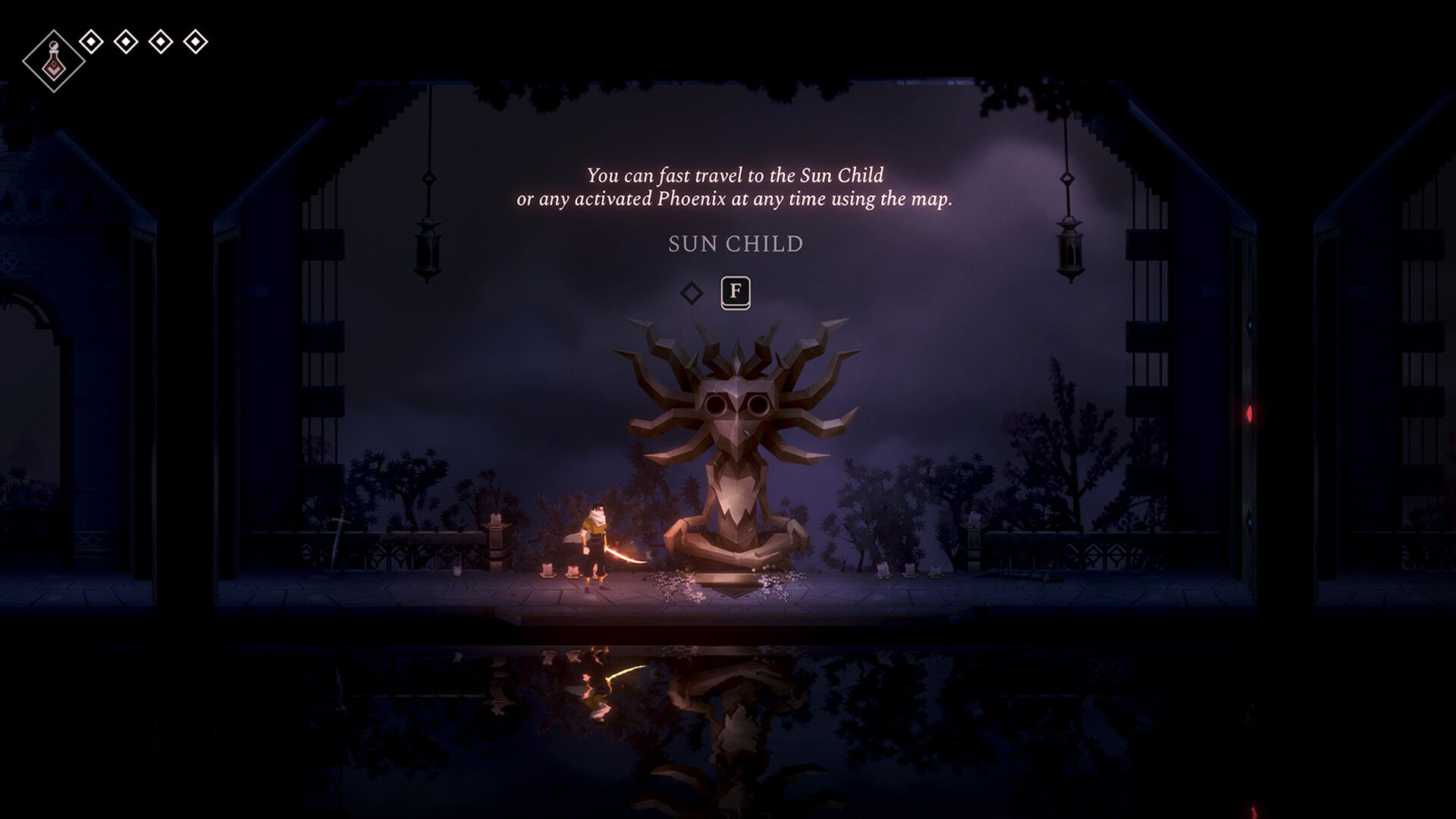
Igniting wall braziers sparks steel ablaze, pushes choking fog backward, reveals hidden traversal ledges, and powers aerial sword combos customized through collected Fire Gems. Instead of burying progress under bloated RPG loot tables or incremental +2% armor stats, Fire Gems alter movement cadence, healing rhythms, and combustion bursts directly.
Water hazards, rain-soaked courtyards, and mist-breathing enemies constantly threaten to douse your blade, forcing players to read room geometry like a wick path from one brazier to the next. Tying illumination, environmental puzzles, phoenix fast-travel shrines, and melee momentum to a single volatile resource ensures Ytash rewards spatial memory rather than empty map-icon backtracking.
Small Budgets, Mid-Range Hardware, Fast Word of Mouth
Technical accessibility also helps these three releases spread far beyond high-end desktop rigs. None asks for a thousand-dollar graphics card, mandatory ray-tracing upscalers, or 150 gigabytes of NVMe SSD clearance before the title screen loads.

By leaning on crisp 2D and stylized 3D art direction, readable silhouettes, and distinctive mechanical hooks instead of brute photogrammetry asset budgets, small November launches run at a locked 60 to 90 frames per second on mid-range laptops, older desktop GPUs, and handhelds like the Steam Deck OLED. Sub-$20 storefront pricing and shareable Steam Next Fest demos let compact games circulate organically through Discord groups and short-form video clips without needing multi-million-dollar trailer placements.
Why Tight Constraints Win Players Back
Watching three sharply odd November releases catch fire underscores real bandwidth fatigue across modern gaming. Few working adults want five concurrent live-service battle passes demanding nightly chore lists after work. Mirroring why curated weekend queues beat endless algorithmic binge lists, players connect faster with games that respect their time and know their boundaries.
In the same spirit that offbeat genre experiments broke out across crowded summer slates, PHOSEPO, Leonn Camayo, and Sunnyside Games showed that strict creative limits still outpunch bloated marketing budgets. Spend one surreal evening laughing at impossible staircases inside FailRooms, lose a rainy weekend lighting the braziers of Ytash in Nocturnal 2, or argue through warped eyewitness testimonies inside Psycho-Sleuth: none claims six months of your calendar, and finishing a sharp eight-to-twelve-hour game gives players something memorable to recommend on Friday night.
Comments (0)
No comments yet. Be the first to share your thoughts.