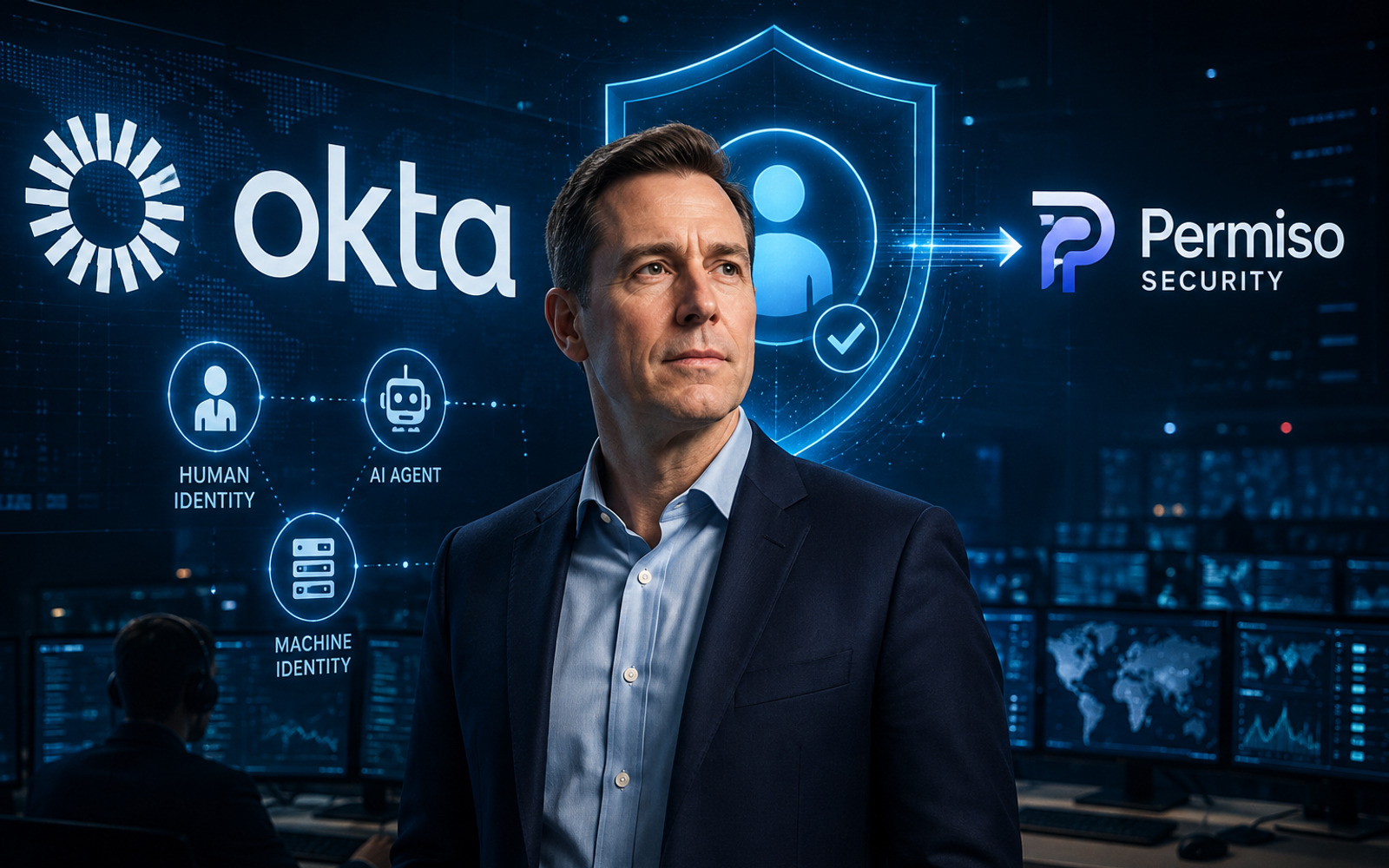
Okta's $815M Bet: The AI Identity Lesson Everyone Missed
Okta's Permiso deal isn't just about security. It's a signal that identity verification is becoming the next big startup battleground.

The security world has a habit of celebrating acquisitions as if they're victories for the industry, when often they're just larger companies buying their way out of a problem they couldn't solve internally. That's exactly what makes the Okta-Permiso deal so interesting, not because it's a rare moment of defensive consolidation, but because it exposes a gap that most startup founders still haven't acknowledged: identity is no longer just about passwords and logins. It's about proving that the thing trying to get into your system is actually a human, a machine, or a rogue AI agent, and that distinction is now worth real money.
For an early-stage SaaS founder or a lean engineering team shipping products on tight deadlines, this news might initially feel like distant enterprise chess. But the underlying mechanics of this deal hit close to home. Okta is effectively acquiring the security layer that arbitrates access permissions across complex cloud environments. In doing so, it underscores an urgent reality: legacy password and login verification tools are insufficient in an ecosystem increasingly populated by autonomous AI agents and background microservices.
The Gap That Permiso Fills
Permiso Security isn't a flashy name most people have heard of, but its core job description is becoming the most important function in any modern company. According to SC Media's coverage, the startup focuses on identity threat detection, which means monitoring for signs that an identity has been compromised, whether it's a stolen employee credential, a hijacked service account, or an AI agent abusing its permissions. This is the security operations center function that most companies pretend to have but rarely execute well.
The timing is telling. The Paypers reported that the acquisition comes amid growing concerns about AI agents being exploited in cyberattacks. Think about what that means for your own business. If you've built any kind of automation, a chatbot, an API integration, or even a simple workflow tool, you've probably created identities that no human is actively watching. Those are the exact gaps Permiso was designed to catch, and Okta just paid a premium to close them.
Why This Matters for Your Startup's Roadmap
Here's the contrarian angle that most commentary is missing. The conversation around this deal has focused on Okta's market position, but the real lesson is for the dozens of startups that will now rush to build identity threat detection features. If you're a founder, this is not the moment to pivot into security infrastructure, the space is about to get crowded with copycats. Instead, the lesson is about timing and positioning, and it's one that applies whether you're building a fintech app or a content platform.
Look at what actually happened. Okta didn't invent this technology, it bought it after watching Permiso gain traction. That means there was a window, roughly two to three years, where Permiso was proving the market existed while the giants were still asleep. That window is the real takeaway for you. The founders who win aren't the ones who build the biggest features first, they're the ones who spot a niche before the enterprise players notice, then either sell or scale before the attention arrives.
The AI Agent Problem No One Is Solving
There's a specific detail in this deal that founders should study closely, and it's the emphasis on AI identities. The official announcement highlights that Permiso's capabilities will help customers protect human, machine, and AI identities. That last category is the one that keeps executives up at night, because AI agents are being deployed faster than anyone can secure them, and they often have access to sensitive systems without human oversight.
For a small business owner, this translates into a practical audit. Walk through every automated system you run and ask who owns the credentials. If a former employee set up a marketing automation tool, does their account still have access to your customer database? If you've linked your payment processor to an AI assistant, what happens if that assistant's credentials get compromised? These are the questions that Permiso answers for enterprises, but the mindset is identical for a team of five.
The good news is that you don't need a seven-figure security stack to start. The principle is simple: map your identities, audit their permissions, and set alerts for unusual behavior. Start with the highest-risk access points, like financial tools and customer data, and work outward. This is the spreadsheet exercise that our earlier analysis of the AI experiment predicted would follow the hype cycle, and it's now arriving with a security label attached.
What Founders Should Actually Do Now
Don't panic and start building a competing security product, that's a trap for people who confuse a news headline with a business plan. Instead, take three concrete actions that will pay off regardless of what the security market does. First, review your own identity exposure, not as a compliance chore, but as a competitive advantage. When you pitch investors or partners, being able to say that you've audited AI and machine identities makes you look several steps ahead of the average startup.
Second, track how major identity providers integrate agentic security over the coming quarters. The acquisition integration timeline will be gradual, creating a multi-year window where agile third-party developer tools can solve tactical identity verification bottlenecks for specialized platforms. If you build B2B software, evaluating whether transparent audit logs could make your core product stickier is a high-leverage strategic exercise.
Third, and most importantly, treat security hygiene as a commercial differentiator rather than an administrative hurdle. Founders who communicate data protection protocols in straightforward, transparent language immediately build trust in an ecosystem crowded with opaque AI wrappers. Articulating clear data boundaries and credential management in your product demos often becomes the deciding factor that closes enterprise contracts.
The Real Cost of Ignoring This Trend
The uncomfortable truth is that most startups will ignore this story entirely, because it feels like enterprise noise. But the same dynamic is playing out in every industry where digital identities are multiplying. The freelancer running client portals, the e-commerce store using automated inventory, the creator economy platform connecting brands to influencers, all of these now depend on systems that verify who's really on the other side.
Every time a new wave of automation arrives, a wave of identity fraud follows, and the companies that adapt first are the ones that thrive. You don't need to be Okta to apply that logic. You just need to look at your own systems with fresh eyes and ask whether you truly know who's accessing your data. The founders who do that homework today are the ones who won't need a rescue acquisition later.
This deal isn't a warning to build a security company. It's a reminder that the next layer of trust in any business, whether you sell software, services, or content, is verification. Start auditing your identities this week, and treat it as a growth conversation, not a technical footnote. That's the edge this acquisition is really pointing to.
Comments (0)
No comments yet. Be the first to share your thoughts.