The 2026 World Cup's Expanded Format Is Reshaping Summer Culture
With 48 teams, three host countries, and likely the final World Cups for Lionel Messi and Cristiano Ronaldo, the 2026 tournament is already the biggest in the event's history. Here's how the new format is changing the way fans experience the game.

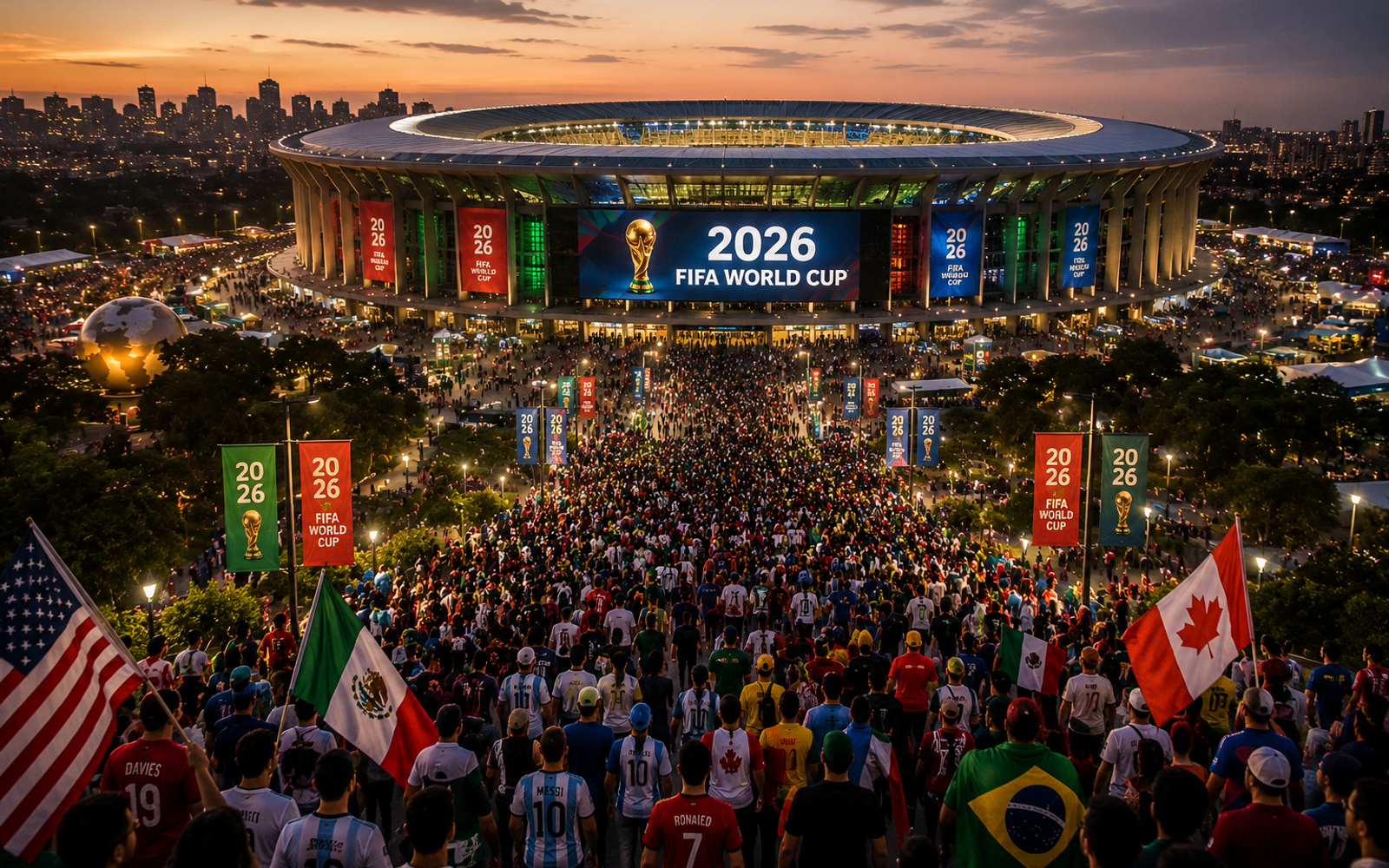
The 2026 FIFA World Cup, jointly hosted by the United States, Mexico, and Canada, kicked off June 11 at Estadio Azteca in Mexico City and is already structurally unlike any tournament that came before it.
For the first time in football history, 48 national teams are competing (up from 32), split across 12 groups of four. That structural expansion introduces an entirely new knockout round: instead of 16 teams advancing directly to the Round of 16, 32 teams move on, including all 12 group winners, all 12 runners-up, and the eight best third-place finishers.
The Economics of the 48-Team Expansion
The format change is more than a statistical experiment. It means sixteen additional countries get a genuine shot at the world stage, 104 matches are played across 39 match days (up from 64 matches in Qatar 2022), and sixteen municipal hubs across North America are sharing hosting duties.
Eleven stadiums in the United States alone are staging fixtures, stretching from Seattle and Los Angeles to Atlanta, Boston, and Philadelphia.

The Farewell Tournament: Messi and Ronaldo
This summer also represents the final World Cup stage for two stars who defined modern football for two decades.
Lionel Messi is anchoring Argentina as the defending world champions, while Cristiano Ronaldo continues to lead the line for Portugal. Both icons are widely expected to conclude their international careers at the tournament's conclusion, giving every group-stage appearance an added layer of emotional gravity for a generation of supporters who grew up on their rivalry.
Co-Host Momentum Across Three Nations
The three host federations have generated significant domestic momentum:
- United States: Opened their group campaign with an emphatic 4-1 victory over Paraguay before shutting down Australia 2-0.
- Canada: Staged an electric offensive showcase in Group B, including a commanding 6-0 result over Qatar.
- Mexico: Playing in front of a roaring home crowd at Estadio Azteca (the historic venue where Diego Maradona lifted the trophy in 1986), El Tri secured consecutive opening wins over South Africa and South Korea.
Sensor Balls and Environmental Rules
New competitive regulations are actively shaping match play. Mandated stadium hydration breaks have been enforced by match officials to safeguard player welfare against extreme midday summer heat across southern host cities.
Simultaneously, FIFA has deployed a connected "smart ball" embedded with high-frequency inertial measurement units (IMUs). The sensor streams positional telemetry directly to video match officials, accelerating semi-automated offside rulings and goal-line verification.
The Summer Cultural Footprint
For North American audiences, the tournament's unprecedented footprint is fundamentally altering summer culture. Travel schedules, pub viewing habits, and civic fan fests are reshaping public life from Toronto to Guadalajara.
Between the logistical scale, the new knockout math, and the historic farewells of football's greatest players, the road to the July 19 final at MetLife Stadium in East Rutherford is already writing a defining chapter in global sports culture.
Comments (0)
No comments yet. Be the first to share your thoughts.