The Hidden Cost of Self-Hosting Is Someone Else's Roadmap
Plex drops TheTVDB, Android gates LAN access, and Synology ships a Docker engine retired in 2024. Self-hosters pay for all three.

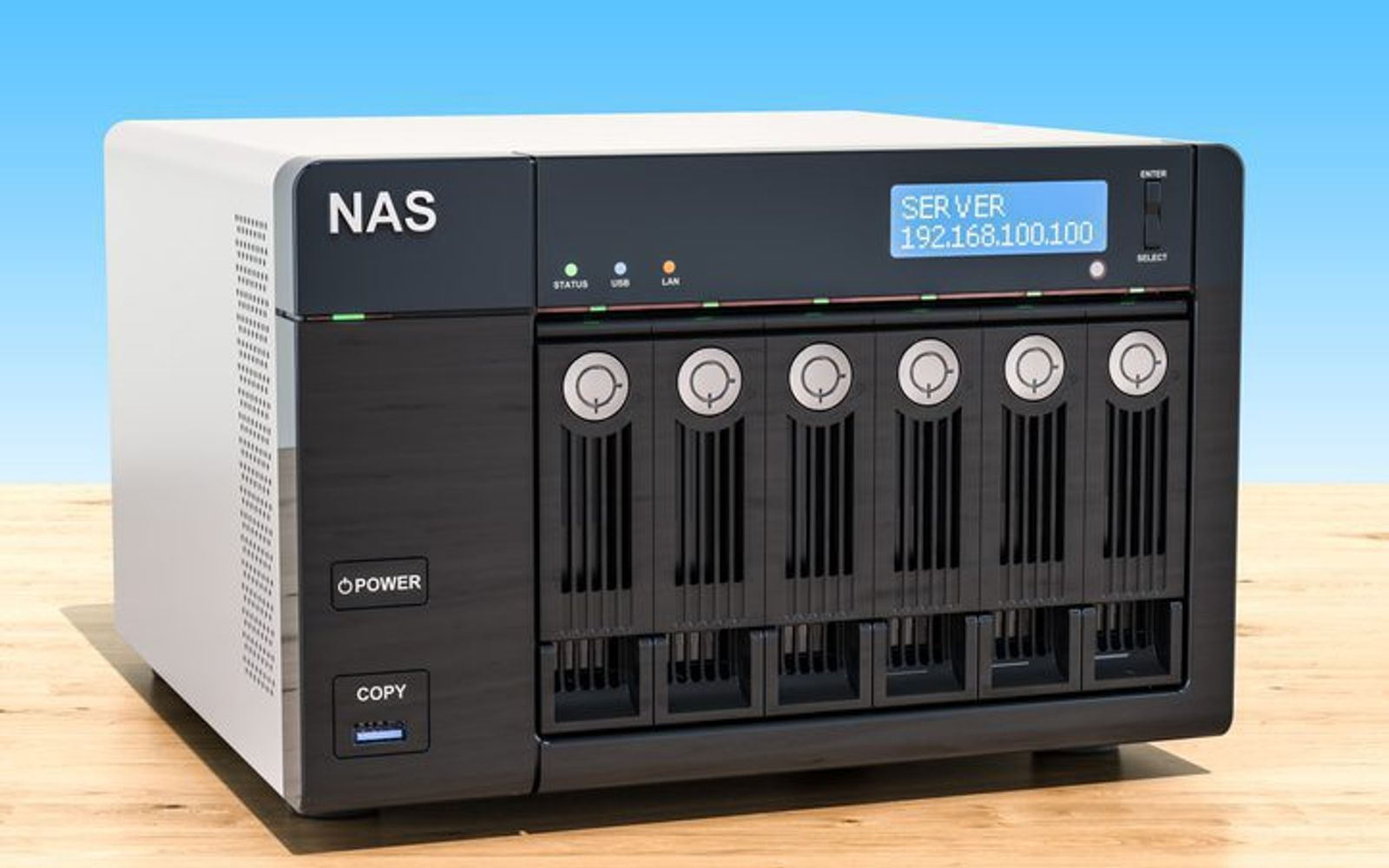
Inside a Synology NAS, the Container Manager row in Package Center carries the version string 24.0.2-1706. The digits after the dash changed on 26 August, when Synology pushed an update that revised the package and left the engine underneath alone. The leading number is the one that matters. Docker marked 24.0.2 end of life on 8 June 2024, and the current upstream release is 29.2.1, so a NAS bought this month from a vendor with a decade of goodwill in the homelab market runs a container runtime that stopped receiving security patches 904 days ago.
- 1Plex's metadata deadline: Plex stops pulling TV metadata from TheTVDB on 3 December, and ongoing series set to TheTVDB ordering will stop updating four days after this roundup is published.
- 2Android's LAN gate: Apps built for Android 17 must request a runtime permission before touching devices on the local network, turning every self-hosted mobile client into a consent screen.
- 3A frozen container engine: Synology's Container Manager still ships Docker Engine 24.0.2, retired upstream in June 2024 and now five major releases behind.
That detail sits beside two other announcements from the past week, and together they sketch the same problem from three directions. Plex will stop pulling TV metadata from TheTVDB on 3 December, a licence it couldn't renew. Google's local network protection, enforced from Android 17, makes reaching a device on your own LAN a runtime permission that an app has to request and a user has to grant. One vendor is retiring a feed, one is gating a socket, and one is shipping a runtime nobody upstream supports anymore. Hardware ownership turned out to be the easy half of the deal.
A container engine held at 24.0.2
Docker's version scheme matters less than the API version inside it. Container Manager pins the daemon at API 1.43, and that number is what Compose files, third-party management tools and image build pipelines negotiate against. Pin a daemon and you pin everything downstream of it. Newer Compose syntax gets parsed by the NAS, then rejected at the socket because the daemon doesn't recognise the field. Images that assume newer cgroup handling fail in ways that look like configuration errors, which sends users to forums to debug a problem no compose edit will fix.
Synology isn't alone in shipping Docker, but it is now conspicuous. Other NAS vendors have moved their engines forward. Synology's August release, 24.0.2-1706, arrived 809 days after upstream support ended and represented a package revision rather than a version jump. Users who want a current engine replace the vendor's daemon themselves over SSH, trading a supported but stale stack for a current one nobody supports. That trade is the same shape as the one people make when they keep old hardware alive with a lighter Linux distribution, except here the ageing layer isn't the desktop, it's the runtime under every service on the box.
The exposure is worth naming plainly. A container engine parses untrusted images, mounts filesystems and arbitrates capabilities between containers, which makes it the single most privileged piece of software on the machine. When it stops receiving patches, every image you pull inherits the risk, and the risk never announces itself in a DSM changelog. Synology did disclose 25 vulnerabilities in a recent DSM update, which is ordinary patch hygiene. The engine under Container Manager doesn't appear on that list, because it isn't being patched at all.
Plex retires a feed it never owned
Plex's notice went up on 20 November and takes effect on 3 December, which gives library owners 13 days. Plex wrote in its forum announcement: "Unfortunately, we weren't able to reach terms with the company that owns TheTVDB on a new agreement, so we can no longer support it." Nothing gets deleted on the cutoff date. Existing metadata stays, finished series stay complete, and libraries keep the artwork and descriptions already matched.
What stops is the update path for anything still airing. A show set to TheTVDB ordering will stop receiving new episode titles, descriptions and season data, and Plex says it will try to match new titles against other sources without promising the match will land. The legacy TheTVDB agent stops working outright. The recommended move is switching libraries and individual shows to The Movie Database ordering, a few clicks per library and an unknown number of clicks for shows with custom ordering, because alternative orders are exactly where TheTVDB earned its loyalty. Anime absolute numbering and DVD broadcast order are the usual casualties.
The part worth understanding is what a metadata provider actually is. It's a licensed feed with a contributor community attached, not a public utility, and the ordering data is the hard part because it encodes editorial judgement about how episodes should be watched. Metadata is to a media library what a card catalogue is to a shelf of books: the shelf is yours outright, the catalogue is on loan and the loan can be recalled.
The community workaround already exists. A third-party custom metadata provider re-adds TheTVDB to newer Plex Media Server builds using your own API key, which is the honest shape of the fix. You keep the catalogue only if you bring your own credential. Thirteen days of notice on a renewal that presumably took months to fail sits badly against Synology's 809 days of silence on a retired engine, and the ratio runs in the wrong direction, roughly 62 to 1. The change users can see coming is the one with the loudest warning and the shortest runway. The change that has been running quietly for two and a half years never got an announcement at all.
Android makes the home network a permission prompt
For fifteen years, Android's INTERNET permission covered the whole address space. An app that could reach a web server could also send multicast DNS queries, listen for SSDP broadcasts, resolve a .local hostname and open a socket to any device sharing the Wi-Fi. That was convenient for casting and printing, and it was also an identification channel, since the set of devices visible on a network narrows down where that network is and who might live there. A 2025 Privacy Enhancing Technologies Symposium paper documented how apps holding only the INTERNET permission could map LAN devices and use that map to infer location.
Android 17 splits the two. Apps targeting API level 37 must declare and request ACCESS_LOCAL_NETWORK at runtime, and the permission gates outgoing TCP connections, incoming ones, UDP unicast, multicast and broadcast, plus framework helpers like NsdManager, as Google's developer documentation sets out. Denial here produces socket errors, EPERM or ECONNABORTED, which read to a user as the server being broken. A concrete case surfaced in Termux, the terminal emulator many self-hosters use as a pocket SSH client: the Play Store build targeting API 37 lost ping and SSH access to LAN addresses, while a sideloaded build targeting API 28 kept working with no configuration change.
That split is the real consequence. Apps distributed outside Play that never raise their target level keep implicit LAN access until Google's enforcement deadline catches them, while Play-distributed apps must climb to API 36 for updates and onward to 37. Users end up with two tiers of client on the same phone, one that can see the homelab and one that can't, both talking to the same server. The support burden lands on whoever runs Immich, Jellyfin or Home Assistant, because the failure doesn't mention the permission anywhere the user will look.
The privacy argument is sound, and Google's framing of LAN access as a location proxy holds up. What the change doesn't solve is intent. A one-time prompt asks a user to authorise what an app might do with the network forever, and the operating system has no mechanism to distinguish a media client fetching a thumbnail from a scanner enumerating every device on the subnet.
An independent engine reaches alpha, one layer up
Ladybird shipped its first alpha on 23 November for macOS and Linux, downloadable without compiling from source. Its engine is its own, LibWeb for the platform and LibJS for JavaScript, not a fork of Blink, WebKit or Gecko. The alpha comes with a rolling update channel, built-in content blocking, crash reports the user reviews before sending, and an explicit statement in the project's announcement that some sites will fail and the browser will crash sometimes. There are no security promises attached.
The performance picture is honest about where it stands. On one Linux laptop test it scored roughly 40 per cent of Chromium 158 in Speedometer 3.1 and used about 2.2 times the memory. The project's own October figures put Speedometer 2 at 156, up from 84, and reported passing Safari Technology Preview on the Web Platform Tests. Those are the numbers of a credible fourth engine in its early adolescence, which is more than most people expected a donation-funded nonprofit to produce.
Why this belongs in a column about self-hosting is the client layer. Proxmox, Portainer, Grafana and most of the *arr stack are administered through web consoles, so the last component between a self-hoster and their own infrastructure is a rendering engine chosen by someone else. Three engines have held that position for a decade, and a fourth is the only structural thing that changes the negotiating position. The same week brought quieter news on the maintenance front: Dokemon was archived on GitHub after two years of inactivity, a reminder that the dependency graph includes projects with one maintainer and no succession plan.
The dependency you can't install around
The homelab pitch has always been about owning the metal and the bytes. What this week shows is that the gates have moved up the stack, into licence terms, mobile OS permission models and vendor firmware policy, and none of them are addressed by a bigger chassis or a better RAID card. The same question that decides whether you can get a car repaired without the manufacturer's permission decides whether your NAS runs a patched daemon. A self-hoster can replace Plex with Jellyfin and keep the metadata, or bolt a newer daemon onto a consumer NAS and accept the support risk, but each of those fixes is a workaround for a relationship that sits outside the machine.
The unresolved technical question is verification. Local network access is gated at the client by a prompt that captures intent once, and a server on the LAN has no way to check who is calling or why. A router can't distinguish a media client pulling a thumbnail from an app enumerating the subnet, which is why the gate sits in Android's network stack rather than at the boundary of the network itself. Until local traffic can be authenticated at both ends, every self-hosted service on a home network inherits the policy of three parties who never signed up to maintain it, and the bill for that arrives on someone else's schedule, addressed to hardware you already paid for.
Comments (0)
No comments yet. Be the first to share your thoughts.