How India's Mandatory CNAP Caller ID Changes Unknown Calls
With Calling Name Presentation live across Indian 4G and 5G networks, unfamiliar calls now pull KYC-verified subscriber names straight from carrier databases instead of crowdsourced apps.

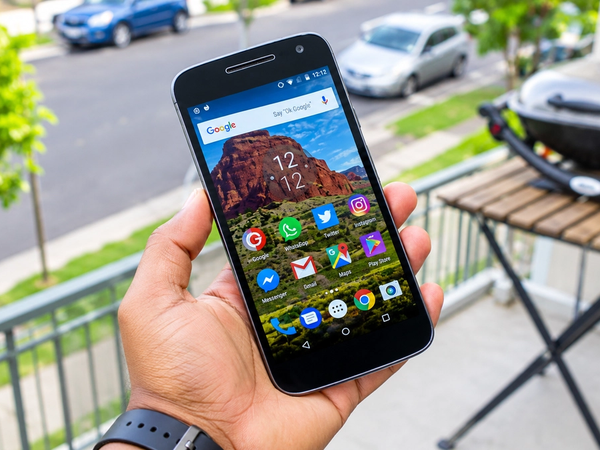
Pick up an unfamiliar ten-digit call in Mumbai, Bengaluru, or Chennai right now and your dialer behaves very differently than it did twelve months ago. For years, screening an unknown number meant guessing blindly or handing address-book permissions to crowdsourced caller-ID apps in return for warning banners about aggressive personal loan agents. Now, sitting directly beside the incoming digits, a verified full name loads straight from the mobile carrier itself.
That change comes from Calling Name Presentation (CNAP), India's network-level caller identification standard. Following TRAI's October 2025 recommendations and an October 13, 2026 directive from the Department of Telecommunications (DoT), mobile operators flipped CNAP on nationwide starting November 1, 2026 across 4G and 5G lines. For nearly a billion mobile subscribers, the basic voice network now doubles as an identity layer, even as it introduces knotty privacy edge cases for families sharing SIM cards.
Where the Caller Name Comes From
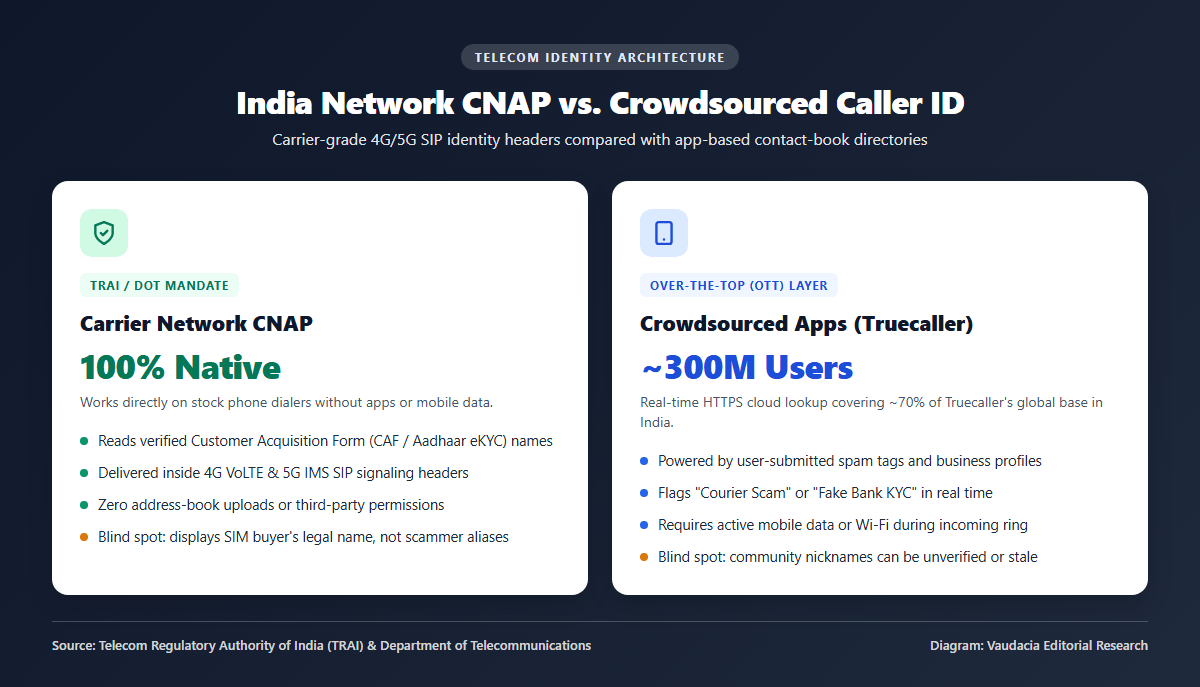
Instead of guessing identities by scraping how strangers saved a number on social phones, CNAP queries the Customer Application Form (CAF) records tied to your SIM activation, verified via Aadhaar or passport KYC at purchase.
When someone dials a 4G VoLTE or 5G VoNR call, the originating telecom queries its verified subscriber database, inserts the registered name into network call-setup signaling, and delivers it straight to the recipient's native phone app before the first ring finishes. As Gadgets Now noted during the launch rollout, subscribers do not install an app or toggle a carrier portal; CNAP activates at the network layer automatically.
Three simple display rules govern what shows up on screen. Personal contacts saved in your local address book still override everything, so an entry saved as "Raju Garage" stays intact rather than switching to a government name. Overseas calls from numbers missing in your contacts label cleanly as "International Call" because Indian telecoms cannot audit foreign KYC records, blunting overseas spoofing traps where foreign boiler rooms previously flashed fake Indian mobile prefixes. Businesses that once accidentally displayed an HR director's private legal name during pilot tests can now bind verified GST trade names or registered trademarks to enterprise trunks so customers see the company brand name.
In technical terms, the originating telecom queries its CAF subscriber table during call setup and passes the validated display string via SIP signaling headers across carrier interconnects straight to Jio, Airtel, Vodafone Idea, or BSNL handsets before the first ring finishes. That carrier-originated architecture separates CNAP fundamentally from consumer apps built on scraped phonebooks.
Why It Still Leaves Room for Spam Apps
CNAP overlaps with apps like Truecaller without replacing what crowdsourced directories do. Seeing "Ramesh Kumar" confirms who registered the SIM card on paper, yet it does not warn a busy commuter that Ramesh Kumar's line placed four thousand credit-card phishing calls since Tuesday or belongs to an aggressive loan-recovery contractor cycling fresh numbers every week.
Whereas Truecaller and similar caller-ID apps require an explicit app install, harvest user address-book uploads, work across legacy 2G and landline connections, and offer a manual web unlisting portal alongside crowdsourced "Spam" and telemarketer badges, network CNAP operates strictly via carrier signaling on 4G and 5G without scraping anyone's contact book. At the same time, CNAP displays verified KYC or GST identity strings alone without community fraud warnings, and restricts opt-outs largely to formal Calling Line Identification Restriction (CLIR) exemptions. Because the carrier lookup pulls straight from verified SIM activation records rather than how strangers nicknamed a phone number in their contacts, CNAP avoids the awkward nicknames and outdated job titles that routinely clutter crowdsourced caller directories, though it leaves Reputation scoring entirely up to the handset's dialer software.
Until Indian carriers layer real-time spam-scoring flags and Do Not Disturb (DND) complaint velocity directly atop verified KYC strings, or on-device AI call screeners screen call intent before ringing, everyday dialers will still rely on Google Dialer or Apple spam warnings alongside the network name. Registered telemarketers operating cleanly under business names still flood phones midday unless filtered separately.
Blind Spots Fraudsters Already Exploit
Every nationwide mandate leaves seams on launch day. Legacy 2G, 3G, and fixed landline systems were deferred from November 1 because older circuit-switched infrastructure cannot inject caller-name metadata into call setup without costly exchange upgrades, leaving feature-phone users and older SIP-to-landline call centers passing plain numbers. Dual-SIM handsets add day-to-day confusion too: calls hitting an active 4G/5G VoLTE slot pop CNAP cleanly, while forwarded lines, Wi-Fi calling handoffs on older devices, or non-VoLTE fallbacks can revert to bare digits without telling the owner why one ring carried a name and the next stayed blank.
More troubling, CNAP only verifies whose identity sits on the SIM registration form, not who holds the handset. Cybercrime syndicates routinely recruit day laborers or rural nominees for modest fees to open bulk KYC-verified mule SIMs. When one of those lines dials a victim tomorrow, CNAP obligingly stamps a genuine Indian citizen's legal name across the screen, lending casual legitimacy to a fake bank or parcel pitch before shifting targets onto WhatsApp, Telegram, or web links where carrier signaling vanishes completely. Even impersonation scripts benefit subtly when an ordinary Indian name sits beneath a ten-digit number rather than a flagged commercial header.
Digital rights researchers flagged a sensitive domestic snag inside TRAI's consultation records. Across millions of Indian households, teenagers, college students, and spouses carry SIM cards bought years ago in a father's or uncle's name. Every ride-share pickup, landlord call, or courier confirmation now either displays the relative's full name or exposes a caller's legal surname to strangers, while domestic safety hotlines, whistleblowers, and journalists who once relied on routine number anonymity find that only narrow Calling Line Identification Restriction (CLIR) profiles can suppress outgoing names cleanly.
Meanwhile, regional banks, healthcare clinics, and gig-economy logistics platforms run into a separate customer confusion loop whenever contracted drivers ring doorbells from personal prepaid lines and show random individual names instead of the merchant brand. Cloud-telephony masked numbers bound to verified GST trade identities solve part of that gradually as delivery fleets migrate outbound queues onto enterprise trunks, yet independent pharmacies and neighborhood shops still get caught explaining why a dispatch clerk's home surname popped up on an order confirmation call. Even legitimate telecom verification calls occasionally trigger needless hang-ups when an outsourced customer support center dials off unbranded vendor lines rather than registered corporate headers.
There is also an adoption lag on the handset side that few launch announcements highlight clearly. While recent Android and iPhone releases parse SIP caller-name headers natively out of the box, older budget 4G feature phones and carrier-customized dialer builds vary widely in how cleanly long business names truncate across narrow lock screens. A twenty-eight-character trade name often clips mid-word next to the green answer button, leaving buyers squinting at partial syllables before deciding whether to pick up.
Taken alongside rural subscriber education, smoothing family SIM ownership transfers inside self-service carrier portals matters just as much as slowing robocalls. Checking which Aadhaar record sits linked to dependent household SIMs avoids needless surprises on everyday deliveries, keeping saved address-book entries intact guarantees personal overrides win on screen, and remembering that a legal name on a ringing dialer proves SIM registration paperwork rather than bank employment keeps identity-verified spam from feeling safer than it is.
Comments (0)
No comments yet. Be the first to share your thoughts.