
The $1 Trillion AI Wake-Up Call That's Killing Projects
After two years of experimentation, CEOs are slashing AI budgets. The data shows why the party is over.

The second quarter earnings season is still weeks away, but the tone has already shifted. Across earnings call previews and pre-close analyst briefings, the same question keeps surfacing. It's not "how much are you spending on AI?" It's "show us the money."
For two years, companies treated artificial intelligence as a strategic imperative that required no immediate justification. Budgets were approved on narrative alone. Pilot programs multiplied. Vendors sold subscriptions to products that promised everything and delivered, in many cases, little more than cost centers dressed up as transformation. That era is ending.
The 56% That Nobody Wants to Talk About

A PwC survey of 4,454 CEOs, published in January and cited widely since, found that 56% of chief executives report zero financial return from their AI investments. The same survey showed that only 12% of companies are actually profiting from their AI initiatives. The gap between those two numbers is where the current corporate drama lives.
The data has landed hard in boardrooms. Kyndryl's 2025 Readiness Report, referenced in multiple analyst notes this year, found that 61% of senior business leaders feel more pressure to prove AI ROI now than they did a year ago. That pressure is translating into action. CFOs are demanding standardized "AI P&L" packs rather than narrative updates, according to Forbes. The shift from storytelling to spreadsheets is the single most consequential change in enterprise technology budgeting since the dot-com bust.
Why the Share Price Magic Evaporated
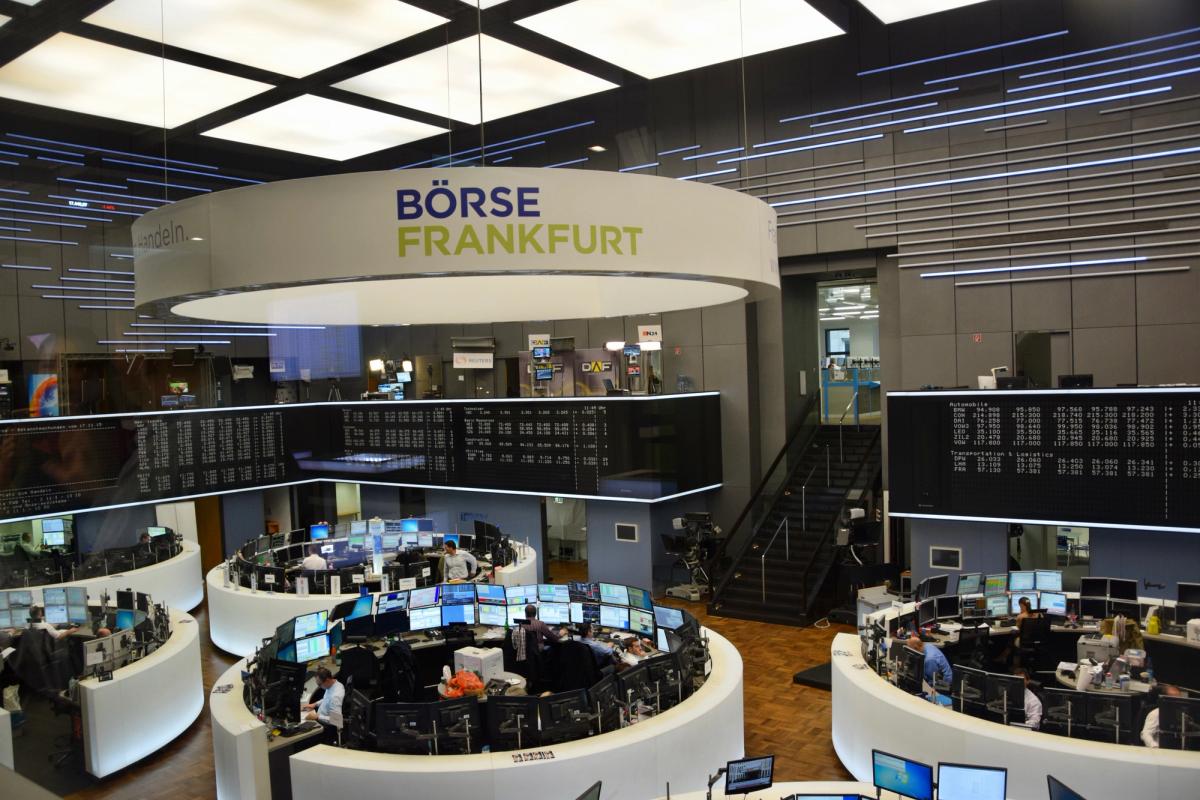
Markets have been signaling this reckoning for months. Bloomberg noted that AI rebrands have failed to deliver a lasting share price boost, a pattern visible across sectors. Companies that tacked "AI" onto their name or product suite in 2024 saw an initial pop, then a steady drift back to pre-announcement levels. Investors have become allergic to claims unbacked by revenue.
The math is brutal for a simple reason: the infrastructure costs are real and they're huge. Nvidia's market cap surged past $5 trillion in late 2025, as noted by analysts tracking the MAG7 group, but the companies buying those chips are still waiting for the output to justify the input. The semiconductor boom has been a story of capital expenditure, not operational return. As covered in a recent NovaRift analysis of Nvidia's market rout, even strong macroeconomic data can trigger selloffs when the market starts questioning whether AI spending translates to productivity gains.
This isn't an anti-AI argument. It's a capital allocation argument. When money was nearly free, experimentation made sense. With rates where they are and margins under pressure, the same CFOs who signed blank checks are now auditing every line item.
The Capital Expenditure vs. Realized Cash Flow Paradox
The structural crisis unfolding in enterprise IT budgets stems from an unprecedented divergence between capital expenditure commitments and realized operating cash flow. Hyperscalers have poured hundreds of billions into accelerated GPU clusters, custom optical interconnects, and gigawatt-scale grid allocations, betting that enterprise software buyers would absorb massive token surcharges. Instead, Fortune 500 chief information officers are encountering severe unit economics bottlenecks, where recurring inference API bills exceed the cost of the human labor workflows they were intended to replace.
This financial friction has triggered widespread project cancellations across corporate innovation divisions. Organizations that launched dozens of speculative pilot programs in late 2024 and 2025 are systematically decommissioning projects that fail to demonstrate direct margin contribution within a single fiscal quarter. The transition from exploratory experimentation to rigorous unit-cost accounting has exposed an uncomfortable reality: general-purpose frontier models are frequently too expensive to run at production scale for high-volume enterprise tasks.
What the 12% Do Differently
The minority of companies that actually profit from AI share a pattern that is worth understanding. They don't ask "what can AI do?" They ask "what specific process cost can we eliminate or revenue stream can we unlock?"
According to the same Forbes analysis, the profitable 12% track three distinct categories: direct cost reduction (labor replaced or reallocated), revenue attribution (new sales clearly tied to an AI tool), and risk reduction (fraud caught, errors avoided, compliance breaches prevented). They don't mix these categories. They report them separately, and they report them monthly.
This discipline sounds obvious. It is not common. Most companies still treat AI as a strategic umbrella under which all spending is justified. The successful ones treat it as a vendor line item with a required payback period. That distinction separates the 56% seeing zero return from the 12% who can point to a P&L impact.
The Second-Quarter Reckoning
The upcoming Q2 earnings season will be the first widespread test of this new discipline. Analysts are already flagging a change in tone. The conference calls will feature fewer mentions of "AI transformation" and more references to "AI-driven efficiency gains" backed by specific margin improvements.
Companies that can show concrete numbers will be rewarded. Those that cannot will face a market that has exhausted its patience. This creates a bifurcation that maps roughly onto the 12% versus the 56%. The gap between those groups is likely to widen, not narrow, over the next two quarters.
For publicly traded companies, the pressure is compounded by a rotation in capital flows. As noted by analysts tracking global markets, capital is rotating away from pure AI narratives and toward sectors with demonstrable earnings power. The crypto IPO market has stalled for the same reason: investors want revenue, not roadmaps.
The Budget Cuts Have Already Started
Several large enterprises have quietly pulled funding from AI pilot programs that failed to show measurable results within six months. The cuts are not public in most cases, because admitting failure carries its own reputational cost, but the pattern is visible in vendor churn data and reduced headcount in corporate AI labs.
Go Deeper
Why Rest No Longer Recovers YouA recent study by Deloitte found that while 85% of organizations increased AI investment in the prior 12 months, the growth rate is decelerating. The low-hanging fruit has been picked. The remaining use cases require deeper integration, longer timelines, and higher risk. Corporate risk appetite, never high, has contracted further in a macroeconomic environment shaped by trade uncertainty and mixed signals from central banks.
This is not a crash. It is a correction. The difference matters because a crash implies a wholesale rejection of the technology. What's happening is more nuanced: a rejection of the idea that AI deserves special treatment in the capital allocation process.
What Comes Next
The next 12 to 24 months will likely see a stabilization of AI spending at levels that are still historically high but far below the growth trajectory of 2024 and 2025. Companies will consolidate their vendor relationships, cancel underperforming pilots, and double down on the three or four use cases that actually deliver measurable value.
As noted in earlier NovaRift coverage of hidden market truths, headline numbers often obscure underlying divergence. The same is true here. Aggregate AI spending will continue to rise, but beneath the surface, the gap between the companies that know what they're doing and the ones that don't will become a canyon.
The party was never going to last forever. What comes after is harder to sell on a conference call but far more durable: actual returns, measured in actual currency, against actual business problems. That is a smaller story than the one the market told itself for two years. It is also the only one that works.
Disclaimer: This article is for informational purposes only and does not constitute financial advice. Past performance is not indicative of future results. Consult a qualified financial advisor before making investment decisions.
Comments (0)
No comments yet. Be the first to share your thoughts.